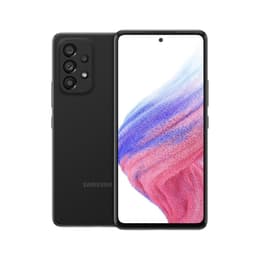



Galaxy A53 5G Vs Huawei P30 Pro

Galaxy A53 5G
Galaxy A53 5G
Starting at

Refurbished price:119.00

Versus €459.00 new

See options
Huawei P30 Pro
Huawei P30 Pro
Starting at

Refurbished price:188.00

Versus €849.00 new

See options

Ratings

The Samsung Galaxy A53 5G, released in March 2022, and the Huawei P30 Pro, launched in March 2019, represent different eras and market segments within the smartphone landscape. While the Galaxy A53 5G focuses on delivering a balanced modern Android experience with long-term software support, the P30 Pro, an older flagship, was renowned for its advanced camera system and premium build. Both devices run on the Android operating system, though their software experiences and access to services differ significantly due to the P30 Pro's unique circumstances.

Scores

Durability

When considering the practical lifespan of these devices, their respective release dates and software support policies are key factors. The Galaxy A53 5G benefits from a more recent launch, while the Huawei P30 Pro, as an older model, has a different trajectory for updates.

  • Release Timeline: The Galaxy A53 5G was released in March 2022, making it a newer device compared to the Huawei P30 Pro, which launched in March 2019. This age difference impacts how long each device can be expected to receive official support and remain current with software trends.
  • OS Support Duration: Samsung committed to four major Android OS upgrades and five years of security updates for the Galaxy A53 5G, ensuring a longer period of official software relevance. The Huawei P30 Pro launched with Android 9.0 Pie and received updates to Android 10, but its software future, particularly regarding Google Mobile Services, became complex due to external factors.
  • Repairability: The Samsung Galaxy A53 5G generally receives a favorable repairability score, with some sources indicating it is relatively easy to repair, particularly for components like the battery and screen, though adhesive is used. Specific repairability scores for the Huawei P30 Pro are less commonly available, but as an older flagship, its repair complexity might be higher.

Year of Release

2022

2019

Compatible with latest Update

Yes

No

OS

Android

Android

Foldable

No

No

Performance

The performance of a smartphone is influenced by its internal components, affecting everything from app responsiveness to multitasking capabilities and gaming. These two devices offer different performance profiles based on their respective hardware generations.

  • Processor Capabilities: The Galaxy A53 5G is equipped with a processor designed for efficient everyday use and 5G connectivity, handling common applications and multitasking smoothly. The Huawei P30 Pro features a flagship-tier processor from its release year, which was powerful for its time, excelling in general tasks and demanding applications.
  • System Responsiveness: Users of the Galaxy A53 5G generally find it responsive for daily tasks, though some reports indicate occasional slowdowns or lag during graphically intensive gaming or heavy multitasking. The P30 Pro, despite its age, offers a fluid user experience for most applications, reflecting its former flagship status.
  • Storage and RAM: Both devices offer various configurations for RAM and internal storage. The Galaxy A53 5G comes with 6GB or 8GB of RAM and 128GB or 256GB of storage, expandable via microSD. The P30 Pro was available with 6GB or 8GB of RAM and 128GB, 256GB, or 512GB of storage, expandable via Huawei's proprietary Nano Memory (NM) card.
  • Battery Behavior: The Galaxy A53 5G features a larger 5000 mAh battery, often providing over a day of use for many users, even with a high refresh rate display. The Huawei P30 Pro has a 4200 mAh battery, which was considered excellent for its time, offering strong endurance and supporting faster wired charging and wireless charging capabilities.

Memory (GB)

4 GB

8 GB

Screen quality

The visual experience on a smartphone is largely defined by its display technology, resolution, and refresh rate. Both the Galaxy A53 5G and the Huawei P30 Pro offer vibrant OLED screens, but with some distinctions.

  • Display Technology and Clarity: Both devices feature OLED displays, known for deep blacks and vibrant colors. The Galaxy A53 5G has a 6.5-inch Super AMOLED display with a resolution of 1080x2400 pixels. The Huawei P30 Pro features a 6.47-inch OLED display with a resolution of 1080x2340 pixels. Both provide clear visuals for media consumption and daily use.
  • Refresh Rate and Smoothness: A key difference lies in the refresh rate. The Galaxy A53 5G offers a 120Hz refresh rate, contributing to smoother scrolling and a more fluid user interface experience. The Huawei P30 Pro has a standard 60Hz refresh rate, which is still smooth for most content but does not offer the same level of fluidity as a higher refresh rate display.
  • Brightness and Viewing Experience: The Galaxy A53 5G's display can reach up to 800 nits of peak brightness, making it suitable for outdoor visibility. The P30 Pro's OLED screen also offers good brightness and supports HDR, enhancing the viewing experience for compatible content with improved contrast.

Resolution

1080 x 2400

1080 x 2340

Screen type

Super AMOLED

OLED

Audiovisual

Both smartphones offer capable camera systems, but they approach mobile photography with different strengths and features, reflecting their respective design philosophies and release timelines.

  • Camera System Capabilities: The Galaxy A53 5G features a versatile quad-camera setup with a 64MP main sensor with optical image stabilization (OIS), a 12MP ultrawide, a 5MP macro, and a 5MP depth sensor. The Huawei P30 Pro boasts a Leica-branded quad-camera system, including a 40MP main sensor with OIS and a unique RYYB sensor for enhanced light capture, a 20MP ultrawide, an 8MP periscope telephoto lens with 5x optical zoom and OIS, and a Time-of-Flight (ToF) sensor for depth.
  • Photography Performance: The Galaxy A53 5G delivers good photos in bright conditions with vibrant colors, and its OIS helps in low light, though some reviews note slower processing for night shots. The P30 Pro was particularly acclaimed for its exceptional low-light performance, capable of capturing significant detail in very dim conditions, and its 5x optical zoom was a standout feature, offering impressive reach.
  • Video Recording and Front Camera: Both devices support 4K video recording at 30 frames per second from their main cameras. For selfies, the Galaxy A53 5G has a 32MP front camera, while the P30 Pro also features a 32MP front camera, which was praised for its detail and handling of varying lighting.

Main camera

64 megapixels

40 megapixels

Front camera

32 megapixels

32 megapixels

Miscellaneous

Beyond core performance and display, several practical elements contribute to the overall user experience, including connectivity, physical design, and additional features.

  • Connectivity Options: The Galaxy A53 5G supports 5G networks, offering faster mobile data speeds where available, along with Wi-Fi 5 (802.11ac) and Bluetooth 5.1. The Huawei P30 Pro is limited to 4G LTE connectivity, featuring Wi-Fi 5 (802.11ac) and Bluetooth 5.0.
  • Port Types and Sensors: Both phones utilize a USB Type-C port for charging and data transfer. The Galaxy A53 5G lacks a 3.5mm headphone jack, a common trend in newer smartphones. The P30 Pro also does not include a 3.5mm headphone jack. Both devices feature in-display fingerprint sensors for secure unlocking.
  • Build Materials and Handling: The Galaxy A53 5G features a plastic back and frame, contributing to its lighter weight of 189 grams, and offers IP67 dust and water resistance. The Huawei P30 Pro has a glass back and an aluminum frame, weighing 192 grams, and boasts IP68 dust and water resistance, indicating slightly better protection against immersion.

Weight

189 g

192 g

Screen size (in)

6.5

6.47

Network

5G

4G

SIM card

Physical SIM

Dual Physical SIM

Carrier compatibility

Unlocked

Unlocked

Connector

USB-C

USB-C

The Samsung Galaxy A53 5G and the Huawei P30 Pro cater to different user priorities, largely influenced by their release dates and the evolving smartphone market. Users frequently praise the Galaxy A53 5G for its vibrant 120Hz AMOLED display, long-lasting 5000 mAh battery, and Samsung's commitment to extended software updates. Its camera system is considered versatile and capable for its segment. However, some users have noted that its processor can exhibit occasional slowdowns or lag, particularly with demanding applications or games. The absence of a 3.5mm headphone jack is also a point of criticism for some.

The Huawei P30 Pro, despite being an older device, is consistently lauded for its groundbreaking camera system, especially its exceptional low-light performance and impressive 5x optical zoom capabilities, which were ahead of its time. Its battery life was also a strong point upon release. The primary concern for many users, however, revolves around the lack of Google Mobile Services on newer Huawei devices, which impacts access to many popular apps and services. While the P30 Pro launched with Google services, its long-term software support and ecosystem integration are less certain compared to the A53 5G.

Users prioritizing a modern Android experience with guaranteed long-term software support, a smooth high-refresh-rate display, and robust battery life for everyday tasks may find the Samsung Galaxy A53 5G well-suited to their needs. It offers a balanced package for general use and media consumption. Conversely, individuals who place a premium on advanced photography features, particularly exceptional low-light performance and optical zoom, might still appreciate the Huawei P30 Pro's camera prowess, understanding the trade-offs regarding software ecosystem and future updates. For those seeking a quality-assured refurbished option, both devices can offer a sustainable choice, extending their useful life and reducing electronic waste.


See all articles

Our recent comparisons




