

Galaxy A54 Vs Xiaomi Redmi 14C

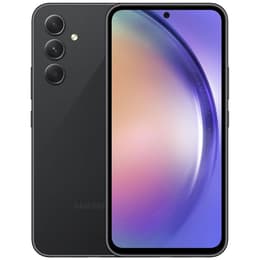
Galaxy A54
Galaxy A54
Starting at

Refurbished price:178.00

Versus €527.33 new

See options
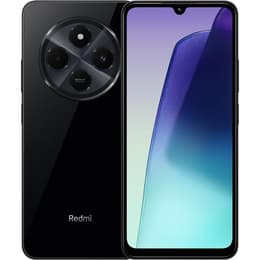
Xiaomi Redmi 14C
Xiaomi Redmi 14C
Starting at

Refurbished price:128.20

Versus €189.00 new

See options

Ratings

The Samsung Galaxy A54 and the Xiaomi Redmi 14C are both Android smartphones designed to offer a balanced user experience. The Galaxy A54, released in March 2023, is part of Samsung's popular mid-range A-series, known for its robust features and software support. The Redmi 14C, launched in August 2024, represents Xiaomi's offering in a similar segment, focusing on a large display and battery capacity. While both devices run on the Android operating system, they differ in their approach to display technology, build quality, and long-term software commitment.

Scores

Durability

The longevity of a smartphone is significantly influenced by its release timeline, build materials, and software support. These two devices present different profiles in these aspects.

  • Release Timeline and Software Support: The Samsung Galaxy A54, released in March 2023, benefits from Samsung's commitment to providing four major Android OS updates and five years of security updates, extending its software relevance well into the future. In contrast, the Xiaomi Redmi 14C, launched in August 2024, typically receives two major OS updates and four years of security patches, offering a shorter guaranteed software lifespan.
  • Build Quality and Durability: The Galaxy A54 features Gorilla Glass 5 on both its front and back, along with an IP67 rating for dust and water resistance, contributing to its physical resilience against everyday elements. The Redmi 14C utilizes a glass front and a plastic frame, with some variants offering a glass or eco-leather back, but it does not carry an official IP rating for water and dust protection.
  • Expected Practical Lifespan: Users prioritizing extended software support and enhanced physical durability for a longer practical lifespan may find the Galaxy A54 more aligned with their needs. The Redmi 14C, while newer, offers a more modest software update policy and less robust physical protection.

Year of Release

2023

2024

Compatible with latest Update

Yes

Yes

OS

Android

Android

Foldable

No

No

Performance

Performance is a key consideration for daily usage, affecting everything from app responsiveness to multitasking capabilities. Both devices are equipped to handle common tasks, but with differing levels of fluidity.

  • Processor Capabilities: The Galaxy A54 is powered by an octa-core processor that delivers solid performance for everyday tasks and is noticeably smoother than its predecessor. It handles demanding applications and multitasking with general ease, though it is not designed for flagship-level performance. The Redmi 14C features an octa-core processor suitable for daily activities like social media browsing and messaging. Users might experience minor stutters when running multiple applications simultaneously or engaging in more intensive tasks.
  • Storage and RAM: The Galaxy A54 is available with 6GB or 8GB of RAM and 128GB or 256GB of internal storage, expandable via microSD. The Redmi 14C offers configurations with 4GB, 6GB, or 8GB of RAM and 64GB, 128GB, or 256GB of internal storage, also expandable with a microSD card. The higher RAM options on both devices contribute to smoother multitasking.
  • Battery Behavior: The Galaxy A54's 5000 mAh battery typically lasts a full day of heavy use and can extend to two days with lighter usage. It supports 25W fast charging. The Redmi 14C comes with a slightly larger 5160 mAh battery, providing good endurance that can last a day and a half or even two days with casual usage. It supports 18W fast charging.

Memory (GB)

8 GB

4 GB

Screen quality

The display is the primary interface for most smartphone interactions, and the quality of the screen significantly impacts the user experience.

  • Display Technology and Resolution: The Samsung Galaxy A54 features a 6.4-inch Super AMOLED display with a Full HD+ resolution (1080 x 2340 pixels). This technology provides deep blacks and vibrant colors, enhancing the viewing experience. The Xiaomi Redmi 14C has a larger 6.88-inch IPS LCD panel with an HD+ resolution (720 x 1640 pixels). While offering more screen real estate, its lower resolution results in less sharpness compared to the A54.
  • Brightness and Refresh Rate: The Galaxy A54's display can reach a peak brightness of 1000 nits, making it clearly visible even in bright outdoor conditions. Both devices offer a 120Hz refresh rate, contributing to smoother scrolling and a more fluid visual experience. The Redmi 14C has a peak brightness of 600 nits, which may be less optimal for direct sunlight viewing.
  • Viewing Experience: Users prioritizing a more vibrant, sharper, and brighter display for media consumption and outdoor use will find the Galaxy A54's Super AMOLED screen advantageous. The Redmi 14C offers a larger screen, which can be beneficial for those who prefer more expansive viewing, despite the lower resolution and brightness.

Resolution

1080 x 2340

720 x 1640

Screen type

Super AMOLED

IPS LCD

Audiovisual

For many users, the camera system is a crucial factor, determining the quality of photos and videos captured in various scenarios.

  • Rear Camera System: The Galaxy A54 is equipped with a versatile triple-camera setup, including a 50 MP main sensor with Optical Image Stabilization (OIS), a 12 MP ultrawide lens, and a 5 MP macro lens. The OIS on the main sensor significantly improves low-light performance and video stability. The Redmi 14C features a 50 MP primary camera along with an auxiliary lens, which in practical terms often functions as a single main camera setup. Its low-light performance is generally considered less capable, with images appearing noisy and lacking detail in challenging conditions.
  • Front Camera and Video Recording: The Galaxy A54 has a 32 MP front-facing camera that captures sharp and crisp selfies. Both its front and rear cameras can record video at up to 4K resolution at 30 frames per second. The Redmi 14C comes with a 13 MP front camera. Its video recording capabilities are limited to 1080p at 30 frames per second for both front and rear cameras.
  • Overall Photography Experience: Users seeking better low-light photography, more stable video recording, and higher resolution video capabilities will likely prefer the Galaxy A54. The Redmi 14C's camera is usable for well-lit everyday shots but may not meet expectations for more demanding photographic situations.

Main camera

50 megapixels

50 megapixels

Front camera

32 megapixels

13 megapixels

Miscellaneous

Beyond the core specifications, several other features contribute to the overall usability and convenience of a smartphone.

  • Connectivity and Ports: The Samsung Galaxy A54 supports 5G connectivity, Wi-Fi 6, and Bluetooth 5.3, offering fast and modern wireless communication. It features a USB-C 2.0 port but lacks a 3.5mm headphone jack. The Xiaomi Redmi 14C supports 4G LTE, Wi-Fi, and Bluetooth 5.4. It also includes a USB Type-C port and, depending on the region, may offer NFC.
  • Biometric Security and Design: The Galaxy A54 incorporates an under-display optical fingerprint sensor for secure unlocking, alongside face recognition. Its design includes a glass front and back with a plastic frame, providing a premium feel. The Redmi 14C features a side-mounted fingerprint sensor integrated into the power button and supports face unlock. Its design typically involves a glass front with a plastic frame and a choice of glass or eco-leather for the back.
  • Dimensions and Handling: The Galaxy A54 measures 158.2 x 76.7 x 8.2 mm and weighs 202 grams. The Redmi 14C is slightly larger and heavier at 171.88 x 77.80 x 8.22 mm and 204-211 grams, which might impact one-handed use for some individuals.

Weight

202 g

207 g

Screen size (in)

6.4

6.88

Network

5G

4G

SIM card

Physical SIM + eSIM

Dual Physical SIM

Carrier compatibility

Unlocked

Unlocked

User feedback for the Samsung Galaxy A54 often highlights its vibrant Super AMOLED display, reliable battery life, and the quality of its main camera, particularly in low-light conditions, as strong points. Some users note that while its performance is solid for a mid-range device, it doesn't match flagship speeds, and the in-display fingerprint sensor can be slightly slower than some alternatives. The extensive software update policy is also a frequently praised aspect, contributing to a longer usable life for the device.

For the Xiaomi Redmi 14C, common praise points revolve around its large screen size and impressive battery endurance, with many users reporting it easily lasts over a day of use. Criticisms often point to its lower display resolution, less capable camera performance in challenging lighting, and the potential for occasional software stutters during heavy multitasking. The software experience, while feature-rich with HyperOS, can sometimes be perceived as less streamlined than other Android interfaces.

Users prioritizing a premium build, a superior display with higher resolution and brightness, and a more robust camera system with better low-light capabilities and OIS, along with a longer software support commitment, may prefer the Samsung Galaxy A54. This device is well-suited for individuals who value a balanced and refined smartphone experience with strong long-term support.

Conversely, users who prioritize a larger screen for media consumption, exceptional battery life, and are content with a capable but not class-leading camera and a more basic build, may find the Xiaomi Redmi 14C to be a suitable option. It caters to those who need a device for essential daily tasks and extended usage without frequent charging.

Both devices offer compelling features for different user needs. Exploring quality-assured refurbished options for either model can provide an eco-friendly alternative, allowing consumers to make informed and sustainable choices.


See all articles

Our recent comparisons