

Galaxy A14 Vs Galaxy S24 FE

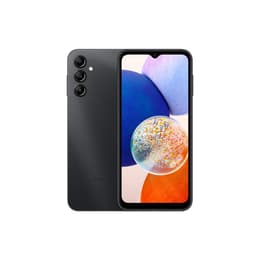
Galaxy A14
Galaxy A14
Starting at

Refurbished price:97.00

Versus €269.00 new

See options
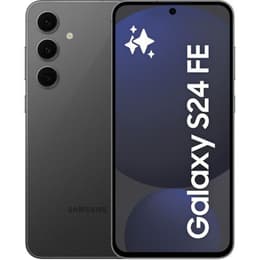
Galaxy S24 FE
Galaxy S24 FE
Starting at

Refurbished price:329.00

Versus €991.15 new

See options

Ratings

The Samsung Galaxy A14, released in early 2023, and the Samsung Galaxy S24 FE, launched in late 2024, represent different segments within Samsung's smartphone lineup. While both operate on the Android platform, the Galaxy S24 FE offers a more advanced feature set and extended software support compared to the more budget-oriented Galaxy A14. This comparison will explore their key differences to help users determine which device aligns best with their needs.

Scores

Durability

The expected lifespan of a smartphone is influenced by its build quality, software support, and component longevity. These two devices offer distinct propositions in terms of durability and long-term usability.

  • Release and Software Support: The Galaxy A14 was released in January 2023, while the Galaxy S24 FE followed in October 2024. The Galaxy A14 is slated to receive two major Android OS updates, bringing it up to Android 15, and four years of security updates, extending until 2027. In contrast, the Galaxy S24 FE launched with Android 14 and is promised seven years of both OS and security updates, ensuring support until 2031.
  • Build Materials and Protection: The Galaxy A14 features a plastic frame and back, with glass on the front. The Galaxy S24 FE, positioned as a more premium device, incorporates an aluminum frame and Gorilla Glass Victus+ on both the front and back for enhanced scratch and drop resistance. The S24 FE also carries an IP68 rating for water and dust resistance, a feature not present on the Galaxy A14.
  • Practical Lifespan: Users prioritizing extended software longevity and robust physical protection will find the Galaxy S24 FE better suited for long-term use. The Galaxy A14, while offering reasonable support for its segment, will reach its end-of-life for major software updates sooner.

Year of Release

2023

2024

OS

Android

Android

Foldable

No

No

Performance

Performance is a key differentiator, impacting how smoothly applications run and how responsive the overall user experience feels.

  • Processing Power: The Galaxy A14 is equipped with an entry-level processor (Exynos 850, MediaTek Helio G80/G99, or Dimensity 700 depending on the variant), designed for essential daily tasks and light usage. The Galaxy S24 FE, on the other hand, features a more powerful, flagship-tier processor (Exynos 2400e), which delivers significantly faster speeds for demanding applications, multitasking, and graphically intensive games.
  • Multitasking and Storage: The Galaxy A14 typically comes with 4GB or 6GB of RAM and 64GB or 128GB of internal storage, with microSD card expansion. The Galaxy S24 FE offers 8GB of RAM and 128GB or 256GB of storage, without microSD expansion, providing more headroom for multiple applications running simultaneously and larger file storage.
  • Battery Performance: Both devices house a substantial battery capacity, with the Galaxy A14 featuring a 5000 mAh battery and the Galaxy S24 FE a 4700 mAh battery. User reports for the A14 often highlight its long battery life, sometimes lasting up to two days with moderate use. The S24 FE also offers reliable battery life, with some reviews noting it can last over 15 hours of video streaming.

Memory (GB)

4 GB

8 GB

Screen quality

The display is a primary interface for user interaction, and differences in screen technology and specifications can significantly impact the viewing experience.

  • Display Technology and Resolution: The Galaxy A14 features a 6.6-inch PLS LCD display with FHD+ resolution (1080 x 2408 pixels). The Galaxy S24 FE boasts a larger 6.7-inch Dynamic AMOLED 2X display, also with FHD+ resolution (1080 x 2340 pixels). The AMOLED technology on the S24 FE provides deeper blacks, higher contrast, and more vibrant colors compared to the LCD panel on the A14.
  • Refresh Rate and Brightness: The Galaxy A14 5G offers a 90Hz refresh rate, providing a smoother scrolling experience than a standard 60Hz display. The Galaxy S24 FE elevates this with a 120Hz adaptive refresh rate, resulting in even more fluid animations and responsiveness. The S24 FE also achieves a significantly higher peak brightness of 1900 nits, improving outdoor visibility compared to the A14's typical LCD brightness.
  • Viewing Experience: Users who prioritize a more immersive and visually rich experience, especially for media consumption and gaming, will find the S24 FE's AMOLED display with its higher refresh rate and brightness to be a notable upgrade. The A14's display is functional for everyday use but offers a less premium visual experience.

Resolution

1080 x 2408

1080 x 2340

Screen type

PLS LCD

Dynamic AMOLED 2X

Audiovisual

Camera capabilities are often a deciding factor for many users, and these two devices offer different photographic strengths.

  • Rear Camera Systems: The Galaxy A14 features a triple rear camera setup, typically including a 50MP main sensor, a 5MP ultrawide (on some variants), and a 2MP macro lens. The Galaxy S24 FE also comes with a versatile triple camera system, comprising a 50MP main sensor with optical image stabilization (OIS), a 12MP ultrawide lens, and an 8MP telephoto lens with 3x optical zoom.
  • Photography Performance: The A14's 50MP main camera performs well in good lighting conditions, capturing decent detail and colors, but it generally struggles in low-light environments due to the lack of a dedicated night mode on some variants and smaller sensor size. The S24 FE's larger main sensor with OIS, combined with its more powerful processor, allows for better low-light performance and more consistent image quality across various conditions. The inclusion of a telephoto lens on the S24 FE also provides greater versatility for zoomed shots.
  • Video Recording and Front Camera: The Galaxy A14 supports video recording up to 1080p at 30fps, and has a 13MP front camera. The Galaxy S24 FE can record video up to 8K at 30fps and features a 10MP front camera, offering higher resolution and more advanced video capabilities.

Miscellaneous

Beyond the core specifications, several other features contribute to the overall user experience and device utility.

  • Connectivity and Ports: Both devices support 5G connectivity, Wi-Fi, and Bluetooth. The Galaxy A14 typically features Wi-Fi 5 and Bluetooth 5.1 or 5.2, along with a 3.5mm headphone jack and a USB-C port. The Galaxy S24 FE offers more advanced connectivity with Wi-Fi 6E and Bluetooth 5.3, and a USB-C port, but it omits the traditional headphone jack.
  • Biometrics and Design: The Galaxy A14 includes a side-mounted fingerprint sensor. The Galaxy S24 FE features an in-display optical fingerprint sensor and supports face recognition. In terms of design, the S24 FE has a more modern aesthetic with slimmer bezels and a slightly larger screen-to-body ratio compared to the A14.
  • Weight and Dimensions: The Galaxy A14 weighs around 201-202g and has dimensions of approximately 167.7 x 78 x 9.1 mm. The Galaxy S24 FE is slightly heavier at around 213g and measures approximately 162 x 77.3 x 8 mm, offering a more compact feel despite its larger screen due to reduced bezels.

Weight

201 g

213 g

Screen size (in)

6.6

6.7

Network

4G

5G

SIM card

Dual Physical SIM

Dual Physical SIM

Carrier compatibility

Unlocked

Unlocked

The Samsung Galaxy A14 and Galaxy S24 FE cater to different user expectations, with distinct strengths and considerations.

The Galaxy A14 is often praised by users for its exceptional battery life, often lasting well over a day on a single charge, and its inclusion of a 3.5mm headphone jack. Common criticisms include its less vibrant LCD display, modest performance for demanding tasks, and camera limitations in challenging lighting conditions.

Conversely, the Galaxy S24 FE receives positive feedback for its powerful performance, vibrant AMOLED display with a high refresh rate, and versatile camera system that includes a telephoto lens. Users also appreciate its extended software support and premium build quality. Some common concerns noted by users include its battery life, which while good, may not always match the endurance of some competitors, and the absence of a headphone jack or expandable storage.

Users prioritizing long battery life, a traditional headphone jack, and a more budget-friendly option for everyday communication and light media consumption may find the Galaxy A14 well-suited to their needs. For those who require a device with significantly more processing power for gaming and demanding applications, a superior display for media, a more capable camera system, and a longer period of software updates, the Galaxy S24 FE presents a compelling choice. Both devices offer reliable Android experiences, and considering a quality-assured refurbished option for either model can be an eco-friendly alternative to purchasing new.

See all articles

Our recent comparisons