

Galaxy A53 5G Vs iPhone 13 Pro

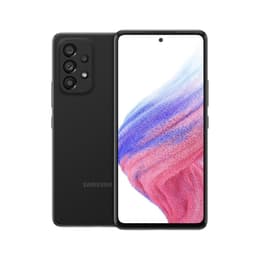
Galaxy A53 5G
Galaxy A53 5G
Starting at

Refurbished price:119.00

Versus €459.00 new

See options
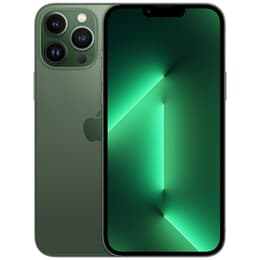
iPhone 13 Pro
iPhone 13 Pro
Starting at

Refurbished price:313.00

Versus €1,149.00 new

See options

Ratings

The Samsung Galaxy A53 5G, released in March 2022, and the iPhone 13 Pro, launched in September 2021, represent distinct approaches to smartphone design and functionality. The Galaxy A53 5G operates on the Android platform, offering a customizable user experience, while the iPhone 13 Pro runs on Apple's iOS, known for its integrated ecosystem. Key differentiators include their respective operating systems, display technologies, and camera systems, catering to different user preferences.

Scores

Durability

The longevity of a smartphone is influenced by its release timeline, software support, and physical durability. These two devices offer different expectations in these areas.

  • Release Timeline & OS Support: The Galaxy A53 5G, released in March 2022, typically receives four years of Android OS updates and five years of security updates. The iPhone 13 Pro, launched in September 2021, generally receives iOS updates for five to six years from its release. This means the iPhone 13 Pro may offer a slightly longer period of software support.
  • Physical Durability: The Galaxy A53 5G features a plastic back and a Gorilla Glass 5 front, with an IP67 rating for dust and water resistance, allowing submersion in up to 1 meter of freshwater for 30 minutes. The iPhone 13 Pro has a more robust build with a stainless steel frame, Ceramic Shield front, and a textured matte glass back, along with an IP68 rating, offering protection in up to 6 meters of water for 30 minutes.
  • Practical Lifespan: Both devices are built to last, but the iPhone 13 Pro's extended software support and more premium build materials may contribute to a slightly longer practical lifespan for users who prioritize maximum longevity and durability.

Year of Release

2022

2021

Compatible with latest Update

Yes

Yes

OS

Android

iOS

Foldable

No

No

Performance

Performance in daily use is a critical factor for smartphone users, encompassing everything from app responsiveness to battery endurance. The Galaxy A53 5G and iPhone 13 Pro offer different performance profiles.

  • Processor Capabilities: The Galaxy A53 5G is equipped with a processor that handles everyday tasks smoothly, suitable for general browsing, social media, and moderate gaming. The iPhone 13 Pro features a high-performance processor designed for demanding applications, intensive multitasking, and graphically rich games, providing a highly responsive user experience.
  • Battery Behavior: The Galaxy A53 5G houses a 5000 mAh battery, which typically provides extended usage, often lasting through a full day or more for many users. The iPhone 13 Pro, with a 3095 mAh battery, benefits from efficient software optimization and hardware integration, resulting in strong battery performance that can also last a full day for many users, with Apple claiming up to 22 hours of video playback.
  • Storage and Responsiveness: The Galaxy A53 5G offers storage options up to 256GB and includes a microSD card slot for expandable storage up to 1TB, providing flexibility for users with large media libraries. The iPhone 13 Pro offers internal storage options ranging from 128GB up to 1TB, without expandable storage. Both devices offer smooth system responsiveness for their respective operating systems, though the iPhone 13 Pro generally exhibits faster app loading and smoother transitions due to its more powerful processing capabilities.

Memory (GB)

4 GB

6 GB

Screen quality

The display is a primary interface for smartphone interaction, and both devices offer vibrant viewing experiences with distinct characteristics.

  • Display Technology and Clarity: The Galaxy A53 5G features a 6.5-inch Super AMOLED display with a resolution of 1080 x 2400 pixels, providing vibrant colors and deep blacks. The iPhone 13 Pro comes with a 6.1-inch Super Retina XDR OLED display, offering a higher resolution of 2532 x 1170 pixels, resulting in a sharper image with excellent clarity and color accuracy.
  • Brightness and Refresh Rate: The Galaxy A53 5G's display has a 120Hz refresh rate, contributing to smoother scrolling and a more fluid visual experience, with a typical brightness of 800 nits. The iPhone 13 Pro also features an adaptive 120Hz ProMotion display, which can dynamically adjust its refresh rate from 10Hz to 120Hz, optimizing for both smoothness and power efficiency. It offers a higher typical brightness of 1000 nits, peaking at 1200 nits for HDR content, making it highly visible in bright outdoor conditions.
  • Viewing Experience: The larger screen of the Galaxy A53 5G may appeal to users who prefer more screen real estate for media consumption and browsing. The iPhone 13 Pro's display, while slightly smaller, offers superior brightness and pixel density, enhancing the viewing experience for detailed content and outdoor use.

Resolution

1080 x 2400

1170 x 2532

Screen type

Super AMOLED

Super Retina XDR OLED

Audiovisual

Camera capabilities are a significant consideration for many users, and both the Galaxy A53 5G and iPhone 13 Pro provide advanced photographic tools with different strengths.

  • Rear Camera Systems: The Galaxy A53 5G features a quad-camera setup with a 64 MP main sensor with optical image stabilization (OIS), a 12 MP ultrawide lens, a 5 MP macro lens, and a 5 MP depth sensor. This configuration allows for versatile shooting, including detailed main shots and close-up macro photography. The iPhone 13 Pro boasts a triple 12 MP camera system, including a wide lens with a larger sensor and wider aperture for improved light gathering, an ultrawide lens with autofocus for macro capabilities, and a telephoto lens with 3x optical zoom.
  • Photography Performance: The Galaxy A53 5G's main camera captures detailed images in good lighting, and its night mode can produce brighter shots in medium-to-low light compared to some competitors. The iPhone 13 Pro excels in various lighting conditions, particularly in low light, due to its larger sensors and advanced image processing. Its telephoto lens provides optical zoom for distant subjects without significant loss of quality.
  • Video Recording and Audio: Both devices support 4K video recording at 30fps. The iPhone 13 Pro extends this to 4K at 60fps and introduces features like Cinematic mode for shallow depth-of-field video and ProRes video recording for professional-grade footage. Both offer stereo speakers for media consumption, with the iPhone 13 Pro generally providing a richer audio experience.

Main camera

64 megapixels

12 megapixels

Front camera

32 megapixels

12 megapixels

Miscellaneous

Beyond core features, several practical elements contribute to the overall user experience, from connectivity to physical design.

  • Connectivity and Ports: Both the Galaxy A53 5G and iPhone 13 Pro support 5G connectivity for faster mobile data speeds. The Galaxy A53 5G supports Wi-Fi 5 (802.11ac) and Bluetooth 5.1, featuring a USB-C port for charging and data transfer. The iPhone 13 Pro supports Wi-Fi 6 (802.11ax) and Bluetooth 5.0, utilizing Apple's proprietary Lightning port. Neither device includes a traditional 3.5mm headphone jack.
  • Biometric Security: The Galaxy A53 5G incorporates an in-display optical fingerprint sensor for secure unlocking. The iPhone 13 Pro uses Face ID, Apple's facial recognition system, for secure authentication.
  • Design and Handling: The Galaxy A53 5G measures 159.6 x 74.8 x 8.1 mm and weighs 189 grams, featuring a flat design with a plastic back. The iPhone 13 Pro is more compact at 146.7 x 71.5 x 7.65 mm and slightly heavier at 204 grams, due to its stainless steel frame and glass construction. The iPhone's smaller dimensions may offer easier one-handed use for some, while the Galaxy A53 5G provides a larger screen in a slightly lighter package.

Weight

189 g

203 g

Screen size (in)

6.5

6.1

Network

5G

5G

SIM card

Physical SIM

Physical SIM + eSIM

Carrier compatibility

Unlocked

Unlocked

Connector

USB-C

Lightning

Users often praise the Samsung Galaxy A53 5G for its vibrant display, long-lasting battery, and consistent software update policy for an Android device. Common criticisms sometimes point to its processor performance not matching higher-end devices, and some users note the plastic build feels less premium. The iPhone 13 Pro is frequently lauded for its powerful performance, exceptional camera system, and the smooth, adaptive ProMotion display. Some users occasionally mention the proprietary Lightning port as a minor inconvenience compared to the more universal USB-C standard.

Users prioritizing a large, vibrant display and extensive battery life within the Android ecosystem, with the flexibility of expandable storage, may find the Galaxy A53 5G well-suited to their needs. Its robust software support policy also makes it a compelling choice for those seeking a device with a good balance of features and longevity. Conversely, users who value top-tier performance for demanding applications, a highly advanced camera system with professional video capabilities, and a compact, premium build within the iOS ecosystem will likely lean towards the iPhone 13 Pro. Both devices offer reliable performance and features for their respective user bases, and considering a quality-assured refurbished option for either model can provide an eco-friendly alternative.


See all articles

Our recent comparisons