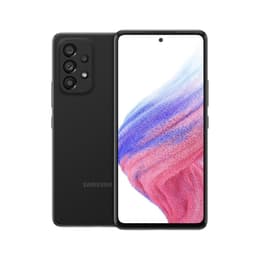



Galaxy A53 5G Vs Google Pixel 7 Pro

Galaxy A53 5G
Galaxy A53 5G
Starting at

Refurbished price:119.00

Versus €459.00 new

See options
Google Pixel 7 Pro
Google Pixel 7 Pro
Starting at

Refurbished price:201.00

Versus €640.98 new

See options

Ratings

The Samsung Galaxy A53 5G, released in March 2022, and the Google Pixel 7 Pro, launched in October 2022, are both Android smartphones offering distinct user experiences. While the Galaxy A53 5G focuses on delivering a balanced set of features for everyday use, the Pixel 7 Pro emphasizes advanced camera capabilities and a premium software experience. Both devices run on the Android operating system, with each manufacturer providing their own unique interface and feature sets.

Scores

Durability

When considering the long-term usability of these devices, their release timelines and software support policies are key factors. The Galaxy A53 5G was released in March 2022, while the Pixel 7 Pro followed in October 2022, giving the Pixel a slight advantage in terms of its newer launch date.

  • Software Updates: The Samsung Galaxy A53 5G is notable for its commitment to four major Android OS upgrades and five years of security updates, meaning it is expected to receive updates up to Android 16. The Google Pixel 7 Pro, on the other hand, is guaranteed five years of OS and security updates from its release, with expectations to receive Android 17 and potentially Android 18.
  • Repairability: The Galaxy A53 5G generally receives a favorable repairability score, often cited around 6.75 to 7.5 out of 10, indicating that components like the screen and battery are replaceable, though often requiring heat to loosen adhesives. The Pixel 7 Pro has a repairability score typically around 5.5 to 7.0 out of 10, with screen replacements being relatively straightforward, but battery removal can be challenging due to strong adhesive, and the charging port is soldered to the motherboard.
  • Practical Lifespan: Both devices offer substantial software longevity, with the Pixel 7 Pro having a slightly longer projected OS update window. The physical durability also plays a role, with the Pixel 7 Pro featuring Corning Gorilla Glass Victus for enhanced screen protection and an IP68 rating for dust and water resistance, compared to the Galaxy A53 5G's Gorilla Glass 5 and IP67 rating.

Year of Release

2022

2022

Compatible with latest Update

Yes

Yes

OS

Android

Android

Foldable

No

No

Performance

The performance of a smartphone impacts daily responsiveness, app handling, and multitasking capabilities. Both the Galaxy A53 5G and the Pixel 7 Pro are designed to handle common tasks, but they approach performance with different hardware philosophies.

  • System Responsiveness: The Google Pixel 7 Pro offers a highly responsive and fluid user experience, capable of handling demanding applications and extensive multitasking smoothly. Its internal architecture is optimized for efficient processing, contributing to quick app loading and seamless transitions. The Samsung Galaxy A53 5G provides adequate performance for most everyday tasks, though some users have noted occasional sluggishness or minor delays when navigating the interface or switching between apps.
  • Multitasking and Storage: The Pixel 7 Pro comes with a generous 12GB of RAM, facilitating robust multitasking and allowing many applications to remain active in the background without needing to reload. It offers storage options up to 512GB, but without expandable storage. The Galaxy A53 5G typically features 6GB or 8GB of RAM, which is sufficient for general use, but may show limitations with a high number of concurrently open applications. It offers 128GB or 256GB of internal storage, with the added flexibility of microSD card expansion.
  • Battery Behavior: The Galaxy A53 5G is equipped with a 5000 mAh battery, and users frequently report excellent battery life, often extending beyond a full day of heavy use. The Pixel 7 Pro also features a 5000 mAh battery, and while it generally provides sufficient power for a full day of typical use, some users have found its endurance to be average compared to other devices in its category, especially with its high-resolution, high-refresh-rate display.

Memory (GB)

4 GB

12 GB

Screen quality

The visual experience on a smartphone is largely defined by its display, and both devices offer vibrant screens with distinct characteristics.

  • Display Technology and Clarity: The Google Pixel 7 Pro features a 6.7-inch LTPO AMOLED display with a high resolution of 1440 x 3120 pixels, resulting in exceptionally sharp and detailed visuals. The Samsung Galaxy A53 5G sports a 6.5-inch Super AMOLED display with a resolution of 1080 x 2400 pixels, providing clear and colorful images suitable for most content consumption.
  • Brightness and Refresh Rate: The Pixel 7 Pro's display can reach a peak brightness of up to 1500 nits, ensuring good visibility even in bright outdoor conditions. It also boasts an adaptive refresh rate that can dynamically adjust between 10Hz and 120Hz, offering smooth scrolling and animations while conserving battery life. The Galaxy A53 5G offers a peak brightness of 800 nits, which is generally sufficient for indoor and moderate outdoor use, and features a consistent 120Hz refresh rate for fluid interactions.
  • Viewing Experience: The larger, higher-resolution display of the Pixel 7 Pro, combined with its adaptive refresh rate, offers a more immersive and detailed viewing experience, particularly for high-quality video content and detailed graphics. The Galaxy A53 5G's display provides a good overall viewing experience with vibrant colors and smooth motion, making it suitable for everyday media consumption and browsing.

Resolution

1080 x 2400

1440 x 3120

Screen type

Super AMOLED

LTPO AMOLED

Audiovisual

The camera systems on both the Galaxy A53 5G and the Pixel 7 Pro are central to their appeal, though they cater to slightly different photographic priorities.

  • Rear Camera System: The Google Pixel 7 Pro is equipped with a versatile triple-camera setup, including a 50MP main sensor, a 48MP telephoto lens with 5x optical zoom (and up to 30x Super Res Zoom), and a 12MP ultrawide lens with autofocus. This configuration allows for significant photographic flexibility, from wide-angle shots to distant subjects. The Samsung Galaxy A53 5G features a quad-camera system with a 64MP main sensor (with OIS), a 12MP ultrawide, a 5MP macro, and a 5MP depth sensor. This setup provides a range of options for different types of photography.
  • Photography Performance: The Pixel 7 Pro is widely praised for its class-leading still photography, capturing a high level of detail and accurate colors across various lighting conditions, including impressive low-light performance, largely due to its advanced computational photography. The Galaxy A53 5G delivers good image quality in daylight, with clear and colorful photos, and includes features like night mode. However, its low-light performance is considered average, and some daylight photos can appear less vibrant compared to higher-end devices.
  • Video Recording and Audio: The Pixel 7 Pro offers strong video recording capabilities, though some users have noted occasional issues with exposure shifts and choppy zoom transitions in videos. Its microphone quality is generally good for calls and recordings. The Galaxy A53 5G can record 4K video at 30 frames per second, but optical image stabilization is not active at this resolution, which can affect video smoothness. Both devices offer stereo speakers for media consumption, with the Pixel 7 Pro's speakers sometimes described as lacking bass.
  • Front Camera: The Pixel 7 Pro has a 10.8MP front camera, which performs well in various lighting conditions. The Galaxy A53 5G features a higher resolution 32MP front camera, capable of sharp selfies.

Main camera

64 megapixels

50 megapixels

Front camera

32 megapixels

10.8 megapixels

Miscellaneous

Beyond core performance and camera, several practical elements contribute to the overall user experience and daily convenience of these smartphones.

  • Connectivity: Both devices support 5G connectivity for fast mobile data. The Google Pixel 7 Pro includes Wi-Fi 6E, offering access to a less congested 6GHz band for potentially faster and more stable wireless connections, alongside Bluetooth 5.2. The Samsung Galaxy A53 5G supports Wi-Fi 5 (802.11ac) and Bluetooth 5.1.
  • Ports and Sensors: Both smartphones utilize a USB-C port for charging and data transfer, with the Pixel 7 Pro featuring USB-C 3.2 Gen 2 for potentially faster data speeds compared to the Galaxy A53 5G's USB-C 2.0. Neither device includes a traditional 3.5mm headphone jack. For security, both offer under-display optical fingerprint sensors. The Pixel 7 Pro also includes face recognition for unlocking.
  • Build Materials and Handling: The Pixel 7 Pro has a more premium build with a glass back (Corning Gorilla Glass Victus) and an aluminum frame, contributing to its weight of 212 grams and dimensions of 162.9 x 76.6 x 8.9 mm. It carries an IP68 rating for dust and water resistance. The Galaxy A53 5G features a plastic back and a lighter build at 189 grams, with dimensions of 159.6 x 74.8 x 8.1 mm. It has an IP67 rating for dust and water resistance.

Weight

189 g

212 g

Screen size (in)

6.5

6.7

Network

5G

5G

SIM card

Physical SIM

Physical SIM + eSIM

Carrier compatibility

Unlocked

Unlocked

User feedback for the Google Pixel 7 Pro frequently highlights its exceptional camera system for still photography, often described as class-leading, and its refined software experience with smart AI features. Common criticisms include video recording quality, which some users find disappointing with noticeable exposure shifts, and battery life that, while sufficient for a day, may not be as outstanding as some competitors. The build quality, while premium, has been noted by some as feeling less rigid than other flagship devices.

The Samsung Galaxy A53 5G is often praised for its vibrant Super AMOLED display, long-lasting battery life that can extend beyond a day, and a versatile camera setup that performs well in good lighting conditions. However, a recurring concern among users is its performance, which can sometimes feel sluggish during daily use or when multitasking heavily. Its low-light camera performance is also considered average.

Users prioritizing a top-tier still photography experience, a highly responsive software interface, and a premium build with advanced display technology may find the Google Pixel 7 Pro well-suited to their needs. Its longer software update commitment also appeals to those seeking extended device longevity. Conversely, users who prioritize exceptional battery life, a vibrant display for everyday media, expandable storage, and a capable camera for general use might lean towards the Samsung Galaxy A53 5G. Both devices offer compelling features, and for those looking for an eco-friendly and quality-assured option, considering refurbished models of either device can provide a sustainable choice.


See all articles

Our recent comparisons