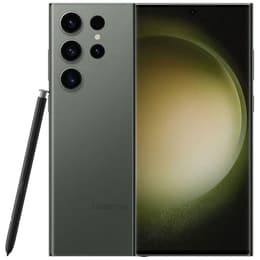
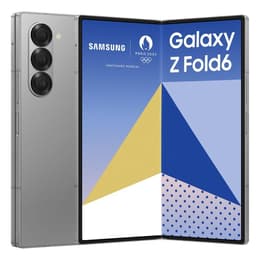


Galaxy S23 Ultra Vs Galaxy Z Fold6

Galaxy S23 Ultra
Galaxy S23 Ultra
Starting at

Refurbished price:430.00

Versus €1,409.00 new

See options
Galaxy Z Fold6
Galaxy Z Fold6
Starting at

Refurbished price:750.00

Versus €1,973.53 new

See options

Ratings

The Samsung Galaxy S23 Ultra, released in February 2023, is a traditional high-end smartphone known for its expansive display and advanced camera system. In contrast, the Samsung Galaxy Z Fold6, launched in July 2024, offers a unique foldable design, transforming from a compact smartphone into a larger tablet-like experience. These devices cater to different user preferences, with the S23 Ultra prioritizing a conventional premium experience and the Z Fold6 focusing on versatility and a larger screen real estate. Both run on the Android operating system with Samsung's One UI.

Scores

Durability

When considering the practical lifespan of these devices, several factors come into play, including their release timelines, software support, and physical resilience.

  • Release Timeline and Age: The Galaxy S23 Ultra was released in February 2023, making it an earlier model compared to the Galaxy Z Fold6, which became available in July 2024. This difference in release date means the Z Fold6 benefits from a more recent hardware foundation.
  • OS Support Duration: Samsung typically provides substantial software support for its flagship devices. The Galaxy S23 Ultra is expected to receive four years of Android updates and five years of security patches. The Galaxy Z Fold6, being a newer device, comes with a promise of seven years of both OS upgrades and security updates, offering a significantly longer period of software longevity.
  • Repairability and Durability: The Galaxy S23 Ultra features Gorilla Glass Victus 2 on both its front and back, along with an IP68 rating for dust and water resistance, contributing to its overall robustness. Its design allows for easier battery replacement due to internal pull tabs. The Galaxy Z Fold6, while featuring Gorilla Glass Victus 3 on its cover screen and a refined hinge for improved longevity, incorporates a delicate Ultra-Thin Glass for its main foldable display. The complex nature of its foldable screen and adhesive-heavy construction generally results in a lower repairability score compared to traditional smartphones.

Year of Release

2023

2024

Compatible with latest Update

Yes

Yes

OS

Android

Android

Foldable

No

Yes

Performance

The performance of both devices is designed to handle demanding tasks, though they are powered by different generations of processors, influencing their overall responsiveness and efficiency.

  • Processor Capabilities: The Galaxy S23 Ultra is equipped with a powerful processor from its generation, optimized for Samsung devices, which allows it to handle demanding applications and multitasking smoothly. The Galaxy Z Fold6, being a newer model, features a more recent generation processor, also customized for Samsung, providing enhanced performance for intensive tasks like gaming and complex computations.
  • Multitasking and Responsiveness: Both phones offer a highly responsive user experience. The Galaxy S23 Ultra, with its ample RAM options, ensures efficient multitasking and quick app loading. The Galaxy Z Fold6, typically featuring 12GB of RAM, is particularly well-suited for extensive multitasking, especially when utilizing its larger internal display for multiple applications simultaneously.
  • Battery Behavior: The Galaxy S23 Ultra houses a 5000 mAh battery, which users frequently report as lasting a full day, often extending to 1.5 days with average use. The Galaxy Z Fold6 has a 4400 mAh battery. While its battery life is considered good for a foldable device and can last a full day for many users, it may require more frequent charging under heavy use, particularly when the larger internal screen is utilized extensively.

Memory (GB)

8 GB

12 GB

Screen quality

The display experience is a primary differentiator between these two devices, with one offering a large, conventional screen and the other providing a versatile, expansive foldable display.

  • Display Technology and Size: The Galaxy S23 Ultra features a single 6.8-inch Dynamic AMOLED 2X display, providing a consistently vibrant and sharp viewing experience. The Galaxy Z Fold6 offers a dual-screen setup: a 6.3-inch Dynamic AMOLED 2X cover display for smartphone use and a 7.6-inch Dynamic AMOLED 2X main foldable display that unfolds into a tablet-like screen.
  • Resolution and Clarity: Both devices offer high-resolution displays, ensuring clear and detailed visuals. The S23 Ultra's display has a resolution of 3088x1440 pixels, resulting in excellent clarity. The Z Fold6's main display has a resolution of 1856x2160 pixels, providing a sharp image across its larger surface.
  • Brightness and Refresh Rate: Both phones feature adaptive refresh rates up to 120Hz for smooth scrolling and responsiveness, and can reach high peak brightness levels for good visibility in various lighting conditions. The S23 Ultra can achieve up to 1750 nits peak brightness. The Z Fold6's displays can reach up to 2600 nits peak brightness, offering enhanced visibility, especially outdoors.

Resolution

1440 x 3088

1856 x 2160

Audiovisual

Both the Galaxy S23 Ultra and the Galaxy Z Fold6 offer advanced camera systems, though their configurations and strengths cater to slightly different photographic needs.

  • Rear Camera Systems: The Galaxy S23 Ultra boasts a quad-camera setup, highlighted by a 200MP main sensor, a 12MP ultrawide lens, and two 10MP telephoto lenses offering 3x and 10x optical zoom capabilities. This configuration is praised for its exceptional detail, versatile zoom, and strong low-light performance. The Galaxy Z Fold6 features a triple-camera system with a 50MP wide-angle main sensor, a 12MP ultrawide lens, and a 10MP telephoto lens with 3x optical zoom. Its cameras are considered solid performers in various conditions, with improved low-light capabilities for the ultrawide lens.
  • Front-Facing Cameras and Video: The S23 Ultra includes a 12MP front camera. The Z Fold6 has a 10MP camera on its cover display and a 4MP under-display camera on its main screen, which is primarily suited for video calls. A notable advantage of the Z Fold6 is the ability to use its higher-quality rear cameras for selfies, utilizing the cover screen as a viewfinder. Both devices are capable of high-quality video recording, including 8K resolution.
  • Audio Experience: Both smartphones provide a robust audio experience for media consumption and calls. They feature stereo speakers that deliver clear and loud output, enhancing the immersive experience for videos and music. Microphone quality on both is designed for clear voice capture during calls and recordings.

Front camera

12 megapixels

4 megapixels

Miscellaneous

Beyond core performance, several practical elements contribute to the overall user experience, from connectivity to physical design.

  • Connectivity and Ports: Both the Galaxy S23 Ultra and the Galaxy Z Fold6 support 5G connectivity, ensuring fast mobile data speeds. They also feature modern Wi-Fi standards and Bluetooth for wireless connections. The S23 Ultra uses a USB-C port for charging and data transfer. The Z Fold6 also uses a USB-C port.
  • Sensors and Biometrics: Both devices incorporate advanced biometric security features. The S23 Ultra includes an ultrasonic fingerprint sensor and facial recognition. The Z Fold6 also offers a fingerprint reader and face recognition, along with other essential sensors like accelerometers and gyroscopes.
  • Weight, Dimensions, and Build Materials: The Galaxy S23 Ultra is a substantial device, weighing 233 grams, with dimensions that reflect its large, traditional smartphone form factor. It features an aluminum frame and Gorilla Glass Victus 2 on both front and back. The Galaxy Z Fold6, despite its foldable nature, has been refined to be slightly lighter and thinner than its predecessors, weighing 239 grams. It uses an aluminum frame, Gorilla Glass Victus 3 on the cover screen, and Ultra-Thin Glass for the main display. The Z Fold6 also supports S Pen input, though it does not have a built-in slot for the stylus.

Weight

233 g

239 g

Screen size (in)

6.8

7.6

Network

5G

5G

SIM card

Dual Physical SIM + eSIM

Physical SIM + eSIM

Carrier compatibility

Unlocked

Unlocked

Connector

USB-C

USB-C

The Samsung Galaxy S23 Ultra is frequently praised for its exceptional camera capabilities, particularly its zoom performance and high-resolution main sensor, as well as its long-lasting battery life. Users appreciate its consistent performance and the integrated S Pen for productivity. Some common criticisms include its large size, which might be challenging for users with smaller hands, and its incremental upgrades over previous models.

The Samsung Galaxy Z Fold6 is lauded for its innovative foldable design, offering a versatile large screen for multitasking and media consumption. Its improved cover screen usability and the ability to use the main cameras for high-quality selfies are also frequently highlighted. However, users sometimes express concerns about the durability of the foldable screen and the camera system, which, while capable, may not match the advanced zoom features of traditional flagship phones.

Users prioritizing a top-tier, conventional smartphone experience with an emphasis on camera performance, battery endurance, and S Pen integration will find the Galaxy S23 Ultra well-suited to their needs. It's an excellent choice for professionals and power users who value a robust, single-screen device. Conversely, those who seek a highly versatile device for enhanced productivity, immersive media viewing, and a unique form factor will lean towards the Galaxy Z Fold6. It caters to users who can benefit from a larger, tablet-like display on demand, such as travelers or those who frequently multitask. Both devices represent premium options in the Android ecosystem, and considering a quality-assured refurbished option can be a smart, eco-friendly alternative for either model.


See all articles

Our recent comparisons






