

Galaxy A50 Vs Galaxy S21 Ultra 5G

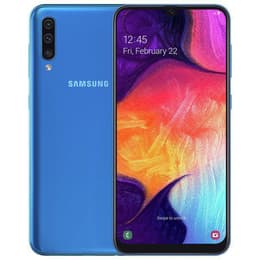
Galaxy A50
Galaxy A50
Starting at

Refurbished price:107.00

Versus €349.00 new

See options
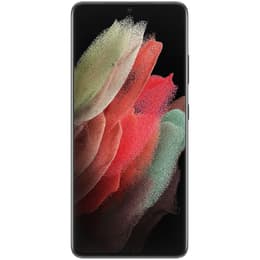
Galaxy S21 Ultra 5G
Galaxy S21 Ultra 5G
Starting at

Refurbished price:229.00

Versus €1,297.00 new

See options

Ratings

The Samsung Galaxy A50, released in early 2019, and the Samsung Galaxy S21 Ultra 5G, launched in early 2021, represent different segments of Samsung's smartphone offerings. While both devices operate on the Android platform with Samsung's One UI, the Galaxy S21 Ultra 5G stands as a premium flagship with advanced features, whereas the Galaxy A50 was positioned as a capable mid-range option. The primary differentiators lie in their overall performance capabilities, display technology, and sophisticated camera systems.

Scores

Durability

The expected practical lifespan of a smartphone is influenced by its release timeline, software support, and physical durability.

  • Release Timeline: The Galaxy A50 was released in February 2019, making it an older device compared to the Galaxy S21 Ultra 5G, which launched in January 2021. This age difference directly impacts their remaining software support and component availability.
  • Software Longevity: The Galaxy A50 launched with Android 9 Pie and received major OS updates up to Android 11. Official software support for the A50 concluded around April 2023, meaning it no longer receives security updates. In contrast, the Galaxy S21 Ultra 5G launched with Android 11 and is expected to receive updates up to Android 15, offering a longer period of official software and security support.
  • Repairability: The Galaxy A50 generally has a moderate repairability score, with some sources indicating around 7.0 out of 10, noting that components like the battery and screen are relatively accessible despite the use of adhesive. The Galaxy S21 Ultra 5G, however, received a lower repairability score of 3 out of 10 from iFixit, largely due to extensive use of adhesive for the battery, display, and rear panel, making repairs more challenging.

Year of Release

2019

2021

Compatible with latest Update

No

Yes

OS

Android

Android

Foldable

No

No

Performance

Performance in daily use, from app handling to multitasking, varies significantly between these two devices, reflecting their different market positions.

  • Storage Options: The Galaxy A50 offers internal storage options of 64GB or 128GB, with the flexibility of expandable storage via a microSD card up to 512GB. The Galaxy S21 Ultra 5G provides larger internal storage configurations, including 128GB, 256GB, and 512GB, but it does not support expandable storage.
  • Battery Behavior: The Galaxy A50 is equipped with a 4000 mAh battery, which users often report as sufficient for a full day of moderate to heavy use, supported by 15W fast charging. The Galaxy S21 Ultra 5G features a larger 5000 mAh battery, typically providing ample power for a full day, even with its more demanding display and processor. It supports 25W fast charging, wireless charging, and reverse wireless charging.
  • System Responsiveness: The Galaxy A50's processor handles everyday tasks and most games adequately, though some users noted that heavy multitasking or graphically intensive applications could lead to occasional slowdowns. The Galaxy S21 Ultra 5G, with its advanced processor, delivers a highly responsive experience, smoothly managing demanding applications, complex multitasking, and high-fidelity gaming without noticeable lag.

Memory (GB)

4 GB

12 GB

Screen quality

The visual experience on both devices is shaped by their display technology, resolution, and refresh rate capabilities.

  • Display Technology: The Galaxy A50 features a 6.4-inch Super AMOLED display, known for its vibrant colors and deep blacks. The Galaxy S21 Ultra 5G boasts a 6.8-inch Dynamic AMOLED 2X display, which offers enhanced color accuracy, contrast, and overall visual quality.
  • Resolution and Clarity: The Galaxy A50 provides a Full HD+ resolution of 1080x2340 pixels, resulting in a pixel density of approximately 403 pixels per inch (PPI), offering clear visuals for most content. The Galaxy S21 Ultra 5G features a Quad HD+ resolution of 3200x1440 pixels, with a higher pixel density of 515 PPI, delivering exceptionally sharp and detailed images.
  • Brightness and Refresh Rate: The Galaxy A50 has a standard 60Hz refresh rate, providing a smooth but conventional scrolling experience. Its brightness levels are generally good for indoor and outdoor use. The Galaxy S21 Ultra 5G offers an adaptive refresh rate that can dynamically adjust from 10Hz to 120Hz, ensuring very fluid motion while conserving battery life. It also achieves a peak brightness of 1500 nits, making it highly visible even in bright outdoor conditions.

Resolution

1080 x 2340

1440 x 3200

Screen type

Super AMOLED

Dynamic AMOLED 2X

Audiovisual

The camera systems on these two smartphones cater to different photography needs, with distinct capabilities for capturing images and videos.

  • Rear Camera System: The Galaxy A50 features a triple rear camera setup, including a 25MP main sensor, an 8MP ultra-wide lens, and a 5MP depth sensor. It performs well in good lighting conditions, capturing versatile shots. The Galaxy S21 Ultra 5G is equipped with a quad-camera system, featuring a 108MP main sensor, a 12MP ultra-wide lens, and two 10MP telephoto lenses offering 3x and 10x optical zoom, alongside a 100x Space Zoom feature. This setup provides extensive photographic versatility and detail.
  • Low-Light and Everyday Photography: While the Galaxy A50 captures good images in well-lit environments, its low-light performance is noted to be less capable, often resulting in increased noise and softer details. The Galaxy S21 Ultra 5G excels in various lighting conditions, including low light, thanks to its larger sensor and advanced processing, producing clearer and more detailed images.
  • Video Recording Quality: The Galaxy A50 supports video recording up to 1080p at 30 frames per second (fps). The Galaxy S21 Ultra 5G offers significantly more advanced video capabilities, including 8K recording at 24fps and 4K recording at 60fps across multiple lenses, along with features like Director's View for multi-camera recording.

Main camera

25 megapixels

108 megapixels

Front camera

25 megapixels

40 megapixels

Miscellaneous

Beyond core performance and display, several practical elements contribute to the overall user experience of these smartphones.

  • Connectivity Options: The Galaxy A50 supports 4G LTE networks, Wi-Fi, and Bluetooth 5.0. The Galaxy S21 Ultra 5G offers more advanced connectivity, including 5G capabilities, Wi-Fi 6E, and Bluetooth 5.2, providing faster data speeds and more robust wireless connections.
  • Port Types: The Galaxy A50 includes a USB-C port for charging and data transfer, as well as a 3.5mm headphone jack. The Galaxy S21 Ultra 5G features a USB-C 3.2 port but omits the traditional 3.5mm headphone jack.
  • Sensors and Biometrics: Both devices incorporate an in-display fingerprint sensor for secure unlocking. The Galaxy A50 also includes an accelerometer, gyroscope, proximity sensor, and compass. The Galaxy S21 Ultra 5G features a larger and more responsive in-display fingerprint sensor, along with a suite of other sensors and S-Pen support, though the S-Pen is sold separately.
  • Build Materials and Handling: The Galaxy A50 has a plastic back and frame with a Gorilla Glass 3 front, weighing 166g. The Galaxy S21 Ultra 5G features a more premium construction with Gorilla Glass Victus on both the front and back, encased in an aluminum frame, and weighs between 227-229g. It also carries an IP68 rating for dust and water resistance.

Weight

166 g

227 g

Screen size (in)

6.4

6.8

Network

4G

5G

SIM card

Dual Physical SIM

Physical SIM + eSIM

Carrier compatibility

Unlocked

Unlocked

Connector

USB-C + Jack 3.5mm

USB-C

The Samsung Galaxy A50 and Galaxy S21 Ultra 5G cater to different user expectations and priorities, reflecting their respective positions in the smartphone market.

Users have often praised the Galaxy A50 for its vibrant Super AMOLED display, reliable battery life for daily use, and versatile camera system in good lighting conditions. Common criticisms included its less impressive low-light camera performance, occasional software bugs, and modest speaker quality. The Galaxy S21 Ultra 5G, on the other hand, has been widely lauded for its exceptional Dynamic AMOLED 2X display with adaptive refresh rates, its highly capable and versatile camera system (especially its zoom capabilities), powerful performance, and robust battery life. Points of concern for users often revolved around its challenging repairability, the absence of a headphone jack, and the separate purchase of the S-Pen.

Users prioritizing a device for everyday communication, social media, and casual photography with a focus on display quality and battery longevity may find the Galaxy A50 well-suited to their needs. Its expandable storage is also a notable advantage for those who keep a large media library. Conversely, users who demand top-tier performance for demanding applications, professional-grade photography and videography, a highly advanced display, and future-proof connectivity like 5G will lean towards the Galaxy S21 Ultra 5G. Its premium build and water resistance also appeal to those seeking enhanced durability.

For those considering either device, exploring quality-assured refurbished options can provide an eco-friendly alternative, extending the life cycle of these smartphones and offering a sustainable choice for consumers.


See all articles

Our recent comparisons