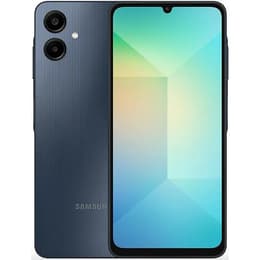
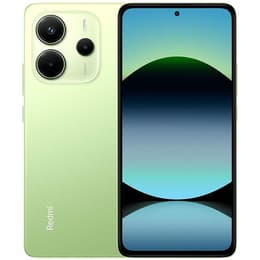


Galaxy A06 Vs Xiaomi Redmi Note 14 4G

Galaxy A06
Galaxy A06
Starting at

Refurbished price:108.00

Versus €186.96 new

See options
Xiaomi Redmi Note 14 4G
Starting at

Refurbished price:162.00

Versus €229.99 new

See options

Ratings

The Samsung Galaxy A06 and the Xiaomi Redmi Note 14 4G are both smartphones released in late 2024 and early 2025, respectively, targeting users seeking practical functionality. While both operate on Android 14, the Redmi Note 14 4G generally offers a more advanced display and camera system, whereas the Galaxy A06 focuses on core smartphone features with a robust battery.

Scores

Durability

When considering the long-term usability of these devices, their release timelines and software support are key factors.

  • Release and Software Support: The Samsung Galaxy A06, released in August 2024, is expected to receive two major Android OS upgrades and four years of security updates, extending its support until approximately 2028. The Xiaomi Redmi Note 14 4G, launched in January 2025, also runs on Android 14 with HyperOS and is likely to follow a similar or slightly longer update schedule due to its later release.
  • Practical Lifespan: Both devices are built with materials common in their segment, featuring plastic frames and backs. The Redmi Note 14 4G includes Corning Gorilla Glass 5 for display protection, which may offer a slight edge in scratch resistance compared to the Galaxy A06's standard glass.
  • Repairability: Information on specific repairability scores is not widely available for these newer models. However, as entry-level smartphones, both are generally designed for straightforward component replacement, contributing to their potential for an extended practical lifespan, especially when considering quality-assured refurbished options.

Year of Release

2024

2025

OS

Android

Android

Foldable

No

No

Performance

The performance of a smartphone is crucial for daily tasks, from app usage to multitasking.

  • Processing Power: The Samsung Galaxy A06 is equipped with a processor that handles everyday applications and light multitasking efficiently. The Xiaomi Redmi Note 14 4G features a more capable processor, which provides a smoother experience for more demanding applications and gaming.
  • Multitasking and Storage: The Galaxy A06 typically comes with 4GB or 6GB of RAM, suitable for standard app usage. The Redmi Note 14 4G offers 6GB or 8GB of RAM, allowing for more fluid multitasking and keeping more applications open in the background without slowdowns. Both devices offer 64GB or 128GB internal storage options, with the Redmi Note 14 4G also providing a 256GB variant, and both support expandable storage via microSD cards.
  • Battery Endurance: Both smartphones are equipped with large batteries, with the Galaxy A06 featuring a 5000mAh capacity and the Redmi Note 14 4G having a 5500mAh battery. This translates to extended usage times for both, though the Redmi Note 14 4G's larger capacity, combined with its more efficient display technology, may offer slightly longer endurance for heavy users. The Redmi Note 14 4G also supports faster charging at 33W compared to the Galaxy A06's 25W.

Memory (GB)

4 GB

6 GB

Screen quality

The display is a primary interface for any smartphone, influencing the visual experience.

  • Display Technology and Resolution: The Samsung Galaxy A06 features a 6.7-inch PLS LCD display with an HD+ resolution (720x1600 pixels). In contrast, the Xiaomi Redmi Note 14 4G boasts a 6.67-inch AMOLED display with a Full HD+ resolution (1080x2400 pixels), offering significantly sharper images and more vibrant colors due to its panel technology.
  • Refresh Rate and Brightness: The Galaxy A06 has a standard 60Hz refresh rate, while the Redmi Note 14 4G provides a smoother visual experience with a 120Hz refresh rate, which is particularly noticeable during scrolling and gaming. The Redmi Note 14 4G also achieves a higher peak brightness of 2100 nits, making it more comfortable to view outdoors in bright conditions compared to the Galaxy A06.
  • Screen Protection: The Redmi Note 14 4G includes Corning Gorilla Glass 5 for enhanced durability against scratches and minor impacts, a feature not explicitly highlighted for the Galaxy A06.

Resolution

720 x 1600

1080x2400

Audiovisual

For many users, camera capabilities are a significant factor in smartphone choice.

  • Rear Camera System: The Samsung Galaxy A06 features a dual-camera setup with a 50-megapixel main sensor and a 2-megapixel secondary sensor. The Xiaomi Redmi Note 14 4G offers a more versatile triple-camera system, typically including a 108-megapixel main sensor, an 8-megapixel ultrawide lens, and a 2-megapixel macro or depth sensor. The higher megapixel count and additional lenses on the Redmi Note 14 4G generally allow for more detailed photos and greater flexibility in shooting scenarios, including better wide-angle shots.
  • Front Camera Performance: For selfies and video calls, the Galaxy A06 comes with an 8-megapixel front camera. The Redmi Note 14 4G steps up with a 20-megapixel front camera, which can capture more detail and potentially perform better in varying lighting conditions.
  • Video Recording and Audio: Both devices are capable of recording video, with the Redmi Note 14 4G's more advanced sensor potentially offering better detail. The Redmi Note 14 4G also features stereo speakers, providing a more immersive audio experience for media consumption compared to the Galaxy A06's single speaker.

Miscellaneous

Beyond core features, several practical elements contribute to the overall user experience.

  • Connectivity and Ports: Both smartphones support 4G LTE connectivity, Wi-Fi, and Bluetooth for wireless connections. The Galaxy A06 uses Bluetooth v5.3, while the Redmi Note 14 4G also offers modern Bluetooth standards. Both feature a USB Type-C port for charging and data transfer. The Redmi Note 14 4G additionally includes an infrared (IR) blaster, allowing it to function as a universal remote control, and some variants may offer NFC for contactless payments.
  • Biometric Security: The Samsung Galaxy A06 includes a side-mounted fingerprint sensor for secure unlocking. The Xiaomi Redmi Note 14 4G integrates an in-display fingerprint sensor, offering a more seamless and modern unlocking experience, alongside face unlock capabilities.
  • Design and Handling: The Galaxy A06 measures 167.3 x 77.3 x 8.0mm and weighs 196g. The Redmi Note 14 4G is slightly more compact at 163.3 x 76.6 x 8.2mm and weighs 196.5g. Both devices have similar dimensions and weight, making them comparable in terms of handling. The Redmi Note 14 4G also boasts an IP64 rating for dust and splash resistance, adding a layer of protection not specified for the Galaxy A06.

Weight

189 g

196 g

Screen size (in)

6.7

6.67

Network

4G

4G

SIM card

Dual Physical SIM

Physical SIM + eSIM

Carrier compatibility

Unlocked

Unlocked

User feedback for the Samsung Galaxy A06 often highlights its reliable battery life and straightforward user interface as strong points, making it a dependable choice for essential smartphone functions. Some users note that its display resolution and camera performance are adequate for casual use but may not satisfy those seeking higher visual fidelity or advanced photography features.

The Xiaomi Redmi Note 14 4G generally receives praise for its vibrant AMOLED display with a high refresh rate, offering a more premium viewing experience. Its camera system, particularly the main sensor, is often cited for producing detailed images, and its faster charging is a convenient feature for many. Criticisms, if any, tend to be minor and often relate to software preferences or the presence of pre-installed applications, which is common across many Android devices.

Users prioritizing a long-lasting battery and a simple, intuitive Android experience for daily communication and light media consumption may find the Samsung Galaxy A06 well-suited to their needs. Conversely, users who value a superior display for media consumption, smoother scrolling, more capable photography, and faster charging will likely lean towards the Xiaomi Redmi Note 14 4G. Both devices offer solid performance within their segment, and choosing between them often comes down to whether display and camera advancements or core reliability are the primary decision factors. For those looking for a more sustainable choice, both models are available as quality-assured refurbished options, providing an eco-friendly alternative to purchasing new.

See all articles

Our recent comparisons