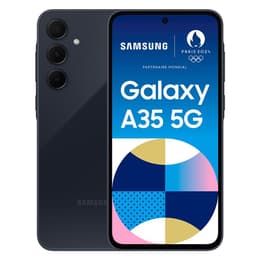


Galaxy A35 Vs Google Pixel 8a

Galaxy A35
Galaxy A35
Starting at

Refurbished price:206.00

Versus €431.43 new

See options
Google Pixel 8a
Google Pixel 8a
Starting at

Refurbished price:232.00

Versus €549.00 new

See options

Ratings

The Samsung Galaxy A35 and the Google Pixel 8A are both Android smartphones released in 2024, targeting users seeking a balanced experience without the premium cost of flagship devices. The Galaxy A35, launched in March 2024, runs on Samsung's One UI atop Android, while the Pixel 8A, released in May 2024, offers a pure Android experience. These devices primarily differentiate themselves through their processing power, camera philosophies, and software support timelines.

Scores

Durability

When considering the longevity of a smartphone, factors such as software support, physical durability, and ease of repair play a significant role. Both the Galaxy A35 and Pixel 8A offer robust software commitments and physical resilience, though with some distinctions.

  • Software Support: The Google Pixel 8A stands out with an impressive commitment to seven years of OS, security, and feature updates from its release date. The Samsung Galaxy A35 is expected to receive four major Android OS updates and five years of security patches. [3, 19, 22, 32, 41, 42, 44]
  • Physical Durability: The Galaxy A35 features Gorilla Glass Victus for screen protection, offering enhanced resistance against scratches and drops. The Pixel 8A uses Gorilla Glass 3, which is an older generation of protective glass. Both devices carry an IP67 rating for dust and water resistance, meaning they can withstand submersion in up to 1 meter of fresh water for 30 minutes. [4, 15, 37]
  • Repairability: The Samsung Galaxy A35 has a repairability score of 8.4 out of 10, indicating that many components are accessible and replaceable, though some adhesive use might require effort for screen and battery replacements. [2, 5, 6, 10] The Google Pixel 8A has a repairability score of 8.6 out of 10 in some assessments, but other analyses highlight challenges such as strong adhesive for the back cover and battery, and a charging port soldered to the main board, which can complicate repairs. [9, 29]

Year of Release

2024

2024

Compatible with latest Update

Yes

Yes

OS

Android

Android

Foldable

No

No

Performance

The performance of a smartphone is crucial for daily responsiveness, app handling, and overall user experience. The Galaxy A35 and Pixel 8A approach this with different internal hardware, leading to distinct real-world outcomes.

  • Processing Power: The Google Pixel 8A is equipped with the same current-generation processor found in Google's flagship Pixel 8 and 8 Pro devices. This allows it to handle demanding applications, complex multitasking, and graphics-intensive games with notable smoothness and responsiveness. [15, 27, 33] The Galaxy A35 features a mid-range processor that capably manages everyday tasks like browsing, social media, and light gaming. Users may experience occasional minor delays when launching very heavy applications. [19, 30]
  • Multitasking and Responsiveness: The Pixel 8A generally offers a visibly more responsive experience, with apps opening quickly and animations appearing fluid. [15, 38] The Galaxy A35 provides adequate performance for most users, but the Pixel 8A's processing capabilities give it an edge in maintaining consistent speed under heavier loads. [15, 27]
  • Storage and RAM: Both devices typically come with 8GB of RAM, though the Galaxy A35 also has 6GB RAM variants. The Pixel 8A offers 128GB or 256GB of internal storage, while the Galaxy A35 provides 128GB or 256GB and includes a microSD card slot for expandable storage, a feature absent in the Pixel 8A. [4, 13, 24]

Memory (GB)

6 GB

8 GB

Screen quality

The display is a primary interface for smartphone interaction, and both devices offer vibrant viewing experiences with some key differences in size and underlying technology.

  • Display Technology and Clarity: The Samsung Galaxy A35 features a 6.6-inch Super AMOLED display, known for its deep blacks and vibrant color reproduction. The Google Pixel 8A comes with a 6.1-inch OLED display, also delivering rich colors and excellent contrast. Both offer a Full HD+ resolution (2340x1080 for A35, 2400x1080 for Pixel 8A), ensuring sharp visuals for text and media. [4, 8, 15, 27]
  • Brightness and Refresh Rate: Both phones support a 120Hz refresh rate, contributing to smoother scrolling and more fluid animations. The Pixel 8A can reach a peak brightness of up to 2,000 nits, making it highly visible even in bright outdoor conditions. The Galaxy A35 also offers good brightness for outdoor use, though some user reports suggest colors can appear slightly less vibrant in direct sunlight. [8, 15, 27, 30, 32]
  • Screen Size and Bezel: The Galaxy A35 provides a larger screen at 6.6 inches, offering more expansive viewing area for content consumption and multitasking. The Pixel 8A's 6.1-inch display results in a more compact device, which some users find easier for one-handed operation. The Pixel 8A also features slightly larger bezels around its display compared to the A35. [8, 15, 20, 38]

Resolution

1080 x 2340

1080 x 2400

Screen type

Super AMOLED

OLED

Audiovisual

Camera performance is a significant consideration for many users, and both the Galaxy A35 and Pixel 8A offer capable systems, albeit with different strengths and computational photography approaches.

  • Rear Camera System: The Google Pixel 8A features a dual-camera setup with a 64MP main sensor (with optical image stabilization) and a 13MP ultrawide lens. The Samsung Galaxy A35 has a triple-camera system, including a 50MP main sensor (with optical image stabilization), an 8MP ultrawide lens, and a 5MP macro lens. [4, 15, 25]
  • Photography Performance: The Pixel 8A is widely praised for its consistent image quality, impressive dynamic range, and strong low-light performance, largely due to Google's advanced computational photography. It excels at capturing natural-looking photos with good detail. [15, 25, 32, 34, 38] The Galaxy A35's main camera performs well in daylight, producing vibrant and detailed images. However, its ultrawide and macro lenses are generally considered less capable, and low-light performance can introduce more noise compared to the Pixel 8A. [17, 19, 30, 31]
  • Video and Front Camera: Both devices can record video in 4K resolution at 30 frames per second with their main cameras. The Pixel 8A's main camera can also record 4K at 60 frames per second, and its 13MP front camera offers strong selfie performance. The Galaxy A35 also has a 13MP front camera, capable of 4K video recording. [13, 17, 31, 32, 37]

Main camera

50 megapixels

64 megapixels

Front camera

13 megapixels

13 megapixels

Miscellaneous

Beyond the core features, several practical elements contribute to the overall user experience, including connectivity, physical design, and additional functionalities.

  • Connectivity and Ports: Both smartphones support 5G connectivity and modern Wi-Fi standards. The Pixel 8A features a faster USB 3.2 Type-C port, while the Galaxy A35 uses a USB 2.0 Type-C port. Neither device includes a traditional 3.5mm headphone jack. [4, 15]
  • Biometric Security and Charging: Both phones offer secure biometric authentication, with the Pixel 8A featuring face recognition and an under-display fingerprint sensor, and the Galaxy A35 relying on an in-display fingerprint sensor. The Pixel 8A supports wireless charging, a feature not available on the Galaxy A35. [4, 12, 24]
  • Design and Handling: The Pixel 8A is more compact and lighter, weighing 188 grams, making it potentially more comfortable for one-handed use. The Galaxy A35 is larger and heavier at 209 grams, offering a more expansive screen. The Galaxy A35 features a metal frame, contributing to a solid in-hand feel. [4, 8, 15, 20]

Weight

209 g

188 g

Screen size (in)

6.6

6.1

Network

5G

5G

SIM card

Dual Physical SIM

Physical SIM + eSIM

Carrier compatibility

Unlocked

Unlocked

The Samsung Galaxy A35 and Google Pixel 8A both present compelling options in the mid-range smartphone market, each with distinct advantages that cater to different user priorities. User feedback often praises the Pixel 8A for its exceptional camera performance, which benefits significantly from Google's advanced image processing, often rivaling more expensive devices. Its long-term software support is also a frequently highlighted positive, ensuring the device remains current and secure for an extended period. Some users, however, note the Pixel 8A's smaller screen and thicker bezels as potential drawbacks, and some reports mention occasional heating under heavy load. [34, 38]

The Galaxy A35 is frequently commended for its large, vibrant Super AMOLED display and impressive battery life, often lasting a full day or more for many users. Its expandable storage is another significant advantage for those who need ample space for media and apps. Criticisms sometimes point to its less powerful processor compared to the Pixel 8A, which can lead to a slightly less fluid experience with demanding applications, and its secondary cameras are not as highly regarded as its main sensor. [17, 19, 30]

Users prioritizing a top-tier camera experience, long-term software updates, and a compact form factor will find the Google Pixel 8A well-suited to their needs. Its powerful processor also makes it a strong choice for those who engage in more intensive tasks or gaming. Conversely, users who value a larger display for media consumption, extended battery life, and the flexibility of expandable storage may lean toward the Samsung Galaxy A35. Both devices offer a quality-assured refurbished option, providing an eco-friendly alternative for consumers looking to make a sustainable choice.


See all articles

Our recent comparisons