

Compare models

Galaxy A34 Vs Google Pixel 9

  • 1-year minimum warranty
  • Free delivery on all orders
  • Free 30-day returns
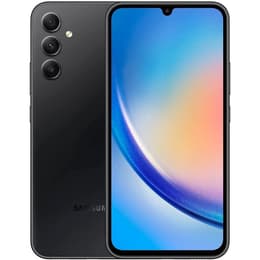
Galaxy A34
Galaxy A34
Starting at

Refurbished price:144.00

Versus €399.00 new

See options
Google Pixel 9
Google Pixel 9
Starting at

Refurbished price:449.00

Versus €1,066.71 new

See options

Differences at a glance

The Samsung Galaxy A34 (2023) and the Google Pixel 9 (2024) are Android smartphones that cater to different user expectations. While both devices offer a smooth Android experience, the Pixel 9 distinguishes itself with a more advanced processor and extended software support, whereas the Galaxy A34 provides expandable storage and a larger battery capacity. Both run on the Android operating system, offering distinct user experiences through their respective software interfaces.

Scores

Durability

The practical lifespan of a smartphone is significantly influenced by its release date and the manufacturer's commitment to software updates. Both devices offer substantial support, but with different timelines.

  • Release Timeline: The Samsung Galaxy A34 was released in March 2023, making it an established option. The Google Pixel 9, launched in August 2024, benefits from being a newer device in terms of hardware and initial software. [1, 2, 5]
  • Software Longevity: The Galaxy A34 is expected to receive four major Android OS upgrades and five years of security updates, extending its support until around 2027. [1, 21, 34, 35] The Pixel 9, however, offers a more extensive commitment with seven years of OS, security, and Pixel Drop updates, ensuring support until August 2031. [1, 11, 12, 15, 30, 31]
  • Durability Features: The Galaxy A34 features Corning Gorilla Glass 5 on its display and carries an IP67 rating for dust and water resistance, capable of immersion in up to 1 meter of fresh water for 30 minutes. [1, 7] The Pixel 9 steps up with Corning Gorilla Glass Victus 2 for enhanced screen protection and an IP68 rating, allowing for immersion in up to 1.5 meters of water for 30 minutes. [1, 9]

Year of Release

2023

2024

Compatible with latest Update

Yes

Yes

OS

Android

Android

Foldable

No

No

Performance

Performance is a key differentiator, impacting how smoothly applications run and how efficiently the device handles demanding tasks. The Pixel 9, being a newer generation device, generally offers more robust capabilities.

  • Processing Power: The Google Pixel 9 is equipped with a more advanced processor, which handles demanding applications and multitasking smoothly, often leveraging on-device artificial intelligence features. [1, 5, 16] The Galaxy A34's processor provides reliable performance for everyday tasks and moderate gaming. [3, 23, 26]
  • System Responsiveness: The Pixel 9 features a higher amount of temporary memory (RAM), which allows it to keep more apps open in the background and switch between them instantly. [1, 2, 16] The Galaxy A34 offers sufficient RAM for typical smartphone usage, ensuring a generally smooth experience. [3]
  • Battery Behavior: The Galaxy A34 is equipped with a larger 5000 mAh battery capacity, with users reporting it easily lasts through a full day of heavy use and often into a second day. [1, 23, 28] The Pixel 9 has a 4700 mAh battery, focusing on efficient power management and software optimization to provide consistent day-long usage. [2, 16, 18]

Memory (GB)

6 GB

12 GB

Screen quality

The visual experience is central to smartphone usage, and both devices offer vibrant displays, though with differences in technology and brightness.

  • Display Technology and Clarity: The Samsung Galaxy A34 features a 6.6-inch Super AMOLED display, known for its deep blacks, vibrant colors, and wide viewing angles, providing a rich visual experience for media consumption. [1, 3, 24] The Google Pixel 9 comes with a 6.3-inch Actua OLED display, which also delivers excellent contrast and color accuracy. [1, 9, 16] Both offer a Full HD+ resolution, ensuring sharp and clear visuals for text and images. [1, 9, 16]
  • Brightness and Refresh Rate: Both phones feature a 120Hz refresh rate, contributing to smoother scrolling and more fluid animations. [1, 9, 16] The Galaxy A34's display can reach a peak brightness of 1000 nits, making it visible outdoors. [24] The Pixel 9's Actua display is designed for high brightness, offering good visibility in various lighting conditions. [5, 16]
  • Screen Size and Protection: The Galaxy A34 offers a slightly larger 6.6-inch screen, which can be beneficial for users who prefer more screen real estate for gaming or watching videos. [1, 27] The Pixel 9 has a 6.3-inch display, making it a more compact device. [1, 9, 16] The Pixel 9's display is protected by Gorilla Glass Victus 2, while the Galaxy A34 uses Gorilla Glass 5. [1, 9]

Resolution

1080 x 2340

1080 x 2424

Screen type

Super AMOLED

OLED

Audiovisual

The camera systems on both devices offer distinct approaches to photography, with strengths in different areas.

  • Rear Camera Systems: The Google Pixel 9 features a dual-camera setup with a 50 MP wide lens and a 48 MP ultrawide lens that includes Macro Focus, designed to capture detailed images even in challenging lighting conditions. [1, 9, 16] The Samsung Galaxy A34 comes with a triple-camera system, including a 48 MP main lens with Optical Image Stabilization (OIS), an 8 MP ultrawide lens, and a 5 MP macro lens for close-up shots. [1, 3, 7]
  • Photography Performance: The Pixel 9 is known for its advanced computational photography, which enhances image quality, particularly in low-light scenarios and for dynamic range, often producing natural-looking results. [1, 10, 19] The Galaxy A34's main camera is capable of capturing good photos with vibrant colors, and its OIS helps in reducing blur. [7, 23, 26]
  • Video Recording and Audio: Both devices are capable of recording video at 4K resolution. [7, 9] The Pixel 9 offers strong video stabilization and clear audio capture. [10] The Galaxy A34 also provides good video quality with effective stabilization, particularly in Full HD. [24, 26] Both phones feature stereo speakers for media consumption. [9, 23]

Main camera

48 megapixels

50 megapixels

Front camera

13 megapixels

10.5 megapixels

Miscellaneous

Practical features such as connectivity and physical handling play a significant role in how these devices fit into a user's daily routine.

  • Connectivity and Ports: Both devices support 5G connectivity for fast mobile data. [3, 9] The Pixel 9 supports newer Wi-Fi 7 standards, while the Galaxy A34 uses Wi-Fi 5. [3, 9] The Pixel 9 features a USB-C 3.2 port, offering faster data transfer speeds compared to the Galaxy A34's USB-C 2.0. [3, 9]
  • Biometric Security: The Pixel 9 incorporates an ultrasonic in-screen fingerprint sensor and face recognition for secure unlocking. [1, 19] The Galaxy A34 also features an in-display optical fingerprint sensor. [1, 6]
  • Build Materials and Handling: In terms of build, the Pixel 9 has an aluminum frame and a glass back, contributing to a premium feel. [1, 19] The Galaxy A34 uses a plastic frame and back with a glass front, offering resilience. [1, 7] The Pixel 9 is slightly more compact and lighter, measuring 152.8 x 72 x 8.5 mm and weighing 198 g. [1, 9, 16] The Galaxy A34 is a bit larger and heavier at 161.3 x 78.1 x 8.2 mm and 199 g, which might appeal to users who prefer a larger device. [1, 3] The Galaxy A34 also offers expandable storage via a microSD card, a feature not present on the Pixel 9. [7]

Weight

199 g

198 g

Screen size (in)

6.6

6.3

Network

5G

5G

SIM card

Physical SIM

Physical SIM + eSIM

Carrier compatibility

Unlocked

Unlocked

Connector

USB-C

USB-C

What the community thinks

User feedback indicates that the Google Pixel 9 is praised for its exceptional camera capabilities, particularly its computational photography, and its long-term software support. [1, 10, 19] Users also appreciate its premium build and the integration of AI features. [13, 19] Some common concerns include reports of occasional performance stuttering with the processor and charging speeds that are not as fast as some competitors. [10, 13, 20]

The Samsung Galaxy A34 receives commendation for its vibrant Super AMOLED display, impressive battery life, and reliable everyday performance. [23, 24, 26, 28] Its expandable storage is a significant advantage for many users. [7] Criticisms sometimes point to its plastic build materials compared to more premium devices and slower charging speeds. [23, 29]

Users prioritizing advanced camera performance, a compact form factor, and the longest possible software support will find the Google Pixel 9 well-suited to their needs. Conversely, users who value a larger display, extended battery life, expandable storage, and a robust experience for general use may lean towards the Samsung Galaxy A34. Both devices offer a solid Android experience, and considering a quality-assured refurbished option for either model can be a sustainable choice for consumers.