

Galaxy A34 Vs Galaxy S25

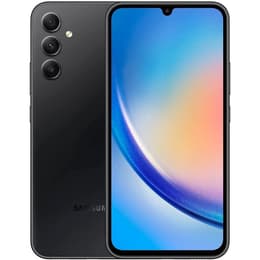
Galaxy A34
Galaxy A34
Starting at

Refurbished price:135.00

Versus €399.00 new

See options
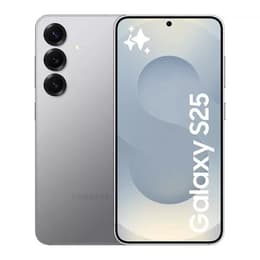
Galaxy S25
Galaxy S25
Starting at

Refurbished price:489.00

Versus €799.00 new

See options

Ratings

The Samsung Galaxy A34 (released March 2023) and the Samsung Galaxy S25 (released February 2025) are two distinct smartphones from Samsung's lineup, catering to different user expectations. While both operate on the Android platform with Samsung's One UI, the Galaxy S25, as a newer flagship model, offers significant advancements in processing power, camera capabilities, and overall build quality compared to the more mid-range Galaxy A34.

Scores

Durability

When considering the longevity of these devices, their release timelines and software support policies are key differentiators.

  • Release and Updates: The Galaxy A34, launched in March 2023, came with Android 13 and is promised four generations of OS updates, extending its software support up to Android 17, along with five years of security patches. In contrast, the Galaxy S25, released in February 2025 with Android 15, benefits from Samsung's extended commitment of seven years of OS upgrades and seven years of security updates, meaning it will receive updates up to Android 22. This provides the Galaxy S25 with a considerably longer period of official software support.
  • Durability and Build: The Galaxy A34 features a glass front protected by Gorilla Glass 5, paired with a plastic frame and back, and carries an IP67 rating for dust and water resistance. The Galaxy S25, being a premium device, utilizes more robust materials, including Gorilla Glass Victus 2 for both its front and back, an aluminum frame, and a higher IP68 rating, offering enhanced protection against dust and water immersion.
  • Practical Lifespan: Users can expect the Galaxy S25 to remain current and receive critical updates for a longer duration, making it a suitable choice for those who prefer to keep their devices for many years. The Galaxy A34 still offers a respectable lifespan, particularly for users who prioritize a balance between features and extended usability without needing the absolute latest software for the longest possible time.

Year of Release

2023

2025

Compatible with latest Update

Yes

Yes

OS

Android

Android

Foldable

No

No

Performance

The performance capabilities of the Galaxy A34 and Galaxy S25 reflect their different market positions, with the S25 offering a significantly more powerful experience.

  • Processing Power: The Galaxy A34 is equipped with a MediaTek Dimensity 1080 processor, which capably handles everyday tasks, social media, and moderate gaming. The Galaxy S25, on the other hand, features a Qualcomm Snapdragon 8 Elite for Galaxy processor, built on a 3nm architecture. This advanced processor delivers substantially faster CPU and GPU speeds, ensuring smooth operation for demanding applications, intensive multitasking, and high-fidelity gaming.
  • System Responsiveness and Multitasking: For general use, both phones offer a responsive experience. However, the Galaxy S25 provides a noticeable advantage in fluidity and speed when launching apps, switching between multiple applications, and handling complex computational tasks, thanks to its more powerful internals and typically higher RAM configurations (12GB standard for S25 compared to 6GB or 8GB for A34).
  • Battery Behavior: The Galaxy A34 houses a larger 5000 mAh battery, which, combined with its less power-intensive processor, generally provides extended usage times, often lasting more than a full day for many users. The Galaxy S25 has a 4000 mAh battery. While its processor is more efficient, some users have reported that the S25's battery life, particularly under heavy usage, may require more frequent charging compared to its predecessor or the A34.

Memory (GB)

6 GB

12 GB

Screen quality

Both devices offer vibrant displays, but the Galaxy S25 incorporates more advanced display technology for a refined visual experience.

  • Display Technology and Clarity: The Galaxy A34 features a 6.6-inch Super AMOLED display with a resolution of 2340x1080 pixels, providing clear visuals and rich colors suitable for media consumption and daily tasks. The Galaxy S25 comes with a 6.2-inch Dynamic AMOLED 2X display, also with a 2340x1080 resolution. The Dynamic AMOLED 2X panel on the S25 offers superior color accuracy and deeper blacks, enhancing the overall viewing quality.
  • Brightness and Refresh Rate: The Galaxy A34's display can reach a peak brightness of 1000 nits, ensuring good visibility outdoors. It also features a 120Hz refresh rate for smooth scrolling and animations. The Galaxy S25 elevates this with a peak brightness of 2600 nits, making it exceptionally bright and readable even in direct sunlight. Its adaptive 120Hz refresh rate dynamically adjusts based on content, optimizing battery efficiency while maintaining visual fluidity.
  • Viewing Experience: The larger screen of the A34 might appeal to users who prefer more screen real estate for videos or browsing. However, the S25's advanced panel technology, higher brightness, and adaptive refresh rate contribute to a more premium and immersive viewing experience, especially for high-quality content.

Resolution

1080 x 2340

1080x2340

Audiovisual

The camera systems on the Galaxy A34 and Galaxy S25 cater to different levels of photography enthusiasts, with the S25 offering a more versatile and advanced setup.

  • Rear Camera Capabilities: The Galaxy A34 features a triple-camera system with a 48MP main sensor with Optical Image Stabilization (OIS), an 8MP ultrawide lens, and a 5MP macro lens. It is capable of recording video at up to 4K resolution at 30 frames per second. The Galaxy S25 boasts a more sophisticated triple-camera array, including a 50MP main sensor, a 12MP ultrawide lens, and a 10MP telephoto lens with 3x optical zoom. This telephoto lens provides greater flexibility for zoomed-in shots without significant loss of detail. The S25 also supports video recording up to 8K at 30 frames per second.
  • Photography Performance: The A34 delivers good results in well-lit conditions, with its OIS helping to produce stable photos. Its ultrawide and macro lenses offer additional creative options, though their performance may be less consistent in challenging lighting. The S25, with its larger sensors and advanced image processing, excels in various lighting conditions, including low light, producing sharper images with better dynamic range and color accuracy. Its dedicated telephoto lens is a significant advantage for portraits and distant subjects.
  • Front Camera and Audio: For selfies and video calls, the Galaxy A34 has a 13MP front camera. The Galaxy S25 features a 12MP front camera, which often benefits from the phone's more powerful image processing for clearer and more detailed self-portraits. Both devices offer stereo speakers for an enhanced audio experience during media consumption.

Miscellaneous

Beyond core features, several practical elements distinguish the Galaxy A34 and Galaxy S25, impacting daily usability and handling.

  • Connectivity and Ports: Both smartphones support 5G connectivity for fast mobile data. The Galaxy A34 includes Wi-Fi 5 (802.11ac) and Bluetooth 5.3. The Galaxy S25, being a newer flagship, steps up to Wi-Fi 7 (802.11be) and Bluetooth 5.4, offering faster and more reliable wireless connections. Both devices utilize a USB-C port for charging and data transfer, but neither includes a traditional 3.5mm headphone jack.
  • Biometrics and Sensors: The Galaxy A34 features an in-display fingerprint sensor for secure unlocking. The Galaxy S25 also incorporates an in-display fingerprint sensor, which is typically faster and more accurate due to its more advanced technology. Both devices include standard sensors like accelerometers, gyroscopes, and compasses.
  • Design, Dimensions, and Handling: The Galaxy A34 has dimensions of 161.3 x 78.1 x 8.2 mm and weighs 199g, featuring a plastic back and frame. The Galaxy S25 is more compact and lighter, measuring 146.9 x 70.5 x 7.2 mm and weighing 162g, with a premium glass and aluminum construction. The S25's smaller size and lighter build make it more comfortable for one-handed use and easier to carry, while the A34 offers a larger screen experience in a slightly bulkier form factor.

Weight

199 g

162 g

Screen size (in)

6.6

6.2

Network

5G

5G

SIM card

Dual Physical SIM

Physical SIM + eSIM

Carrier compatibility

Unlocked

Unlocked

Connector

USB-C

USB-C

The Samsung Galaxy A34 and Galaxy S25 cater to different user needs and priorities, reflecting their positions in Samsung's smartphone hierarchy. User feedback for the Galaxy A34 often highlights its strong battery life and vibrant display as key advantages for everyday use and media consumption. Some users have noted occasional issues with touch sensitivity or camera noise in specific scenarios.

For the Galaxy S25, common praise points revolve around its exceptional performance, advanced camera system, and brilliant, bright display. However, some users have expressed concerns regarding its battery life, which, despite processor efficiencies, may not consistently last a full day for heavy users, and its charging speeds are not the fastest available. There have also been isolated reports of minor software glitches and, in rare cases, physical issues like camera rings detaching.

Users prioritizing a long-lasting battery, a larger screen for media, and a capable device for general daily tasks will find the Galaxy A34 well-suited to their needs. It offers a balanced experience with solid software support for several years. Conversely, users who demand cutting-edge performance for demanding applications and gaming, a highly advanced camera system with optical zoom, a more premium build, and the longest possible software update commitment will lean towards the Galaxy S25. Its compact form factor also appeals to those preferring a smaller, more manageable device.

Both models are available as quality-assured refurbished options, providing a sustainable choice for consumers looking to extend the lifecycle of electronic products.


See all articles

Our recent comparisons