

Galaxy A32 5G Vs Huawei P30 Pro

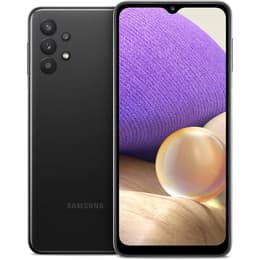
Galaxy A32 5G
Galaxy A32 5G
Starting at

Refurbished price:97.00

Versus €399.00 new

See options
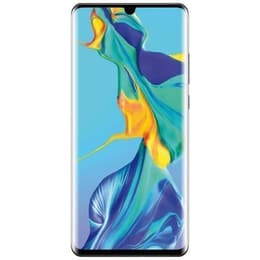
Huawei P30 Pro
Huawei P30 Pro
Starting at

Refurbished price:186.00

Versus €849.00 new

See options

Ratings

The Samsung Galaxy A32 5G, released in January 2021, and the Huawei P30 Pro, launched in March 2019, represent different approaches to smartphone design and functionality. While the Galaxy A32 5G focuses on delivering modern connectivity and a robust battery experience, the P30 Pro, an older flagship, emphasizes advanced camera capabilities and a premium build. Both devices operate on the Android platform, though the P30 Pro's software ecosystem has evolved differently due to external factors, impacting its access to certain services.

Scores

Durability

When considering the longevity of these devices, several factors come into play, including their release timelines, software support, and physical durability.

  • Release Timeline and Software Support: The Galaxy A32 5G, being a 2021 release, benefits from a more recent starting point for software updates, including Android version upgrades and security patches. The Huawei P30 Pro, released in 2019, has received updates to Android 10/EMUI 11, but its access to Google Mobile Services for newer Android versions is limited, which can impact the user experience for those reliant on Google's ecosystem.
  • Physical Durability: The Galaxy A32 5G features a plastic back and a Gorilla Glass 5 display, offering a degree of resistance against everyday drops. The Huawei P30 Pro, with its glass front and back and aluminum frame, also incorporates Gorilla Glass for screen protection and boasts an IP68 rating for dust and water resistance, indicating a higher level of protection against environmental elements.
  • Repairability: The Huawei P30 Pro has been noted by iFixit as being relatively difficult to repair, scoring 4 out of 10 due to heavy use of adhesive and complex internal design. Information on the repairability of the Galaxy A32 5G is less detailed, but its construction is generally considered more straightforward.

Year of Release

2021

2019

Compatible with latest Update

No

No

OS

Android

Android

Foldable

No

No

Performance

The performance of a smartphone is crucial for daily tasks, app usage, and overall responsiveness. These two devices offer distinct experiences in this regard.

  • Everyday Task Handling: The Galaxy A32 5G is equipped to handle common applications and multitasking smoothly, providing a responsive experience for general use. The Huawei P30 Pro, powered by a processor that was a flagship component at its release, delivers a fluid experience for demanding applications and gaming, showcasing strong overall system responsiveness.
  • Storage and Multitasking: The Galaxy A32 5G offers various RAM configurations (4GB, 6GB, 8GB) and storage options (64GB, 128GB), with expandable storage via microSD. The P30 Pro also comes with multiple RAM (6GB, 8GB) and storage configurations (128GB, 256GB, 512GB), utilizing a proprietary NM card for expansion. Both devices provide sufficient memory for multitasking, though the P30 Pro's higher-end configurations offer more headroom.
  • Battery Performance: The Galaxy A32 5G is known for its substantial 5000 mAh battery, which typically provides extended usage times, often lasting through a full day for many users. The Huawei P30 Pro has a 4200 mAh battery, which also offers good endurance, supported by fast charging capabilities.

Memory (GB)

6 GB

8 GB

Screen quality

The visual experience is a primary interaction point for users, and the display technologies in these phones present different characteristics.

  • Display Technology and Resolution: The Galaxy A32 5G features a 6.5-inch TFT LCD with a resolution of 1600 x 720 pixels, resulting in a pixel density of approximately 270 pixels per inch. The Huawei P30 Pro sports a 6.47-inch OLED display with a higher resolution of 2340 x 1080 pixels, offering a sharper image with around 398 pixels per inch.
  • Brightness and Color Reproduction: The P30 Pro's OLED panel provides deep blacks and vibrant colors, enhancing the viewing experience for media consumption. While the A32 5G's LCD is generally bright and vivid, it may not offer the same contrast levels as an OLED.
  • Refresh Rate: The Galaxy A32 5G offers a 90Hz refresh rate, contributing to smoother scrolling and a more fluid user interface experience. The Huawei P30 Pro has a standard 60Hz refresh rate.

Resolution

720 x 1600

1080 x 2340

Screen type

TFT LCD

OLED

Audiovisual

Both smartphones offer multi-camera setups, but their photographic strengths and capabilities differ significantly.

  • Rear Camera Systems: The Galaxy A32 5G includes a quad-camera system with a 48MP main sensor, an 8MP ultrawide, a 5MP macro, and a 2MP depth sensor. It performs well in good lighting conditions and can record 4K video at 30fps. The Huawei P30 Pro features a Leica-branded quad-camera setup, including a 40MP main sensor, a 20MP ultrawide, an 8MP periscope telephoto lens with 5x optical zoom, and a Time-of-Flight (ToF) sensor.
  • Low-Light and Zoom Performance: The P30 Pro is particularly renowned for its exceptional low-light photography and impressive zoom capabilities, including 5x optical zoom and up to 50x digital zoom, which was a groundbreaking feature at its release. The A32 5G's low-light performance is respectable for its class, but it does not match the advanced capabilities of the P30 Pro.
  • Front Camera and Video: The A32 5G has a 13MP front-facing camera, suitable for clear selfies. The P30 Pro features a 32MP front camera, known for high detail and good dynamic range. Both devices are capable of recording 4K video at 30fps with their main rear cameras.

Main camera

48 megapixels

40 megapixels

Front camera

13 megapixels

32 megapixels

Miscellaneous

Beyond the core components, various other features contribute to the overall user experience and practical utility of these devices.

  • Connectivity: A key differentiator is 5G connectivity, which is present in the Galaxy A32 5G, enabling faster mobile data speeds. The Huawei P30 Pro supports 4G LTE networks. Both devices offer Wi-Fi 802.11 a/b/g/n/ac and Bluetooth 5.0.
  • Ports and Sensors: The Galaxy A32 5G includes a 3.5mm headphone jack and a USB-C port, along with a side-mounted fingerprint sensor. The Huawei P30 Pro uses a USB-C port but omits the 3.5mm headphone jack, featuring an in-screen optical fingerprint reader.
  • Design and Handling: The A32 5G has dimensions of 164.2 x 76.1 x 9.1 mm and weighs 205g, with a plastic back that some users report can be slippery. The P30 Pro is slightly more compact at 158 x 73.4 x 8.4 mm and weighs 192g, featuring a glass and aluminum construction.

Weight

205 g

192 g

Screen size (in)

6.5

6.47

Network

5G

4G

SIM card

Dual Physical SIM

Dual Physical SIM

Carrier compatibility

Unlocked

Unlocked

User feedback for the Samsung Galaxy A32 5G often highlights its strong battery life and the inclusion of 5G connectivity as significant advantages. Users appreciate its capable cameras for everyday photography and its generally smooth performance for typical smartphone tasks. Some common criticisms include its lower-resolution display compared to other devices in its category and the plastic build, which can be prone to fingerprints and minor scratches.

The Huawei P30 Pro is frequently praised for its exceptional camera system, particularly its low-light performance and impressive optical zoom capabilities, which were considered leading-edge at its release. Its premium design and vibrant OLED display also receive positive mentions. However, a recurring concern for users is the software situation, specifically the limited access to Google Mobile Services on newer Android versions, which can affect app availability and functionality for some.

Users prioritizing modern connectivity, extended battery life, and a device with full access to the Android ecosystem and its services may find the Samsung Galaxy A32 5G well-suited to their needs. Conversely, individuals who place a high premium on advanced photographic capabilities, especially in challenging lighting conditions or requiring significant zoom, and appreciate a premium build, might lean towards the Huawei P30 Pro. Both devices offer distinct strengths, catering to different user priorities. For those seeking an eco-friendly alternative, quality-assured refurbished options for both models are available, providing a sustainable choice for acquiring these devices.


See all articles

Our recent comparisons