


Galaxy S25+ Vs Xiaomi Redmi Note 13 Pro+

Galaxy S25+
Galaxy S25+
Starting at

Refurbished price:624.00

Versus €1,401.57 new

See options
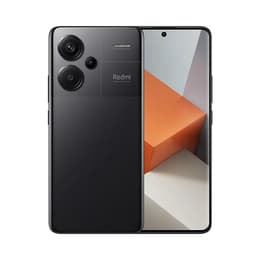
Xiaomi Redmi Note 13 Pro+
Starting at

Refurbished price:198.00

Versus €449.00 new

See options

Ratings

The Samsung Galaxy S25 Plus, released in February 2025, and the Xiaomi Redmi Note 13 Pro Plus, launched globally in January 2024, represent distinct offerings in the smartphone market. While both devices aim to provide a comprehensive user experience, they differentiate themselves through their core processing power, camera philosophies, and long-term software commitment. Both operate on the Android platform, offering a wide ecosystem of applications and customization.

Scores

Durability

When considering the longevity of these devices, their release timelines and software support policies are key factors.

  • Release Timeline: The Galaxy S25 Plus is a more recent device, having been released in February 2025. The Redmi Note 13 Pro Plus was introduced earlier, with its global launch in January 2024. This difference in release dates means the Galaxy S25 Plus inherently offers a longer period before it reaches the same age as its counterpart.
  • OS Support Duration: Samsung provides an extensive software support window for the Galaxy S25 Plus, promising seven years of operating system updates and security patches. In contrast, the Redmi Note 13 Pro Plus is committed to receiving three major Android OS updates and four years of security updates, extending its support until approximately 2028.
  • Durability Features: Both smartphones feature robust build quality. The Galaxy S25 Plus incorporates Gorilla Glass Victus 2 on both its front and back panels, complemented by an aluminum frame and an IP68 rating for dust and water resistance. The Redmi Note 13 Pro Plus also boasts an IP68 rating and uses Gorilla Glass Victus for its front display, along with internal reinforcements designed to enhance drop resistance.

Year of Release

2025

2023

Compatible with latest Update

Yes

Yes

OS

Android

Android

Foldable

No

No

Performance

The performance of a smartphone is central to the user experience, influencing everything from app responsiveness to gaming capabilities.

  • Processing Power: The Galaxy S25 Plus is equipped with a current-generation, high-performance processor, designed to handle demanding applications and intensive multitasking with efficiency. The Redmi Note 13 Pro Plus utilizes an upper-mid-range processor, which provides solid performance for everyday tasks and most mobile gaming.
  • Memory and Storage: The Galaxy S25 Plus typically comes with 12GB of RAM and offers storage options of 256GB or 512GB, utilizing fast UFS 4.0 storage technology. The Redmi Note 13 Pro Plus is available with 8GB, 12GB, or 16GB of RAM and 256GB or 512GB of UFS 3.1 storage. Both configurations provide ample space and speed for most users, though the Galaxy S25 Plus's UFS 4.0 offers a theoretical advantage in data transfer speeds.
  • Battery Behavior: The Galaxy S25 Plus houses a 4900mAh battery, with users often reporting it can last a full day or more under typical usage. The Redmi Note 13 Pro Plus features a slightly larger 5000mAh battery, and user reports suggest it can achieve around 1.5 days of use on a single charge. The Redmi Note 13 Pro Plus also stands out with its 120W wired fast charging, capable of fully charging the device in a short period, whereas the Galaxy S25 Plus supports 45W wired charging and includes wireless charging capabilities.

Memory (GB)

12 GB

12 GB

Screen quality

The display is a primary interface for smartphone interaction, and both devices offer vibrant viewing experiences.

  • Display Technology and Resolution: The Galaxy S25 Plus features a 6.7-inch Dynamic LTPO AMOLED 2X display with a QHD+ resolution (3120x1440 pixels), providing a very sharp and detailed image. The Redmi Note 13 Pro Plus comes with a 6.67-inch AMOLED display offering a 1.5K resolution (2712x1220 pixels), which also delivers a clear and crisp visual experience. Both displays support HDR10+ and Dolby Vision for enhanced color and contrast.
  • Brightness and Refresh Rate: Both phones offer a 120Hz adaptive refresh rate, ensuring smooth scrolling and fluid animations. The Galaxy S25 Plus can reach a peak brightness of 2600 nits, while the Redmi Note 13 Pro Plus achieves a peak brightness of 1800 nits. Both brightness levels are sufficient for comfortable outdoor viewing, with the Galaxy S25 Plus having a higher peak for extreme conditions.
  • Additional Display Features: The Galaxy S25 Plus's LTPO technology allows for a more dynamic refresh rate adjustment, potentially contributing to battery efficiency. The Redmi Note 13 Pro Plus features a high instantaneous touch sampling rate, which can be beneficial for responsive gaming. Both devices incorporate an in-screen fingerprint sensor for secure unlocking.

Resolution

1440 x 3120 pixels

1220 x 2712

Audiovisual

The camera systems on both smartphones are designed to capture high-quality images and videos, though they approach this goal with different hardware configurations.

  • Rear Camera Systems: The Galaxy S25 Plus features a versatile triple-camera setup, including a 50 MP main sensor with optical image stabilization (OIS), a 12 MP ultrawide lens, and a 10 MP telephoto lens with 3x optical zoom and OIS. The Redmi Note 13 Pro Plus highlights a 200 MP main camera with OIS and electronic image stabilization (EIS), an 8 MP ultrawide camera, and a 2 MP macro camera.
  • Photography Performance: The Galaxy S25 Plus's camera system is noted for its balanced performance across its lenses, offering good detail and color reproduction, especially from its main sensor. Its dedicated telephoto lens provides clear zoomed-in shots. The Redmi Note 13 Pro Plus's 200 MP main sensor is capable of capturing highly detailed images, and it includes features like 4x lossless zoom. However, its secondary ultrawide and macro cameras are generally considered less capable than the main sensor.
  • Video Capabilities: The Galaxy S25 Plus supports video recording up to 8K resolution at 30 frames per second. The Redmi Note 13 Pro Plus can record 4K video at 24 or 30 frames per second. Both offer stabilization features to help produce smoother video footage.

Front camera

12MP

16 megapixels

Miscellaneous

Beyond the core specifications, several practical elements contribute to the overall user experience and device utility.

  • Connectivity and Ports: Both devices support 5G connectivity for fast mobile data. The Galaxy S25 Plus features Wi-Fi 7 and Bluetooth 5.4, while the Redmi Note 13 Pro Plus supports Wi-Fi 6 and Bluetooth 5.3. Both utilize a USB-C port for charging and data transfer, and both offer dual SIM capabilities, with the Galaxy S25 Plus also supporting eSIM.
  • Physical Design and Handling: The Galaxy S25 Plus measures 158.4 x 75.8 x 7.3mm and weighs 190g, featuring an aluminum frame and glass back. The Redmi Note 13 Pro Plus has dimensions of 161.4 x 74.2 x 8.9mm and weighs 204.5g, with a glass back and a curved display. The Galaxy S25 Plus is slightly thinner and lighter, which can impact in-hand feel.
  • Audio and Sensors: Both smartphones include stereo speakers for an enhanced audio experience. The Galaxy S25 Plus features an ultrasonic in-screen fingerprint sensor, while the Redmi Note 13 Pro Plus uses an optical in-screen fingerprint sensor. Both also include a standard array of sensors like accelerometers, gyroscopes, and compasses.

Weight

190 g

204 g

Screen size (in)

6.7

6.67

Network

5G

5G

SIM card

Physical SIM + eSIM

Dual Physical SIM

Carrier compatibility

Unlocked

Unlocked

User feedback for the Samsung Galaxy S25 Plus often praises its consistently strong performance, vibrant display, and the extended software support that ensures long-term usability. Some users appreciate its balanced camera system, particularly the inclusion of a dedicated telephoto lens. Criticisms are less common but sometimes point to its design being similar to previous generations.

The Xiaomi Redmi Note 13 Pro Plus receives commendation for its striking 200 MP main camera, exceptionally fast wired charging, and its durable, premium-feeling design for its category. Users also frequently highlight its bright and smooth display. Some common concerns revolve around the performance of its secondary cameras (ultrawide and macro) and the software experience, which, while improving, may not always be as refined as some competitors.

For users prioritizing long-term software updates, a highly refined user interface, and a versatile camera system with optical zoom, the Samsung Galaxy S25 Plus may be the more suitable choice. Its flagship-tier performance ensures it remains capable for many years. Conversely, users who prioritize a high-megapixel main camera, extremely rapid battery charging, and a slightly larger battery capacity might find the Xiaomi Redmi Note 13 Pro Plus better aligns with their needs. Both devices offer a quality-assured refurbished option, providing an eco-friendly alternative for consumers seeking to make informed and sustainable choices.

See all articles

Our recent comparisons