

Compare models

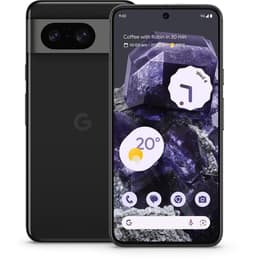
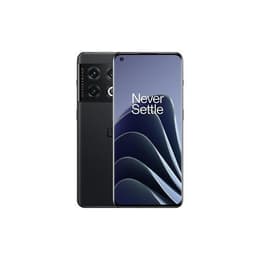
Google Pixel 8a Vs OnePlus 10 Pro

  • 1-year minimum warranty
  • Free delivery on all orders
  • Free 30-day returns
Google Pixel 8a
Google Pixel 8a
Starting at

Refurbished price:242.25

Versus €549.00 new

See options
OnePlus 10 Pro
OnePlus 10 Pro
Starting at

Refurbished price:261.00

Versus €999.00 new

See options

Differences at a glance

The Google Pixel 8A, released in May 2024, and the OnePlus 10 Pro, launched globally in March 2022, represent distinct approaches to the Android smartphone experience. While the Pixel 8A focuses on Google's latest AI advancements and extended software support, the OnePlus 10 Pro, a former flagship, emphasizes raw performance and rapid charging. Both devices run on the Android operating system, offering different interpretations of the user interface and feature sets.

Available Models

Colour

Storage (GB)

Scores

Durability

When considering the longevity of these devices, their release timelines and software support policies are key differentiators.

  • Release and Support: The Google Pixel 8A benefits from a more recent release date (May 2024) and an industry-leading commitment of seven years of OS and security updates, extending its software lifespan significantly. In contrast, the OnePlus 10 Pro, released in early 2022, was promised three major Android updates and four years of security updates. By early 2026, the OnePlus 10 Pro has received its final major Android update (Android 16) and is nearing the end of its security update cycle.
  • Physical Durability: The Pixel 8A features an IP67 rating for dust and water resistance, meaning it can withstand submersion in up to 1 meter of water for 30 minutes. The OnePlus 10 Pro's IP rating is more nuanced; while T-Mobile variants in the US received an official IP68 rating, other global versions generally did not, though OnePlus stated they undergo similar water resistance testing. Both devices utilize Gorilla Glass for screen protection, with the Pixel 8A using Gorilla Glass 3 and the OnePlus 10 Pro featuring Gorilla Glass Victus on the front and Gorilla Glass 5 on the back.
  • Practical Lifespan: Users prioritizing long-term software support and up-to-date features will find the Pixel 8A's extended update policy more appealing. The OnePlus 10 Pro, while still a capable device, will no longer receive major OS updates, which could impact its compatibility with future applications and features.

Year of Release

2024

2022

Compatible with latest Update

Yes

Yes

OS

Android

Android

Foldable

No

No

Performance

The performance capabilities of the Pixel 8A and OnePlus 10 Pro cater to different user expectations, largely influenced by their respective processors and system optimizations.

  • Processing Power: The Google Pixel 8A is equipped with Google's Tensor G3 chip, which also powers its more premium Pixel 8 siblings. This processor delivers smooth performance for everyday tasks, app loading, and handles demanding applications effectively. The OnePlus 10 Pro, on the other hand, features the Qualcomm Snapdragon 8 Gen 1, a high-end processor from its release year, known for its strong performance in gaming and intensive multitasking.
  • Multitasking and Storage: Both phones offer 8GB of RAM in their base configurations, with the OnePlus 10 Pro also available in a 12GB RAM variant, potentially offering a slight edge in managing a very large number of open applications. Storage options for the Pixel 8A include 128GB and 256GB, while the OnePlus 10 Pro provides more choices, ranging from 128GB to 512GB.
  • Battery Experience: The Pixel 8A houses a 4492 mAh battery, generally providing a full day of use for moderate users. The OnePlus 10 Pro comes with a larger 5000 mAh battery, and users often report excellent battery life, frequently lasting more than a full day. The OnePlus 10 Pro also supports significantly faster wired charging speeds compared to the Pixel 8A.

Screen quality

The visual experience on both devices is delivered through high-quality displays, though with some distinctions in size and technology.

  • Display Technology and Size: The Google Pixel 8A features a 6.1-inch OLED display, offering deep blacks and vibrant colors. The OnePlus 10 Pro boasts a larger 6.7-inch LTPO2 Fluid AMOLED display, which provides a more expansive viewing area.
  • Resolution and Clarity: The Pixel 8A has a 1080x2400 (FHD+) resolution, resulting in a pixel density of 430 pixels per inch. The OnePlus 10 Pro offers a higher 1440x3216 (QHD+) resolution, contributing to sharper text and more detailed images, especially on its larger screen.
  • Brightness and Smoothness: Both phones feature a 120Hz refresh rate for smooth scrolling and responsive interactions. The Pixel 8A can reach a peak brightness of 2000 nits, offering excellent visibility in bright outdoor conditions. The OnePlus 10 Pro has a peak brightness of 1300 nits, which is also bright for most environments.

Resolution

1080 x 2400

1440 x 3216

Screen type

OLED

LTPO2 Fluid AMOLED

Audiovisual

Both smartphones offer capable camera systems, with different strengths and features that appeal to various photography preferences.

  • Rear Camera Systems: The Google Pixel 8A features a dual-camera setup with a 64MP main sensor (with optical image stabilization) and a 13MP ultrawide lens. The OnePlus 10 Pro offers a more versatile triple-camera array, including a 48MP main sensor (with OIS), a 50MP ultrawide lens, and an 8MP telephoto lens with 3.3x optical zoom.
  • Photography Performance: The Pixel 8A is known for its reliable point-and-shoot photography, producing consistently good images in various lighting conditions, including low light, largely due to Google's advanced image processing. The OnePlus 10 Pro, with its Hasselblad-tuned cameras, generally delivers good color accuracy and detail, though some users have noted its low-light performance can be inconsistent compared to top-tier flagships. The dedicated telephoto lens on the OnePlus 10 Pro provides greater flexibility for zoomed shots.
  • Video and Front Camera: The Pixel 8A can record 4K video at up to 60fps on its main camera, with a 13MP front camera. The OnePlus 10 Pro supports 8K video recording at 24fps and 4K at up to 120fps, and features a 32MP front camera.

Main camera

64 megapixels

48 megapixels

Front camera

13 megapixels

32 megapixels

Miscellaneous

Beyond core specifications, several practical elements contribute to the overall user experience of these devices.

  • Connectivity and Ports: Both phones support 5G connectivity. The Pixel 8A includes Wi-Fi 6E and Bluetooth 5.3, while the OnePlus 10 Pro features Wi-Fi 6 and Bluetooth 5.2. The Pixel 8A uses a USB-C port, and the OnePlus 10 Pro also uses USB-C. Neither device includes a traditional 3.5mm headphone jack.
  • Biometric Security: The Pixel 8A offers an in-display fingerprint sensor and face unlock. The OnePlus 10 Pro also features an in-display fingerprint sensor and facial recognition, with users often praising its speed and accuracy.
  • Design and Handling: The Pixel 8A has dimensions of 152.1 x 72.7 x 8.9 mm and weighs 188g, making it a more compact and lighter device. It features an aluminum frame and a plastic back. The OnePlus 10 Pro is larger and heavier at 163 x 73.9 x 8.55 mm and 200.5g, with an aluminum frame and glass back (Gorilla Glass Victus front, Gorilla Glass 5 back). The Pixel 8A's smaller size may appeal to users preferring one-handed use.

Weight

188 g

201 g

Screen size (in)

6.1

6.7

Network

5G

5G

SIM card

Physical SIM + eSIM

Physical SIM

Carrier compatibility

Unlocked

Unlocked

What the community thinks

The Google Pixel 8A and OnePlus 10 Pro cater to different priorities within the Android smartphone market. Users frequently praise the Pixel 8A for its exceptional camera performance, clean Android software experience, and Google's commitment to seven years of software updates. Its compact size is also a common positive. Criticisms sometimes point to its performance not matching the absolute top-tier flagships, though it remains very capable for its segment.

The OnePlus 10 Pro, on the other hand, is often lauded for its powerful performance, vibrant display, and notably fast charging capabilities. Its larger battery capacity is also a frequent highlight. However, some users have expressed concerns about the consistency of its camera performance compared to rivals and the more limited software update policy, which is nearing its end.

Users prioritizing long-term software support, a consistently excellent camera for everyday photos, and a more compact form factor may prefer the Google Pixel 8A. Its extended update timeline ensures the device remains current and secure for many years. Conversely, users who value raw processing power for demanding applications and gaming, a larger, higher-resolution display, and very fast charging will likely find the OnePlus 10 Pro more aligned with their needs. Its robust hardware still offers a premium experience, even as its software support concludes.

For those seeking a quality-assured refurbished option, both devices are available, offering a sustainable choice for consumers to enjoy advanced technology while contributing to a more eco-friendly approach to electronics.