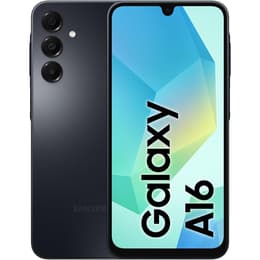
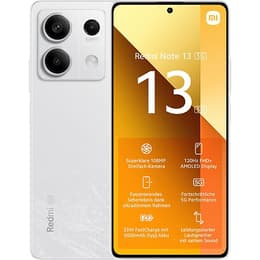


Galaxy A16 Vs Xiaomi Redmi Note 13

Galaxy A16
Galaxy A16
Starting at

Refurbished price:134.00

Versus €250.00 new

See options
Xiaomi Redmi Note 13
Starting at

Refurbished price:135.00

Versus €340.00 new

See options

Ratings

The Samsung Galaxy A16, released in late 2024, and the Xiaomi Redmi Note 13, launched in early 2024, are both smartphones designed for everyday use. While sharing a similar focus on delivering essential features, they differentiate themselves through their software support policies and display characteristics. Both devices operate on the Android platform, offering a range of functionalities for communication, media consumption, and productivity.

Scores

Durability

When considering the long-term usability of these devices, their respective release timelines and software support policies are key factors.

  • Software Longevity: The Samsung Galaxy A16 stands out with a commitment to six years of operating system updates and security patches, extending its support until at least October 2030. This provides a significantly longer period of up-to-date software compared to many devices in its category.
  • Update Frequency: The Xiaomi Redmi Note 13 typically receives two to three major Android OS updates and four years of security updates, with support generally extending until 2028 for security patches. This ensures a reasonable period of current software, though shorter than the Galaxy A16.
  • Practical Lifespan: Both phones are built with materials common in their segment, featuring plastic frames and backs. The Galaxy A16 has an IP54 rating for dust and splash resistance, contributing to its durability in daily scenarios. The Redmi Note 13 also offers IP54 dust and splash resistance and includes Gorilla Glass protection for its display, with some variants featuring Gorilla Glass 3 and others Gorilla Glass 5.

Year of Release

2024

2024

OS

Android

Android

Foldable

No

No

Performance

The performance of both the Galaxy A16 and Redmi Note 13 is tailored for general daily tasks, with some distinctions in their underlying hardware and user experience.

  • Everyday Responsiveness: The Samsung Galaxy A16, depending on the variant, is equipped with either a MediaTek Helio G99, Exynos 1330, or MediaTek Dimensity 6300 processor. These processors are designed to handle common applications and multitasking smoothly, though some users have noted occasional sluggishness or stuttering, particularly with the 4GB RAM configurations.
  • Multitasking and Storage: The Xiaomi Redmi Note 13 (4G) utilizes the Qualcomm Snapdragon 685 processor, while the 5G variant often features the MediaTek Dimensity 6080. These chipsets are capable of managing typical app usage and light gaming. The Redmi Note 13 offers various RAM options, including 6GB, 8GB, and 12GB, alongside storage options up to 512GB, which can contribute to smoother multitasking compared to lower RAM configurations. Both devices offer expandable storage via a microSD card slot.
  • Battery Behavior: Both smartphones are powered by a 5000 mAh battery, generally providing sufficient power for a full day of moderate to heavy use. The Redmi Note 13 supports 33W fast charging, allowing for quicker replenishment of its battery, while the Galaxy A16 supports 25W fast charging.

Memory (GB)

4 GB

8 GB

Screen quality

The visual experience on both devices is characterized by vibrant displays, though they differ in refresh rate and protective features.

  • Display Technology and Clarity: Both the Samsung Galaxy A16 and the Xiaomi Redmi Note 13 feature 6.67-inch or 6.7-inch Super AMOLED or AMOLED displays, respectively, offering rich colors and deep blacks. They both provide Full HD+ resolutions (1080x2340 pixels for A16, 1080x2400 pixels for Redmi Note 13), ensuring clear and detailed visuals for media consumption and browsing.
  • Smoothness and Brightness: The Redmi Note 13 offers a 120Hz refresh rate, providing a smoother scrolling and gaming experience compared to the Galaxy A16's 90Hz refresh rate. In terms of brightness, the Galaxy A16 can reach up to 800 nits in high brightness mode, making it usable outdoors. The Redmi Note 13 boasts a peak brightness of 1800 nits, though typical brightness measured around 454 nits with auto-brightness off for the 4G model.
  • Screen Protection: The Redmi Note 13 includes Gorilla Glass protection, with some variants featuring Gorilla Glass 3 and others Gorilla Glass 5, offering enhanced scratch resistance. The Galaxy A16 features a glass front, but specific Gorilla Glass branding is not consistently mentioned.

Resolution

1080x2340

1080 x 2400

Screen type

Super AMOLED

AMOLED

Audiovisual

Both smartphones offer capable camera systems for capturing everyday moments, with differences in sensor resolution and specific features.

  • Main Camera Capabilities: The Xiaomi Redmi Note 13 features a 108MP main camera, often paired with an 8MP ultra-wide lens and a 2MP macro sensor. This high-resolution main sensor is capable of capturing detailed photos in good lighting conditions. The Samsung Galaxy A16 comes with a 50MP main sensor, a 5MP ultrawide, and a 2MP macro camera. Users generally find the A16's camera to produce clear and vibrant photos for its segment.
  • Low-Light and Video: While both devices perform well in adequate lighting, the Redmi Note 13's photographic performance can decline in low-light environments. The Galaxy A16 has shown improvements in video quality compared to its predecessor, though photo quality might have seen slight changes. Both phones typically record video at 1080p resolution at 30 frames per second.
  • Front Camera and Audio: For selfies, the Redmi Note 13 often includes a 13MP front camera, while some variants may offer a 16MP front camera. The Galaxy A16 features a 13MP front camera. In terms of audio, the Redmi Note 13 includes a 3.5mm headphone jack and an IR blaster, while the Galaxy A16 5G notably omits the headphone jack. Both devices offer decent speaker output for media consumption.

Miscellaneous

Beyond core specifications, several practical elements contribute to the overall user experience of these devices.

  • Connectivity and Ports: Both the Galaxy A16 (5G variant) and Redmi Note 13 (5G variant) support 5G connectivity, along with modern Wi-Fi standards and Bluetooth 5.3. The Redmi Note 13 retains a 3.5mm headphone jack and an IR blaster, offering more versatile connectivity options for traditional audio and remote control. The Galaxy A16 5G, however, does not include a headphone jack. Both devices utilize a USB-C port for charging and data transfer.
  • Biometric Security: The Galaxy A16 typically features a side-mounted fingerprint sensor for secure unlocking. The Redmi Note 13 often incorporates an in-display fingerprint sensor, providing a seamless unlocking experience. Both devices also include standard sensors like accelerometers and light sensors.
  • Design and Handling: Both phones feature a largely plastic construction for their frames and backs, contributing to their overall weight and feel. The Galaxy A16 measures 164.4 mm in height and 7.9 mm in depth, weighing around 200g. The Redmi Note 13 has a similar footprint, with a flat-edged design. Both are generally considered large phones, which can impact one-handed use.

Weight

200 g

175 g

Screen size (in)

6.7

6.67

Network

4G

5G

SIM card

Physical SIM

Dual Physical SIM

Carrier compatibility

Unlocked

Unlocked

Connector

USB-C

USB-C

The Samsung Galaxy A16 and Xiaomi Redmi Note 13 both present compelling options in the smartphone market, each with distinct strengths catering to different user priorities. User feedback for the Galaxy A16 often praises its reliable everyday performance, good camera quality for its price point, and excellent battery life that can last a full day. Its clear and bright screen is also a frequently mentioned positive. However, some users have expressed concerns regarding occasional sluggishness in processor speed and potential issues with RAM management, particularly in demanding scenarios.

For the Xiaomi Redmi Note 13, common praise centers on its vibrant AMOLED display with a high refresh rate, a capable main camera, and solid build quality. Its battery life is also generally well-regarded, often lasting a full day. On the other hand, criticisms sometimes point to the processor being on the slower side for more intensive tasks, and some users have reported inconsistencies with notifications in its software.

Users prioritizing long-term software support and a consistent Android experience may find the Samsung Galaxy A16 well-suited to their needs, given its extended update policy. Those who value a smoother display refresh rate, a higher-resolution main camera, and the inclusion of a traditional headphone jack might lean towards the Xiaomi Redmi Note 13. Both devices offer a robust set of features for daily communication and media consumption. For consumers seeking a sustainable choice, considering a quality-assured refurbished option for either model can provide an eco-friendly alternative.


See all articles

Our recent comparisons