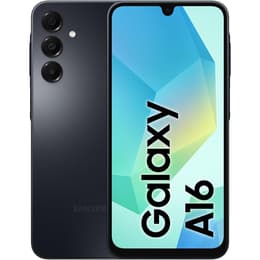
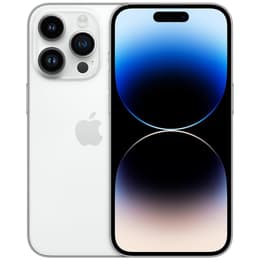

Galaxy A16 Vs iPhone 14 Pro

Galaxy A16
Galaxy A16
Starting at

Refurbished price:134.00

Versus €250.00 new

See options
iPhone 14 Pro
iPhone 14 Pro
Starting at

Refurbished price:424.00

Versus €1,339.00 new

See options

Ratings

The Samsung Galaxy A16 and the iPhone 14 Pro represent distinct offerings in the smartphone market, catering to different user priorities. The Galaxy A16, released in late 2024 and early 2025, operates on Android with Samsung's One UI, focusing on a large display and extended software support. In contrast, the iPhone 14 Pro, launched in September 2022, runs on Apple's iOS, emphasizing high-end performance, advanced camera capabilities, and a premium user experience. These devices differ significantly in their core specifications and intended use cases.

Scores

Durability

When considering the long-term usability of these devices, their release timelines and software support policies are key factors.

  • Release and Software Longevity: The Samsung Galaxy A16, released in late 2024 and early 2025, benefits from a commitment to six major Android OS upgrades and six years of security updates, extending its support until October 2030. The iPhone 14 Pro, launched in September 2022, typically receives iOS updates for five to seven years, with an expected end of major software support around September 2028.
  • Repairability: Samsung's A-series devices generally exhibit good repairability, with similar models like the Galaxy A57 scoring highly (9 out of 10) due to features like pull-tab adhesives for batteries. The iPhone 14 Pro, while initially praised for some hardware design improvements, received a downgraded repairability score (4 out of 10) from iFixit due to Apple's restrictive parts pairing and software validation requirements, which can complicate independent repairs.
  • Expected Practical Lifespan: Both devices are designed for several years of use. The Galaxy A16's extensive software support ensures it remains current and secure for a considerable period, making it a practical choice for users who keep their phones for longer. The iPhone 14 Pro, despite its earlier release, offers robust hardware that can handle demanding tasks for years, though its software update cycle will conclude sooner than the A16's.

Year of Release

2024

2022

OS

Android

iOS

Foldable

No

No

Performance

The performance capabilities of the Galaxy A16 and iPhone 14 Pro cater to different levels of user demand, influenced by their respective processors and system optimizations.

  • Processor Capabilities: The Samsung Galaxy A16 is equipped with a mid-range processor (Mediatek Helio G99 for 4G, or Mediatek Dimensity 6300/Exynos 1330 for 5G variants), which provides smooth performance for everyday tasks, app usage, and casual gaming. The iPhone 14 Pro features Apple's A16 Bionic chip, a high-end processor designed for demanding applications, intensive multitasking, and graphically rich games, offering a very responsive and fluid user experience.
  • Multitasking and Responsiveness: The Galaxy A16, with its various RAM options (4GB, 6GB, 8GB), handles typical multitasking scenarios effectively, allowing users to switch between apps without significant slowdowns. The iPhone 14 Pro, with 6GB of LPDDR5 RAM, delivers exceptional multitasking performance, maintaining numerous applications in memory and providing instant responsiveness across the iOS ecosystem.
  • Storage Options: The Galaxy A16 offers 128GB and 256GB storage options, expandable via a microSDXC card, providing flexibility for users who need more space for media and apps. The iPhone 14 Pro comes with internal storage options ranging from 128GB up to 1TB, catering to users with extensive storage needs, though it lacks expandable storage.

Memory (GB)

4 GB

6 GB

Screen quality

The display technologies and features on both devices offer distinct visual experiences, tailored to their respective market segments.

  • Display Technology and Clarity: The Samsung Galaxy A16 features a 6.7-inch Super AMOLED display with a 1080 x 2340 (FHD+) resolution, providing vibrant colors and deep blacks suitable for media consumption. The iPhone 14 Pro has a 6.1-inch Super Retina XDR OLED display with a 2556x1179 resolution (460 ppi), offering exceptional clarity, color accuracy, and contrast.
  • Brightness and Refresh Rate: The Galaxy A16's display has a 90Hz refresh rate for smoother scrolling and animations, and a typical brightness of 800 nits (HBM). The iPhone 14 Pro boasts an adaptive ProMotion display with refresh rates up to 120Hz, which can scale down to 1Hz for power efficiency. It offers a typical maximum brightness of 1000 nits, reaching up to 1600 nits for HDR content and an impressive 2000 nits for outdoor visibility.
  • Unique Display Features: The iPhone 14 Pro includes the Dynamic Island, an interactive area around the front camera cutout that displays alerts and background activities, and an Always-On display feature. The Galaxy A16 focuses on a larger screen size for an immersive viewing experience.

Resolution

1080x2340

1179 x 2556

Screen type

Super AMOLED

LTPO Super Retina XDR OLED

Audiovisual

The camera systems on the Galaxy A16 and iPhone 14 Pro are designed with different photographic priorities and capabilities.

  • Rear Camera System: The Samsung Galaxy A16 features a triple rear camera setup, including a 50 MP wide-angle main sensor, a 5 MP ultrawide lens, and a 2 MP macro lens. It is capable of capturing detailed photos in good lighting conditions and offers versatility for different shot types. The iPhone 14 Pro's Pro camera system includes a 48 MP main sensor with second-generation sensor-shift optical image stabilization (OIS), a 12 MP ultrawide lens with a 120° field of view, and a 12 MP telephoto lens with 3x optical zoom and OIS.
  • Photography and Video Performance: The Galaxy A16 records video up to Full HD (1080p) at 30 frames per second. The iPhone 14 Pro excels in various lighting conditions, particularly in low light, and offers advanced features like Photonic Engine for improved image processing. It supports 4K video recording at up to 60 frames per second, Cinematic mode for shallow depth-of-field video, and Action mode for stabilized footage.
  • Front Camera and Audio: The Galaxy A16 has a 13 MP front camera. The iPhone 14 Pro features a 12 MP TrueDepth front camera with autofocus, capable of advanced portrait modes and 4K video recording. For audio, the iPhone 14 Pro provides a rich media consumption experience with its stereo speakers and clear microphone quality for calls. The Galaxy A16 typically offers a mono speaker setup.

Miscellaneous

Beyond core features, several practical elements differentiate the user experience of these two smartphones.

  • Connectivity and Ports: Both devices support 5G connectivity for fast mobile data. The Galaxy A16 includes Wi-Fi 802.11 a/b/g/n/ac and Bluetooth 5.3, featuring a USB Type-C 2.0 port for charging and data transfer. The iPhone 14 Pro supports Wi-Fi 6 and Bluetooth 5.3, utilizing a Lightning port. Notably, US models of the iPhone 14 Pro do not support physical SIM cards, relying solely on eSIM.
  • Security and Sensors: The Galaxy A16 incorporates a fingerprint scanner for biometric authentication, along with an accelerometer, gyroscope, and compass. The iPhone 14 Pro features Face ID for secure facial recognition, a LiDAR scanner for enhanced depth sensing, and includes an accelerometer, gyroscope, barometer, and ambient light sensor.
  • Build Materials and Durability: The Galaxy A16 has an IP54 rating for dust and splash resistance and a slimmer 7.9mm form factor. The iPhone 14 Pro boasts a more robust build with a Ceramic Shield front cover, a textured matte glass back, and a stainless steel design, offering IP68 water and dust resistance. It also includes safety features like Emergency SOS via satellite and Crash Detection.

Weight

200 g

206 g

Screen size (in)

6.7

6.1

Network

4G

5G

SIM card

Physical SIM

Physical SIM + eSIM

Carrier compatibility

Unlocked

Unlocked

Connector

USB-C

Lightning

The Samsung Galaxy A16 and iPhone 14 Pro cater to distinct user needs and preferences. Users often praise the Galaxy A16 for its large, vibrant Super AMOLED display and its impressive commitment to six years of software updates, which is a significant advantage for longevity in the Android mid-range segment. Its substantial battery capacity is also frequently highlighted as a strong point for all-day use.

On the other hand, the iPhone 14 Pro receives consistent acclaim for its powerful performance, driven by the A16 Bionic chip, and its advanced camera system, which delivers high-quality photos and versatile video capabilities. Its bright, high-refresh-rate OLED display with features like Dynamic Island and Always-On functionality is also a common point of praise. Criticisms for the iPhone 14 Pro sometimes revolve around its battery life, which some users found to be less impressive than previous Pro Max models, and its repairability challenges due to Apple's parts pairing policies.

Users prioritizing an extended software support lifespan, a larger display for media, and expandable storage may find the Samsung Galaxy A16 well-suited to their requirements. Conversely, those who value top-tier performance, a highly advanced camera system, a premium build, and the iOS ecosystem will likely lean towards the iPhone 14 Pro. Both devices offer compelling features, and choosing between them depends on which aspects align best with individual usage patterns. For those seeking a quality-assured refurbished option, both models can be found, offering a sustainable choice for consumers.


See all articles

Our recent comparisons








