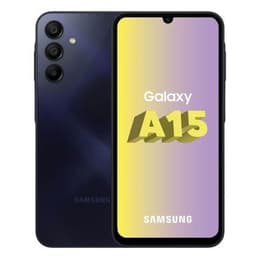



Galaxy A15 Vs Google Pixel 9 Pro XL

Galaxy A15
Galaxy A15
Starting at

Refurbished price:124.00

Versus €189.00 new

See options
Google Pixel 9 Pro XL
Starting at

Refurbished price:475.00

Versus €1,298.07 new

See options

Ratings

The Samsung Galaxy A15, released in late 2023, and the Google Pixel 9 Pro XL, launched in August 2024, represent distinct offerings in the smartphone market. While the Galaxy A15 focuses on delivering essential features and solid battery life, the Pixel 9 Pro XL emphasizes advanced camera capabilities, a premium user experience, and extended software support. Both devices operate on the Android platform, but they cater to different user priorities through their hardware and software implementations.

Scores

Durability

The practical lifespan of a smartphone is significantly influenced by its release timeline, software support, and physical resilience. These two devices offer different propositions in terms of longevity and durability.

  • Release Timeline and Software Support: The Galaxy A15, released in December 2023, is slated to receive four major Android OS upgrades and five years of security updates, extending its support until 2029. In contrast, the Pixel 9 Pro XL, launched in August 2024, benefits from Google's commitment to seven years of OS and security updates, ensuring support until Android 22. This extended support period means the Pixel 9 Pro XL will remain current with the latest software features and security patches for a longer duration.
  • Physical Durability: The Galaxy A15 features a plastic frame and back, with a Gorilla Glass front, offering a practical level of protection for everyday use. The Pixel 9 Pro XL, designed with a more robust build, incorporates Gorilla Glass Victus 2 on both the front and back, along with a recycled aluminum frame and an IP68 rating for dust and water resistance. This makes the Pixel 9 Pro XL more resistant to environmental elements and accidental damage.
  • Repairability: The Pixel 9 Pro XL features a dual-entry design, allowing access to internal components from both the front and rear, which can facilitate easier repairs. While specific repairability scores for the A15 are less prominent, its construction suggests a more conventional approach to internal access.

Year of Release

2023

2024

Compatible with latest Update

Yes

Yes

OS

Android

Android

Foldable

No

No

Performance

Performance is a key differentiator, impacting how smoothly applications run, how quickly tasks are completed, and the overall responsiveness of the user interface.

  • Processing Power: The Galaxy A15 is equipped with a processor that handles everyday applications smoothly and is suitable for casual gaming. Users report that it maintains stable performance for common tasks without noticeable heating. The Pixel 9 Pro XL, powered by Google's Tensor G4 processor, is designed for more demanding applications, advanced AI features, and seamless multitasking. This results in a more responsive experience, particularly with complex computations and intensive graphical tasks.
  • Multitasking and Storage: The Galaxy A15 offers various RAM configurations, including 4GB, 6GB, and 8GB, alongside 128GB or 256GB of internal storage, with the added flexibility of a microSD card slot for expandable storage. The Pixel 9 Pro XL comes with a substantial 16GB of RAM and storage options ranging from 128GB up to 1TB, providing ample space and memory for extensive multitasking and large files without a microSD slot.
  • Battery Behavior: Both devices feature large battery capacities. The Galaxy A15, with its 5000 mAh battery, is noted for its strong all-day battery backup, with many users reporting it lasts through a full day of mixed usage, and some even achieving two days with moderate use. The Pixel 9 Pro XL, with a 5060 mAh battery, also offers excellent endurance, with reports indicating nearly 19 hours of continuous video playback and users experiencing all-day usage with significant screen-on time.

Memory (GB)

4 GB

16 GB

Screen quality

The display is the primary interface for interaction, and both devices offer different visual experiences tailored to their respective segments.

  • Display Technology and Clarity: The Galaxy A15 features a 6.5-inch Super AMOLED display with a Full HD+ resolution (1080 x 2340 pixels). This technology provides vibrant colors and deep blacks. The Pixel 9 Pro XL boasts a larger 6.8-inch LTPO OLED display with a higher QHD+ resolution (1344 x 2992 pixels), offering greater detail and clarity.
  • Brightness and Refresh Rate: The Galaxy A15's screen can reach up to 800 nits in High Brightness Mode (HBM) and has a 90Hz refresh rate, providing smooth scrolling and good visibility in various lighting conditions. The Pixel 9 Pro XL significantly surpasses this with peak brightness levels up to 3000 nits and a dynamic 120Hz LTPO refresh rate, which allows for exceptionally smooth visuals and excellent outdoor readability, even in direct sunlight.
  • Viewing Experience: The Galaxy A15's display is described as vibrant and smooth for daily browsing and streaming, with reduced blue light for eye comfort. The Pixel 9 Pro XL's larger, higher-resolution, and brighter display provides a more immersive and detailed viewing experience, particularly beneficial for high-quality media consumption and detailed work.

Resolution

1080 x 2340

1344 x 2992

Screen type

Super AMOLED

LTPO OLED

Audiovisual

Camera capabilities are a significant factor for many users, and these two smartphones approach photography and videography with different strengths.

  • Rear Camera Systems: The Galaxy A15 features a triple-camera setup with a 50 MP main sensor, a 5 MP ultrawide lens, and a 2 MP macro lens. It performs well in daylight, capturing clear and vibrant shots for everyday use. The Pixel 9 Pro XL offers a more advanced triple-camera system, including a 50 MP main sensor with optical image stabilization (OIS), a 48 MP ultrawide lens with autofocus and macro capabilities, and a 48 MP 5x telephoto lens also with OIS. This setup provides greater versatility and detail across various focal lengths.
  • Low-Light and Advanced Features: While the Galaxy A15 can take decent pictures in good lighting, its low-light performance and lack of image stabilization for video are noted limitations. The Pixel 9 Pro XL excels in computational photography, offering features like Night Sight, Astrophotography, and Portrait Mode, which enhance image quality in challenging conditions. It also includes Pro Controls for manual adjustments, appealing to users who desire more creative control.
  • Video Recording: Both devices support 1080p video recording at 30 frames per second from their main and front cameras. The Pixel 9 Pro XL elevates video capabilities significantly, supporting 4K recording at 60 frames per second and even 8K at 30 frames per second with its cloud-based Video Boost feature, along with advanced stabilization options. The front camera on the Pixel 9 Pro XL is a 42 MP sensor capable of 4K video, whereas the Galaxy A15 has a 13 MP front camera.

Main camera

50 megapixels

50 megapixels

Front camera

13 megapixels

42 megapixels

Miscellaneous

Beyond the core components, several practical features contribute to the overall user experience and device utility.

  • Connectivity and Ports: The Galaxy A15 supports 5G connectivity, Wi-Fi 5 (802.11ac), Bluetooth 5.3, NFC, and features a USB-C 2.0 port, along with a 3.5mm headphone jack. The Pixel 9 Pro XL offers more advanced connectivity with 5G, Wi-Fi 7, Bluetooth 5.4, NFC, and Ultra Wideband (UWB) support, utilizing a faster USB-C 3.2 port but omitting the traditional headphone jack.
  • Biometric Security and Sensors: For security, the Galaxy A15 uses a side-mounted fingerprint sensor. The Pixel 9 Pro XL incorporates an under-display ultrasonic fingerprint sensor and Face Unlock for biometric authentication. Additionally, the Pixel 9 Pro XL includes a barometer, thermometer, and Satellite SOS service, enhancing its utility in various environments.
  • Design and Handling: The Galaxy A15 has a dimension of 160.1 x 76.8 x 8.4 mm and weighs 200g, featuring a plastic build. The Pixel 9 Pro XL is slightly larger and heavier at 162.8 x 76.6 x 8.5 mm and 221g, with a premium feel from its glass and aluminum construction.

Weight

200 g

221 g

Screen size (in)

6.5

6.8

Network

4G

5G

SIM card

Dual Physical SIM

Physical SIM + eSIM

Carrier compatibility

Unlocked

Unlocked

User feedback for the Samsung Galaxy A15 often highlights its strong battery life and vibrant Super AMOLED display as significant advantages, especially considering its positioning. Users appreciate its reliability for daily tasks and the inclusion of a headphone jack and expandable storage. Criticisms sometimes point to its performance for more demanding applications and the camera's limitations in challenging lighting conditions or for professional-grade video.

The Google Pixel 9 Pro XL receives praise for its exceptional camera system, particularly its computational photography capabilities and advanced video features, including 8K recording. Its extended software support and robust build quality are also frequently commended. Some users note its larger size and the absence of a headphone jack as considerations, though these are common for premium devices.

Users prioritizing extended software longevity, advanced camera features, and a premium, durable build will find the Google Pixel 9 Pro XL well-suited to their needs. Its powerful processor and high-resolution display also cater to those who engage in demanding tasks or consume high-quality media. Conversely, users who value long battery life, expandable storage, and a traditional headphone jack for everyday use may lean toward the Samsung Galaxy A15. It serves as a reliable option for essential smartphone functions and casual usage.

For those considering either device, exploring quality-assured refurbished options can provide an eco-friendly alternative, allowing access to these technologies while supporting sustainable consumption.


See all articles

Our recent comparisons







