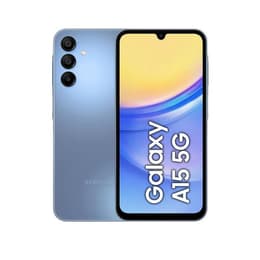
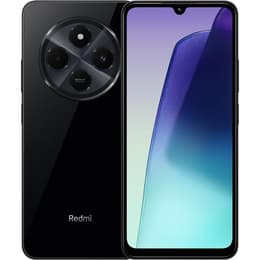


Galaxy A15 5G Vs Xiaomi Redmi 14C

Galaxy A15 5G
Galaxy A15 5G
Starting at

Refurbished price:124.00

Versus €248.54 new

See options
Xiaomi Redmi 14C
Xiaomi Redmi 14C
Starting at

Refurbished price:128.20

Versus €189.00 new

See options

Ratings

The Samsung Galaxy A15 5G, released in December 2023, and the Xiaomi Redmi 14C, launched in January 2025, are both smartphones designed for everyday use. While both devices operate on the Android platform, they offer distinct approaches to display technology, internal processing, and overall user experience. The Galaxy A15 5G emphasizes a vibrant display and a longer software support commitment, whereas the Redmi 14C focuses on a larger screen with a higher refresh rate and a more recent release.

Scores

Durability

When considering the long-term usability of these devices, their release timelines and software support policies are key factors.

  • Release Timeline: The Samsung Galaxy A15 5G was released in December 2023, making it available slightly earlier than the Xiaomi Redmi 14C, which launched in January 2025. [2, 5, 16, 22] This difference in release dates means the Redmi 14C benefits from a more recent hardware and software baseline.
  • Software Longevity: Samsung offers a substantial commitment for the Galaxy A15 5G, promising four major Android OS updates and five years of security patches. [12, 15, 31, 32] This extends its practical lifespan significantly, with updates expected until Android 18 and security patches until the end of 2028. [31] The Redmi 14C, running Android 14 with HyperOS, is a reliable device with software support, though specific long-term update commitments are not as extensively detailed as Samsung's. [16, 22]
  • Durability Features: The Galaxy A15 5G features a Gorilla Glass 5 front for screen protection, along with a plastic back and frame. [1, 15] The Redmi 14C offers an IP52 rating, providing a degree of protection against dust and splashes, and features a glass back design. [22]

Year of Release

2023

2024

Compatible with latest Update

Yes

Yes

OS

Android

Android

Foldable

No

No

Performance

The performance of a smartphone is crucial for daily tasks, app usage, and multitasking. Both devices are equipped to handle common activities, but with different underlying hardware.

  • Processing Capabilities: The Samsung Galaxy A15 5G is powered by a MediaTek Dimensity 6100+ processor. [1, 11, 13] This processor is designed to offer smooth performance for social media, web browsing, and casual gaming. [11] The Xiaomi Redmi 14C features a Qualcomm Snapdragon 4 Gen 2 processor, which is also suited for entry-level users and daily tasks like browsing and messaging. [16]
  • Memory and Storage: The Galaxy A15 5G is available with 4GB, 6GB, or 8GB of RAM and storage options of 128GB or 256GB, with expandable storage up to 1TB via a microSD card. [1, 10, 11, 15] The Redmi 14C comes with 4GB or 6GB of RAM and 64GB or 128GB of internal storage, also supporting microSD card expansion. [16]
  • Battery Performance: Both smartphones are equipped with large batteries to support extended usage. The Galaxy A15 5G has a 5000 mAh battery, while the Redmi 14C features a slightly larger 5160 mAh battery. [1, 16] Both devices support fast charging, with the Galaxy A15 5G supporting 25W charging and the Redmi 14C supporting 18W charging. [11, 16]

Memory (GB)

4 GB

4 GB

Screen quality

The display is a primary interface for users, and these two phones offer different visual experiences.

  • Display Technology and Resolution: The Samsung Galaxy A15 5G features a 6.5-inch Super AMOLED display with a resolution of 1080 x 2340 pixels, providing deep blacks and vibrant colors. [1, 15] In contrast, the Xiaomi Redmi 14C offers a larger 6.88-inch IPS LCD display with a resolution of 720 x 1640 pixels. [16, 22]
  • Refresh Rate and Brightness: Both devices offer a smooth viewing experience with a 90Hz refresh rate on the Galaxy A15 5G and a 120Hz refresh rate on the Redmi 14C. [1, 16, 22] The Galaxy A15 5G boasts a peak brightness of 800 nits, which aids visibility in various lighting conditions. [1] The Redmi 14C's brightness is generally sufficient for indoor use, though it may be less optimal in bright outdoor environments. [16]
  • Viewing Experience: The Super AMOLED panel on the Galaxy A15 5G typically provides better contrast and color saturation, which can enhance media consumption. The larger IPS LCD screen of the Redmi 14C offers more screen real estate, which can be beneficial for users who prefer a bigger display for content viewing or productivity.

Resolution

1080 x 2340

720 x 1640

Screen type

Super AMOLED

IPS LCD

Audiovisual

For capturing moments, both smartphones are equipped with multi-camera systems designed for everyday photography.

  • Rear Camera System: The Samsung Galaxy A15 5G features a triple rear camera setup, including a 50 MP main sensor, a 5 MP ultrawide lens, and a 2 MP macro lens. [1, 15] This configuration allows for versatility in capturing different types of shots. The Xiaomi Redmi 14C comes with a 50 MP dual rear camera setup, which is noted for capturing appealing pictures in daylight with good detail. [16, 22]
  • Front Camera and Video: For selfies and video calls, the Galaxy A15 5G has a 13 MP front camera. [1, 15] The Redmi 14C is equipped with an 8 MP front camera. [16, 22] Both devices are capable of recording video at 1080p resolution at 30 frames per second. [1, 15]
  • Photography Performance: The Galaxy A15 5G's ultrawide lens offers a broader perspective for landscapes or group photos, while its macro lens allows for close-up shots. The Redmi 14C's camera system is considered reliable for daylight photography, producing images with decent contrast and sharpness. [16]

Main camera

50 megapixels

50 megapixels

Front camera

13 megapixels

13 megapixels

Miscellaneous

Beyond the core specifications, several other features contribute to the overall user experience and device utility.

  • Connectivity: Both the Samsung Galaxy A15 5G and the Xiaomi Redmi 14C support 5G connectivity, enabling faster mobile data speeds. [1, 16, 22] The Galaxy A15 5G also includes Wi-Fi 802.11 a/b/g/n/ac and Bluetooth 5.3. [1]
  • Ports and Sensors: Both devices feature a USB-C port for charging and data transfer, and they both retain a 3.5mm headphone jack. [1, 13, 16] For security, both smartphones incorporate a side-mounted fingerprint sensor. [1, 11, 16]
  • Design and Handling: The Galaxy A15 5G has dimensions of 160.1 x 76.8 x 8.4 mm and weighs 200g. [1, 10] The Redmi 14C is slightly larger with a height of 171.88 mm and features a glass back design. [16, 22] The choice of materials and dimensions can influence how each device feels in hand and its overall portability.

Weight

200 g

207 g

Screen size (in)

6.5

6.88

Network

5G

4G

SIM card

Dual Physical SIM

Dual Physical SIM

Carrier compatibility

Unlocked

Unlocked

The Samsung Galaxy A15 5G and the Xiaomi Redmi 14C each present a compelling set of features for users seeking a capable smartphone. Users often praise the Galaxy A15 5G for its bright and colorful Super AMOLED display, which enhances media viewing and general interaction. Its extended software update policy is also a significant advantage, offering peace of mind for long-term use. Some users, however, have noted that its processor performance, while adequate for daily tasks, might show limitations during heavy multitasking or demanding applications. [5, 8]

The Xiaomi Redmi 14C, on the other hand, is frequently appreciated for its larger screen size and higher refresh rate, providing a smoother visual experience, particularly for scrolling and gaming. Its IP52 rating for dust and splash resistance adds a layer of practical durability. User feedback suggests its camera performs reliably in good lighting conditions, making it suitable for everyday photo capture. However, some users might find the display's resolution and outdoor brightness to be less impactful compared to devices with higher-end panels. [16]

Users prioritizing a vibrant display, a compact form factor, and a longer commitment to software updates may find the Samsung Galaxy A15 5G to be a well-suited option. Conversely, those who value a larger screen for immersive content, a higher refresh rate for smoother interactions, and a degree of dust and splash protection might lean towards the Xiaomi Redmi 14C. Both devices offer solid foundations for daily smartphone use, and considering a quality-assured refurbished option for either model can be an eco-friendly alternative for making an informed choice.


See all articles

Our recent comparisons