

Galaxy Z Fold4 Vs Xiaomi 13T Pro

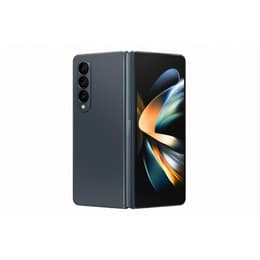
Galaxy Z Fold4
Galaxy Z Fold4
Starting at

Refurbished price:470.00

Versus €1,799.00 new

See options
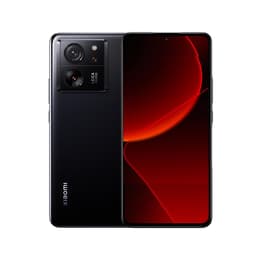
Xiaomi 13T Pro
Xiaomi 13T Pro
Starting at

Refurbished price:241.00

Versus €900.00 new

See options

Ratings

The Samsung Galaxy Z Fold4, released in August 2022, and the Xiaomi 13T Pro, launched in September 2023, represent distinct approaches to modern smartphone design. The Galaxy Z Fold4 offers a unique foldable form factor, transforming from a traditional smartphone into a larger tablet-like display, while the Xiaomi 13T Pro provides a high-performance, conventional slab experience. Both devices run on the Android operating system, but cater to different user preferences through their core design and feature sets.

Scores

Durability

When considering the long-term usability of these devices, both offer substantial software support, though their physical designs present different durability considerations.

  • Software Longevity: The Samsung Galaxy Z Fold4 is eligible for four major Android OS updates and five years of security updates, extending its support until approximately 2027. The Xiaomi 13T Pro also promises four major Android upgrades and five years of security patches, ensuring a comparable period of software relevance.
  • Physical Durability: The Galaxy Z Fold4 features an IPX8 water resistance rating, meaning it can withstand submersion in fresh water, but lacks official dust resistance. Its inner foldable screen uses Ultra-Thin Glass with protective layers, while the cover screen and back are protected by Gorilla Glass Victus+. The Xiaomi 13T Pro boasts an IP68 rating, offering comprehensive protection against both dust and water immersion. Its display is protected by Gorilla Glass 5.
  • Expected Lifespan: Users of the Galaxy Z Fold4 often report satisfaction with its durability, even after extended use, noting the hinge and screen hold up well with careful handling. The Xiaomi 13T Pro's traditional design, combined with its IP68 rating and Gorilla Glass 5, suggests a robust build for everyday use.

Year of Release

2022

2023

Compatible with latest Update

Yes

Yes

OS

Android

Android

Foldable

Yes

No

Performance

Both smartphones are equipped with powerful internal components designed to handle demanding applications and multitasking, though they utilize different underlying architectures.

  • Processing Power: The Galaxy Z Fold4 is powered by a processor that delivers consistent performance, efficiently managing tasks from everyday browsing to intensive gaming without significant heat issues. The Xiaomi 13T Pro features a current-generation processor that provides flagship-level performance, ensuring smooth operation across various applications and gaming scenarios.
  • Multitasking and Responsiveness: The Galaxy Z Fold4 excels in multitasking due to its large foldable display, allowing users to run multiple applications simultaneously with a PC-like taskbar for quick switching. Its 12GB of RAM further supports a fluid experience. The Xiaomi 13T Pro, available with up to 16GB of RAM, also offers excellent responsiveness and handles numerous open applications without slowdowns.
  • Storage Options: Both devices offer ample internal storage, with the Galaxy Z Fold4 available in 256GB, 512GB, and 1TB configurations using UFS 3.1 technology. The Xiaomi 13T Pro provides similar options, including 256GB, 512GB, and 1TB, utilizing the faster UFS 4.0 standard. Neither device supports expandable storage via microSD cards.

Memory (GB)

12 GB

12 GB

Screen quality

The display experience is a primary differentiator between these two devices, with the Galaxy Z Fold4 offering a unique adaptable screen and the Xiaomi 13T Pro providing a high-refresh-rate panel.

  • Display Technology and Size: The Galaxy Z Fold4 features two Dynamic AMOLED 2X displays: a 7.6-inch inner foldable screen and a 6.2-inch outer cover screen. The inner display offers an immersive, nearly square aspect ratio when unfolded. The Xiaomi 13T Pro comes with a single 6.67-inch AMOLED display.
  • Resolution and Clarity: The Z Fold4's main screen has a resolution of 2176 x 1812 pixels, providing sharp visuals on its large canvas, while the cover screen is 2316 x 904 pixels. The Xiaomi 13T Pro offers a resolution of 1220 x 2712 pixels, ensuring excellent clarity and detail on its panel.
  • Brightness and Refresh Rate: Both devices feature adaptive refresh rates for smooth scrolling and animations. The Z Fold4's main screen adapts from 1Hz to 120Hz, and its cover screen from 48Hz to 120Hz. The Xiaomi 13T Pro boasts a higher adaptive refresh rate of up to 144Hz, which can provide a very fluid visual experience, and offers high peak brightness for outdoor visibility.

Resolution

1812 x 2176

1220 x 2712

Screen type

Foldable Dynamic AMOLED 2X

AMOLED

Audiovisual

Both smartphones offer capable camera systems, but they approach photography with different hardware and software philosophies.

  • Rear Camera System: The Galaxy Z Fold4 is equipped with a triple-camera setup on the rear, including a 50MP main sensor, a 12MP ultrawide lens, and a 10MP telephoto lens with 3x optical zoom. This system is noted for producing vibrant and detailed images in good lighting. The Xiaomi 13T Pro also features a triple rear camera system, co-engineered with Leica, comprising a 50MP main sensor with optical image stabilization (OIS), a 50MP telephoto lens with 2x optical zoom, and a 12MP ultrawide lens. Users appreciate its authentic and customizable image styles.
  • Low-Light and Video Performance: The Z Fold4's main camera performs well in low-light conditions, capturing good detail and balanced exposure. It supports video recording up to 8K at 24fps. The Xiaomi 13T Pro's main camera also handles indoor and low-light photos effectively, though its secondary cameras may require more stable conditions due to less OIS. It offers video recording up to 8K at 24fps and 4K at 60fps.
  • Front Cameras and Audio: The Galaxy Z Fold4 has a 10MP camera on its cover screen and a 4MP under-display camera on the main screen, with the cover camera generally offering better quality for selfies. The Xiaomi 13T Pro features a 20MP front-facing camera, which is suitable for video calls and social media. Both devices offer stereo speakers for media consumption.

Main camera

50 megapixels

50 megapixels

Front camera

4 megapixels

20 megapixels

Miscellaneous

Beyond the core features, several practical elements contribute to the overall user experience of these devices.

  • Connectivity and Ports: Both smartphones support 5G connectivity and modern Wi-Fi standards, with the Xiaomi 13T Pro supporting Wi-Fi 7. The Galaxy Z Fold4 uses a USB-C 3.2 port, while the Xiaomi 13T Pro also features a USB-C port. Neither device includes a traditional headphone jack.
  • Biometric Security: The Galaxy Z Fold4 integrates a fingerprint sensor into its side power button, which users often find fast and reliable. It also offers face recognition. The Xiaomi 13T Pro features an in-screen fingerprint sensor and AI face unlock for secure access.
  • Design and Handling: The Galaxy Z Fold4 weighs 263g and has a folded thickness of 14.2-15.8mm, making it heavier and thicker than a standard smartphone, but offering a compact form factor when closed. The Xiaomi 13T Pro is lighter at 200g-206g and has a more conventional slab design, with dimensions that make one-handed use challenging for some. The Z Fold4 also supports S Pen input on its main display with specific S Pen models.

Weight

263 g

200 g

Screen size (in)

7.6

6.67

Network

5G

5G

SIM card

Dual Physical SIM + eSIM

Physical SIM + eSIM

Carrier compatibility

Unlocked

Unlocked

Connector

USB-C

USB-C

User feedback for the Samsung Galaxy Z Fold4 often highlights its innovative foldable design as a major advantage, providing a versatile experience that combines a phone and a small tablet. Many users appreciate the enhanced multitasking capabilities and the ability to consume media on a larger screen. Common criticisms sometimes revolve around its weight and thickness when folded, and some users have noted that the camera system, while capable, might not match the absolute best traditional flagship phones.

For the Xiaomi 13T Pro, users frequently praise its vibrant display with a high refresh rate, its fast charging capabilities, and the quality of its Leica-tuned camera system, especially the main sensor. Some users have reported mixed experiences with battery life, particularly when using mobile data, and occasional software quirks with HyperOS. The selfie camera is sometimes noted as adequate but not exceptional.

Users prioritizing a unique, adaptable form factor for enhanced productivity and media consumption on a larger screen may find the Samsung Galaxy Z Fold4 well-suited to their needs. Those who prefer a traditional smartphone experience with a focus on a high-refresh-rate display, fast charging, and a strong camera system in a more conventional design might lean towards the Xiaomi 13T Pro. Both devices offer a compelling Android experience, and choosing between them often comes down to whether the innovative foldable design or a more conventional, high-performance slab is a better fit for daily use. Exploring quality-assured refurbished options for either model can provide an eco-friendly alternative for consumers.


See all articles

Our recent comparisons