

Compare models

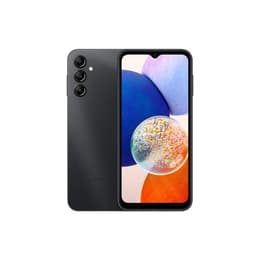
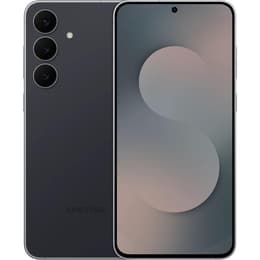
Galaxy A14 Vs Galaxy S25 FE

  • 1-year minimum warranty
  • Free delivery on all orders
  • Free 30-day returns
Galaxy A14
Starting at

Refurbished price:€133.00

Versus €269.00 new

See options
Galaxy S25 FE
Starting at

Refurbished price:€390.00

Versus €750.00 new

See options

Differences at a glance

The Samsung Galaxy A14 (2023) and the Samsung Galaxy S25 FE (2025) represent two different tiers and generations of Samsung's smartphone lineup. While the Galaxy A14 serves as an entry-level everyday device, the Galaxy S25 FE targets users looking for streamlined performance and modern hardware features in a more capable package. The two models differ significantly in their launch timelines, software support schedules, and core processing capabilities.

Available Models

Colour

Storage

Scores

Durability

Lifecycle longevity and update support differ notably between these two models, reflecting their respective release years and market placements.

  • Release timeline and age: The Galaxy A14 launched in early 2023, whereas the newer Galaxy S25 FE arrived in late 2025, providing a more recent manufacturing baseline and extended hardware wear life.
  • Software support duration: The Galaxy S25 FE benefits from a multi-year software maintenance commitment covering numerous upcoming operating system upgrades, while the Galaxy A14 features a shorter support lifecycle.
  • Expected practical lifespan: Users selecting quality-assured refurbished options like the Galaxy S25 FE will find greater future-proofing for demanding daily routines, whereas the Galaxy A14 suits simpler, short-term deployment needs.

Year of Release

2023

2025

Compatible with latest Update

No

Yes

OS

Android

Android

Foldable

No

No

Performance

System responsiveness and hardware capabilities vary substantially, dictating how each device handles intensive daily workloads.

  • Processor capabilities for everyday tasks: The Galaxy S25 FE handles heavy gaming, rapid app switching, and complex multitasking smoothly, whereas the Galaxy A14 is optimized for basic tasks like web browsing, messaging, and media streaming.
  • RAM and storage configurations: The Galaxy S25 FE starts with higher baseline memory for efficient background app management, while the Galaxy A14 relies on lighter configurations paired with expandable storage via microSD.
  • Battery behavior in typical use cases: Both devices manage daily energy consumption reliably, though the Galaxy S25 FE pairs its battery with faster charging protocols compared to the slower charging speed found on the Galaxy A14.

Screen quality

Display technologies shape visual clarity, outdoor visibility, and overall media consumption enjoyment across both smartphones.

  • Display technology and type: The Galaxy S25 FE features an advanced AMOLED panel with deep contrast and rich colors, while the Galaxy A14 utilizes a standard PLS LCD screen.
  • Brightness and outdoor visibility: Peak brightness levels on the Galaxy S25 FE ensure comfortable viewing under direct sunlight, whereas the Galaxy A14 requires manual shade adjustment in bright outdoor environments.
  • Refresh rate and smoothness: The Galaxy S25 FE supports a higher refresh rate for smooth scrolling animations, compared to the standard refresh rate on the Galaxy A14 display.

Audiovisual

Multimedia capabilities and optical hardware differ to accommodate casual photography versus more versatile shooting conditions.

  • Camera system versatility: The Galaxy S25 FE includes a refined multi-lens setup featuring high-resolution main sensors and dedicated telephoto or ultra-wide lenses, whereas the Galaxy A14 relies on a simpler multi-camera arrangement suited for basic snapshots.
  • Low-light and video performance: Processing algorithms on the Galaxy S25 FE preserve details and manage noise effectively in dim settings, while the Galaxy A14 produces usable results primarily in well-lit conditions.
  • Audio and media output: Stereo speaker output on the Galaxy S25 FE delivers an immersive soundstage for videos and calls, whereas the Galaxy A14 utilizes a single-speaker setup for basic audio playback.

Miscellaneous

Physical design, connectivity standards, and daily handling characteristics establish distinct user experiences for each model.

  • Connectivity options: The Galaxy S25 FE incorporates modern wireless standards including advanced Wi-Fi protocols and rapid 5G connectivity, while the Galaxy A14 offers standard 4G or basic 5G connectivity depending on the specific regional variant.
  • Build materials and handling: The Galaxy S25 FE utilizes sleek glass and aluminum construction with formal water resistance ratings, whereas the Galaxy A14 employs an all-plastic chassis without official water resistance certification.
  • Biometrics and security: The Galaxy S25 FE features a responsive under-display fingerprint scanner, while the Galaxy A14 uses a traditional side-mounted power button sensor.

Weight

201 g

190 g

Screen size (in)

6.6

6.7

Network

4G

5G

SIM card

Dual Physical SIM

Physical SIM + eSIM

Carrier compatibility

Unlocked

Unlocked

What the community thinks

User feedback highlights distinct preferences for each device depending on daily demands. Owners of the Galaxy A14 frequently praise its dependable battery endurance and straightforward interface for basic calling and messaging tasks. However, common criticisms focus on its slower charging speeds and limited graphics performance. Conversely, users of the Galaxy S25 FE appreciate the fluid display smoothness, responsive multitasking capabilities, and reliable low-light camera results, though some note the larger physical footprint can feel bulky during one-handed use.

Users prioritizing high-end gaming, bright outdoor displays, and long-term software updates will find the Galaxy S25 FE well-suited to their needs. Meanwhile, users focusing strictly on essential communication tools and basic media playback may prefer the simplicity of the Galaxy A14. Choosing a quality-assured refurbished device provides an eco-friendly alternative for acquiring either model without compromising on functional reliability.