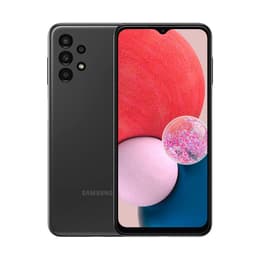
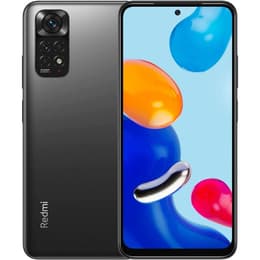


Galaxy A13 Vs Xiaomi Redmi Note 11

Galaxy A13
Galaxy A13
Starting at

Refurbished price:97.00

Versus €249.00 new

See options
Xiaomi Redmi Note 11
Starting at

Refurbished price:108.00

Versus €249.99 new

See options

Ratings

The Samsung Galaxy A13 and the Xiaomi Redmi Note 11, both released in early 2022, represent popular options in the entry-level smartphone segment. While both devices aim to provide essential smartphone functionalities, they offer distinct experiences, particularly concerning their display technology and software approach. The Galaxy A13 launched with Android 12 and Samsung's One UI, while the Redmi Note 11 debuted with Android 11 and Xiaomi's MIUI 13.

Scores

Durability

When considering the long-term usability of these devices, several factors contribute to their expected lifespan, including software support and physical resilience.

  • Release Timeline and Software Support: Both the Galaxy A13 (March 2022) and the Redmi Note 11 (January 2022) were released around the same time, meaning their software support cycles began similarly. The Galaxy A13 launched with Android 12 and has received updates, with the 4G model currently on Android 14 with One UI 6.1. The Redmi Note 11 launched with Android 11 and MIUI 13, later updating to Xiaomi HyperOS based on Android 13. Users can generally expect several years of software updates for both, though the Galaxy A13's initial Android version gives it a slight edge in potential future updates.
  • Repairability: The Samsung Galaxy A13 has a reported repairability score of 8 out of 10, indicating a design that facilitates easier repairs. The Redmi Note 11 4G has a repairability index of 6.5 out of 10, suggesting it is also reasonably repairable, with accessible components like the battery and screen. This means that for both devices, components are generally available and accessible for maintenance, contributing to their practical lifespan.
  • Expected Practical Lifespan: User experiences suggest that while both phones perform adequately initially, some users of the Galaxy A13 have reported significant slowdowns and unresponsiveness after about a year of use, impacting its practical longevity for some. The Redmi Note 11 also shows some UI stutters, particularly when running the 90Hz refresh rate, which might affect its perceived long-term smoothness for heavy users.

Year of Release

2022

2022

Compatible with latest Update

No

No

OS

Android

Android

Foldable

No

No

Performance

The performance of a smartphone is crucial for daily tasks, from navigating apps to handling more demanding activities.

  • Processor Capabilities: Both devices are equipped with processors designed for everyday use. The Galaxy A13 features an octa-core processor, which handles general applications and light multitasking. The Redmi Note 11 is powered by an octa-core processor built on a 6nm process, aiming for efficient performance. For typical social media, browsing, and communication, both phones offer sufficient power.
  • System Responsiveness and Multitasking: The Redmi Note 11 generally offers a responsive experience for day-to-day usage, with apps opening quickly. However, some users have noted occasional stutters in the user interface, especially when the display's higher refresh rate is active. The Galaxy A13, while initially smooth, has been reported by some users to become slower and less responsive over time, with apps freezing or taking longer to load, particularly with heavier usage.
  • Storage and RAM: Both models offer various configurations for RAM and internal storage, typically ranging from 3GB to 6GB of RAM and 32GB to 128GB of storage. The availability of different RAM options means that models with higher RAM will generally offer a smoother multitasking experience and better app retention in memory. Both devices also support expandable storage via a microSD card, allowing users to increase their storage capacity for photos, videos, and apps.

Memory (GB)

4 GB

4 GB

Screen quality

The display is a primary interface for smartphone interaction, and these two devices offer different visual experiences.

  • Display Technology and Clarity: The Xiaomi Redmi Note 11 features a 6.43-inch AMOLED display with a resolution of 1080x2400 pixels, providing vibrant colors, deep blacks, and good contrast. In contrast, the Samsung Galaxy A13 comes with a 6.6-inch PLS TFT LCD display, offering a resolution of 1080x2408 pixels. While both provide Full HD+ clarity, the AMOLED technology in the Redmi Note 11 generally delivers a more visually striking experience.
  • Brightness and Outdoor Visibility: The Redmi Note 11's AMOLED screen can reach peak brightness levels of up to 1000 nits, making it quite visible even in bright outdoor conditions. The Galaxy A13's PLS TFT LCD display, while adequate for indoor use, may struggle more with direct sunlight compared to the Redmi Note 11's brighter panel.
  • Refresh Rate and Smoothness: A key difference lies in the refresh rate. The Redmi Note 11 boasts a 90Hz refresh rate, which contributes to smoother scrolling and a more fluid user experience, particularly noticeable during web browsing and navigating the interface. The Samsung Galaxy A13, on the other hand, typically features a standard 60Hz refresh rate. This means animations and transitions will appear less fluid on the A13 compared to the Redmi Note 11.

Resolution

1080 x 2408

1080 x 2400

Screen type

PLS LCD

AMOLED

Audiovisual

For many users, the camera system is a significant consideration, and both phones offer multi-lens setups for varied photography.

  • Main Camera Capabilities: Both the Samsung Galaxy A13 and the Xiaomi Redmi Note 11 feature a 50-megapixel primary camera with an f/1.8 aperture, capable of capturing detailed images in good lighting conditions. This high megapixel count allows for decent photo quality for everyday moments.
  • Auxiliary Lenses and Versatility: The Galaxy A13 includes a 5-megapixel ultra-wide lens, a 2-megapixel macro lens, and a 2-megapixel depth sensor. The Redmi Note 11 offers an 8-megapixel ultra-wide lens, a 2-megapixel macro lens, and a 2-megapixel depth sensor. The Redmi Note 11's higher resolution ultra-wide lens may provide slightly more detail in wider shots. Both setups allow for different photographic perspectives, from expansive landscapes to close-up details and portrait effects.
  • Front Camera and Video Recording: For selfies, the Redmi Note 11 is equipped with a 13-megapixel front camera, while the Galaxy A13 features an 8-megapixel front camera. In terms of video, both devices are generally capable of recording at 1080p resolution. User feedback for both suggests that camera performance is generally acceptable in well-lit environments but can be a letdown in low-light conditions, with some users noting a lack of video stabilization on the Redmi Note 11.
  • Audio Experience: The Redmi Note 11 is noted for having loud stereo speakers, which can enhance the media consumption experience. The Galaxy A13 typically features a single speaker, which might offer a less immersive audio experience compared to stereo setups.

Main camera

50 megapixels

50 megapixels

Front camera

8 megapixels

13 megapixels

Miscellaneous

Beyond core performance, several practical features contribute to the overall user experience of a smartphone.

  • Connectivity Options: Both devices support 4G LTE connectivity for mobile data. The Galaxy A13 also has a 5G variant, offering faster network speeds where available. The Redmi Note 11 supports Wi-Fi 802.11 a/b/g/n/ac and Bluetooth v5.00. The Galaxy A13 also includes Wi-Fi and Bluetooth connectivity.
  • Ports and Sensors: Both phones feature a USB Type-C port for charging and data transfer. The Redmi Note 11 also includes an infrared (IR) blaster, which allows it to function as a universal remote control for various home appliances. Both devices come with a side-mounted fingerprint sensor for secure unlocking, along with other standard sensors like accelerometers, ambient light sensors, and proximity sensors. The Redmi Note 11 also retains a 3.5mm headphone jack, a feature that some users still prioritize.
  • Build Materials and Handling: The Galaxy A13 features a plastic build with Corning Gorilla Glass 5 protection on its display. The Redmi Note 11 often features a dual-glass design with a matte finish and Corning Gorilla Glass 3 for screen protection. The Redmi Note 11 also carries an IP53 rating for dust and splash resistance. In terms of dimensions, the Galaxy A13 measures 165.1 x 76.4 x 8.8 mm and weighs 195 grams, while the Redmi Note 11 measures 159.87 x 73.87 x 8.09 mm and weighs 179 grams. The Redmi Note 11 is slightly more compact and lighter, potentially offering a more comfortable in-hand feel for some users.

Weight

195 g

179 g

Screen size (in)

6.6

6.43

Network

4G

4G

SIM card

Dual Physical SIM

Dual Physical SIM

Carrier compatibility

Unlocked

Unlocked

User feedback for both the Samsung Galaxy A13 and the Xiaomi Redmi Note 11 highlights their strengths and areas for improvement. For the Galaxy A13, common praise points often include its large display and the familiarity of Samsung's One UI. However, frequent criticisms revolve around its performance, with many users reporting significant slowdowns and unresponsiveness after several months of use, making it challenging for even basic tasks. The camera performance is generally considered adequate in good lighting but struggles in less ideal conditions.

The Redmi Note 11 is often lauded for its vibrant AMOLED display with a 90Hz refresh rate, offering a smoother visual experience, and its good battery life with faster charging capabilities. Its stereo speakers are also a positive point for media consumption. On the other hand, some users have noted occasional UI stutters despite the higher refresh rate, and the processor's performance may not hold up well for demanding games or heavy multitasking over time. The camera, while solid for the main sensor, has received criticism for its ultrawide performance and lack of 4K video recording.

For users prioritizing a large display and the Samsung ecosystem, the Galaxy A13 could be a consideration, especially if their usage is very light and they are prepared for potential long-term performance degradation. Those who value a superior display experience with smoother scrolling, faster charging, and better audio for media consumption may find the Xiaomi Redmi Note 11 more appealing. Both devices offer a solid foundation for everyday smartphone use, and choosing a quality-assured refurbished option for either model can be an eco-friendly alternative to purchasing new, providing a reliable device while extending its lifecycle.


See all articles

Our recent comparisons






