

Galaxy A13 Vs Xiaomi 13T Pro

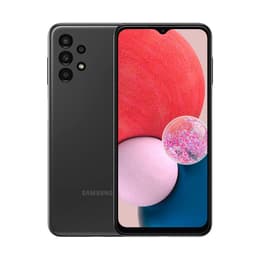
Galaxy A13
Galaxy A13
Starting at

Refurbished price:97.00

Versus €249.00 new

See options
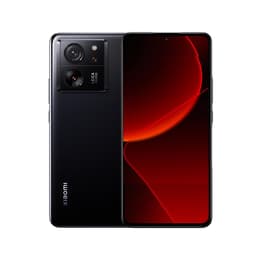
Xiaomi 13T Pro
Xiaomi 13T Pro
Starting at

Refurbished price:245.00

Versus €900.00 new

See options

Ratings

The Samsung Galaxy A13, released in March 2022, and the Xiaomi 13T Pro, launched in September 2023, represent distinct offerings within the Android smartphone market. While both operate on the Android platform, the Xiaomi 13T Pro distinguishes itself with a more advanced display, significantly more powerful internal components, and a sophisticated camera system co-engineered with Leica. The Galaxy A13, on the other hand, focuses on delivering essential smartphone functionalities.

Scores

Durability

The expected practical lifespan of a smartphone is influenced by its initial release date, software support, and physical durability.

  • Release Timeline: The Galaxy A13 was released in March 2022, making it an older model compared to the Xiaomi 13T Pro, which launched in September 2023. This difference in release year means the Xiaomi 13T Pro benefits from a longer period of anticipated software updates and newer hardware.
  • Software Longevity: The Galaxy A13 launched with Android 12 and has received updates up to Android 14, with Samsung generally providing several years of software support. The Xiaomi 13T Pro, starting with Android 13 and MIUI 14 (upgradable to HyperOS), is expected to receive up to four major Android upgrades, potentially offering a longer period of current software features and security patches.
  • Durability Features: Both devices feature Corning Gorilla Glass 5 for screen protection. However, the Xiaomi 13T Pro includes an IP68 rating for dust and water resistance, providing a higher level of protection against environmental elements compared to the Galaxy A13, which lacks an official IP rating.

Year of Release

2022

2023

OS

Android

Android

Foldable

No

No

Performance

Performance differences between these two devices are notable, impacting how smoothly they handle various tasks from everyday browsing to demanding applications.

  • Everyday Responsiveness: The Galaxy A13 is powered by an octa-core processor that handles basic daily tasks like messaging, browsing, and social media. However, users may experience occasional delays or stuttering when opening apps or navigating menus, and it is not designed for intensive gaming. The Xiaomi 13T Pro features a more powerful current-generation octa-core processor, enabling smooth multitasking, rapid app loading, and a highly responsive user experience even with demanding applications and graphically intensive games.
  • Multitasking and Storage: The Galaxy A13 typically comes with 3GB, 4GB, or 6GB of RAM and offers storage options up to 128GB, which can be expanded with a microSD card. The Xiaomi 13T Pro provides significantly more RAM, with options for 12GB or 16GB, and faster UFS 4.0 internal storage ranging from 256GB to 1TB, contributing to superior multitasking capabilities and quicker data access.
  • Battery Behavior: Both phones are equipped with a 5000mAh battery. The Galaxy A13's battery generally provides over a full day of use, and with moderate usage, it can extend to two days, partly due to its less demanding hardware. The Xiaomi 13T Pro also offers a full day of usage, but its more powerful components and high refresh rate display can lead to more frequent charging for heavy users. It supports very fast wired charging, allowing for a full charge in a short period.

Memory (GB)

4 GB

16 GB

Screen quality

The display is a primary interface for smartphone interaction, and these two devices offer different visual experiences.

  • Display Technology and Clarity: The Galaxy A13 features a 6.6-inch PLS TFT LCD with a Full HD+ resolution (1080x2408 pixels), providing clear visuals for everyday content. The Xiaomi 13T Pro boasts a 6.67-inch AMOLED display with a higher 1.5K resolution (2712x1220 pixels), offering deeper blacks, more vibrant colors, and enhanced clarity.
  • Brightness and Outdoor Visibility: The Galaxy A13's LCD screen offers adequate brightness for indoor use and reasonable visibility outdoors, though it may struggle in direct sunlight. The Xiaomi 13T Pro's AMOLED display features high brightness levels, with a typical HBM (High Brightness Mode) of 1200 nits and a peak brightness of 2600 nits, ensuring excellent readability even in bright outdoor conditions.
  • Refresh Rate and Smoothness: The Galaxy A13 has a standard 60Hz refresh rate, which is suitable for general use. The Xiaomi 13T Pro offers a significantly smoother visual experience with a 144Hz adaptive refresh rate, making scrolling, animations, and gaming appear fluid and responsive.

Resolution

1080 x 2408

1220 x 2712

Audiovisual

Camera capabilities vary significantly between these two smartphones, catering to different photography needs and expectations.

  • Rear Camera System: The Galaxy A13 features a quad-camera setup with a 50MP main sensor, a 5MP ultrawide lens, and two 2MP sensors for macro and depth. It performs well in good lighting conditions for everyday photos. The Xiaomi 13T Pro offers a triple camera system co-engineered with Leica, including a 50MP main sensor with optical image stabilization (OIS), a 50MP telephoto lens with 2x optical zoom, and a 12MP ultrawide lens. This setup is designed for more versatile and detailed photography, including improved low-light performance and specialized shooting modes.
  • Photography Features and Quality: The Galaxy A13 includes basic camera modes like Portrait and Panorama. The Xiaomi 13T Pro benefits from Leica's optical expertise and color science, offering features like Leica Authentic and Vibrant photographic styles, and a dedicated telephoto lens for clearer zoomed-in shots and effective telemacro capabilities.
  • Video Recording: Both devices can record video at 1080p resolution at 30 frames per second. The Xiaomi 13T Pro extends its video capabilities significantly, supporting up to 8K resolution at 24 frames per second and 4K at 60 frames per second, along with advanced features like 10-bit LOG recording and HDR10+, providing more options for high-quality video capture.

Miscellaneous

Beyond core performance, several practical elements contribute to the overall user experience and device utility.

  • Connectivity and Ports: The Galaxy A13 supports 4G LTE connectivity, Wi-Fi 5, and Bluetooth 5.0, and includes a 3.5mm headphone jack and a USB-C 2.0 port. The Xiaomi 13T Pro offers more advanced connectivity with 5G support, Wi-Fi 7 (or Wi-Fi 6E/6 depending on region), and Bluetooth 5.4, utilizing a USB-C 2.0 port but omitting the traditional headphone jack.
  • Biometric Security: The Galaxy A13 features a side-mounted fingerprint sensor for secure unlocking. The Xiaomi 13T Pro incorporates an in-display optical fingerprint sensor, offering a modern and integrated biometric security solution.
  • Design and Handling: The Galaxy A13 has a plastic build for its back and frame, contributing to its lighter feel. The Xiaomi 13T Pro offers a more premium build with a glass front, an aluminum frame, and options for a glass or vegan leather back, providing a different tactile experience. Both devices have similar dimensions and weight, making them comparable in terms of handling for their screen size.

Weight

195 g

206 g

Screen size (in)

6.6

6.67

Network

4G

5G

SIM card

Dual Physical SIM

Physical SIM + eSIM

Carrier compatibility

Unlocked

Unlocked

The Samsung Galaxy A13 and Xiaomi 13T Pro cater to different user needs and priorities. Users often praise the Galaxy A13 for its reliable battery life and the inclusion of a headphone jack and expandable storage, making it a practical choice for essential smartphone functions. Criticisms sometimes point to its slower performance and the 60Hz display, which can feel less fluid compared to newer devices.

The Xiaomi 13T Pro is frequently lauded for its powerful performance, vibrant 144Hz AMOLED display, and the versatile Leica-tuned camera system, which delivers high-quality photos and advanced video capabilities. Its fast charging is also a significant advantage for users who need quick power top-ups. Some users might note the absence of a headphone jack and non-expandable storage as potential drawbacks.

Users prioritizing a smooth, high-performance experience for gaming, demanding apps, and advanced photography will find the Xiaomi 13T Pro well-suited to their needs. Its superior display and faster charging also appeal to those who consume a lot of media or are frequently on the go. Conversely, users who value long battery life for basic tasks, expandable storage, and the convenience of a headphone jack, and do not require top-tier performance, may prefer the Samsung Galaxy A13. Both devices are available as quality-assured refurbished options, providing an eco-friendly alternative for consumers.


See all articles

Our recent comparisons




