

Compare models

Galaxy A13 Vs iPhone 13 Pro

  • 1-year minimum warranty
  • Free delivery on all orders
  • Free 30-day returns
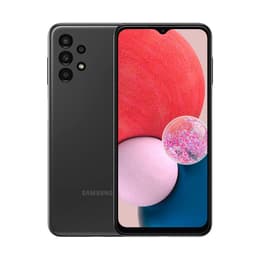
Galaxy A13
Starting at

Refurbished price:102.00

Versus €249.00 new

See options
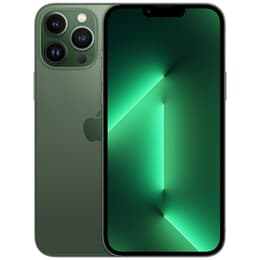
iPhone 13 Pro
Starting at

Refurbished price:373.00

Versus €1,149.00 new

See options

Differences at a glance

The Samsung Galaxy A13, released in March 2022, and the iPhone 13 Pro, launched in September 2021, represent distinct segments within the smartphone market. While both devices offer core smartphone functionalities, they cater to different user expectations and priorities. The Galaxy A13 operates on the Android platform, providing a customizable experience, whereas the iPhone 13 Pro runs on Apple's iOS, known for its integrated ecosystem and streamlined interface. The primary differentiators lie in their display technology, processing power, and advanced camera capabilities.

Available Models

Colour

Storage (GB)

Scores

Durability

The longevity of a smartphone is influenced by its initial release date, software support, and physical resilience.

  • Release Timeline: The iPhone 13 Pro was released in September 2021, making it slightly older than the Galaxy A13, which debuted in March 2022 [1, 2, 14, 19, 22]. This difference in launch dates impacts their respective software support windows.
  • Software Support: The iPhone 13 Pro, running iOS, typically receives major operating system updates for approximately seven years from its release, potentially extending support until iOS 28 (Fall 2027) or even iOS 29 (Fall 2028) [1, 34]. The Galaxy A13, on the other hand, is slated to receive two major Android OS upgrades and four years of security updates from its launch [2]. This means the iPhone 13 Pro is expected to maintain software relevance for a longer period.
  • Repairability: The iPhone 13 Pro received an iFixit repairability score of 5 out of 10. While display and battery replacements are considered manageable, software pairing of components can complicate third-party repairs, potentially disabling features like Face ID if non-authorized parts are used [18, 25, 26, 36]. The Galaxy A13 features a glass front protected by Corning Gorilla Glass 5 and a plastic back and frame, which generally offers a degree of resilience for everyday use [2, 14].

Year of Release

2022

2021

Compatible with latest Update

No

Yes

OS

Android

iOS

Foldable

No

No

Performance

Performance is a key aspect that dictates how smoothly a device handles daily tasks, from basic navigation to demanding applications.

  • Processing Power: The iPhone 13 Pro is equipped with a high-performance processor designed for intensive tasks, enabling smooth operation across demanding applications, complex multitasking, and graphically rich games [4, 6]. The Galaxy A13 features an octa-core processor that capably handles everyday smartphone functions, web browsing, and social media, providing a responsive experience for general use [2, 8, 14, 17].
  • Multitasking and Storage: The iPhone 13 Pro comes with 6GB of RAM, contributing to its ability to manage numerous applications simultaneously without slowdowns [1, 6, 19]. It offers internal storage options up to 1TB, but without expandable storage [1, 6, 19]. The Galaxy A13 is available with various RAM configurations, including 3GB, 4GB, and 6GB, which support typical multitasking needs [2, 8, 14]. It also provides expandable storage up to 1TB via a microSD card, offering flexibility for users with large media libraries [2, 14, 17].
  • Battery Behavior: The iPhone 13 Pro features a 3095 mAh battery, optimized for extended usage, offering up to 22 hours of video playback [3, 4, 6]. The Galaxy A13 is equipped with a larger 5000 mAh battery, which typically translates to prolonged usage between charges for average users [2, 9, 14]. Both devices support fast charging, with the iPhone 13 Pro capable of reaching 50% charge in about 30 minutes with a compatible adapter [3].

Screen quality

The display is the primary interface for user interaction, and its quality significantly impacts the viewing experience.

  • Display Technology and Clarity: The iPhone 13 Pro features a 6.1-inch Super Retina XDR OLED display, which delivers deep blacks, high contrast, and vibrant colors, resulting in a clear and immersive visual experience [1, 3, 21]. The Galaxy A13 utilizes a 6.6-inch PLS TFT LCD screen, offering a large viewing area and clear visuals suitable for general content consumption [2, 9, 12, 17].
  • Resolution and Brightness: The iPhone 13 Pro's display has a resolution of 2532 x 1170 pixels at 460 pixels per inch (ppi), providing sharp detail [1, 3, 21]. It also boasts a typical maximum brightness of 1000 nits, peaking at 1200 nits for HDR content, which ensures excellent visibility even in bright outdoor conditions [1, 3]. The Galaxy A13 offers a resolution of 2408 x 1080 pixels, resulting in a pixel density of approximately 400 ppi, which is suitable for everyday viewing [2, 9, 12].
  • Refresh Rate and Smoothness: A notable feature of the iPhone 13 Pro is its ProMotion technology, offering an adaptive refresh rate that can scale from 10Hz to 120Hz. This provides exceptionally smooth scrolling and fluid animations, enhancing the responsiveness of the interface [1, 3, 22]. The Galaxy A13's display operates at a standard refresh rate, providing a consistent visual experience for typical smartphone interactions.

Resolution

1080 x 2408

1170 x 2532

Screen type

PLS LCD

Super Retina XDR OLED

Audiovisual

Camera capabilities are a significant factor for many users, influencing how they capture and share moments.

  • Rear Camera System: The iPhone 13 Pro features a versatile triple 12MP camera system, including Wide, Ultra Wide, and Telephoto lenses. The Wide lens has a large aperture and sensor-shift optical image stabilization for improved low-light performance, while the Telephoto lens offers 3x optical zoom [3, 4, 7]. The Galaxy A13 comes with a quad-camera setup, featuring a 50MP main wide lens, a 5MP ultra-wide lens, and two 2MP lenses for macro and depth sensing, providing options for various photography scenarios [2, 12, 14].
  • Photography Features: The iPhone 13 Pro includes advanced computational photography features such as Night mode, Deep Fusion, Smart HDR 4, and Apple ProRAW, which enhance image quality across different lighting conditions [3, 4, 7]. It also incorporates a LiDAR Scanner for improved low-light focusing and Night mode portraits [3, 4]. The Galaxy A13's 50MP main sensor uses pixel binning to produce detailed 12.5MP images, and its ultra-wide lens allows for broader landscape shots [2, 13].
  • Video Recording and Front Camera: For video, the iPhone 13 Pro offers Cinematic mode for shallow depth-of-field effects, HDR video recording with Dolby Vision up to 4K at 60fps, and ProRes video recording for professional-grade footage [3, 4]. Its 12MP TrueDepth front camera supports many of the same advanced photographic features as the rear cameras [3, 4]. The Galaxy A13 records video at 1080p at 30fps for both its rear and 8MP front cameras, suitable for everyday video capture and video calls [2, 11, 12].

Main camera

50 megapixels

12 megapixels

Front camera

8 megapixels

12 megapixels

Miscellaneous

Beyond core features, several practical elements contribute to the overall user experience and device utility.

  • Connectivity and Ports: The iPhone 13 Pro supports 5G connectivity, offering faster mobile data speeds where available, along with Wi-Fi 6 and Bluetooth 5.0 [4, 23, 32]. It uses a Lightning port for charging and data transfer [19, 23]. The Galaxy A13 supports 4G LTE connectivity, Wi-Fi (including 5GHz bands), and Bluetooth 5.0 [12, 14]. It features a USB-C 2.0 port and retains a 3.5mm headphone jack, which is absent on the iPhone 13 Pro [12].
  • Biometric Security and Sensors: The iPhone 13 Pro relies on Face ID for secure facial recognition and authentication [4]. It also includes an Ultra Wideband chip for spatial awareness and a LiDAR Scanner [4, 33]. The Galaxy A13 incorporates a side-mounted fingerprint sensor for biometric security [12, 16]. Both devices include standard sensors like accelerometers, proximity sensors, and ambient light sensors [12, 16].
  • Design and Handling: The iPhone 13 Pro features a premium build with a Ceramic Shield front, matte glass back, and stainless steel frame, weighing 204 grams [1, 4, 19, 29]. Its dimensions are 146.7 x 71.5 x 7.65 mm [1, 6, 19]. The Galaxy A13 has a glass front (Gorilla Glass 5) and a plastic back and frame, weighing 195 grams [2, 8, 14]. Its larger dimensions are 165.1 x 76.4 x 8.8 mm [8, 12].

Weight

195 g

203 g

Screen size (in)

6.6

6.1

Network

4G

5G

SIM card

Dual Physical SIM

Physical SIM + eSIM

Carrier compatibility

Unlocked

Unlocked

What the community thinks

The Samsung Galaxy A13 and iPhone 13 Pro cater to different user needs and preferences, reflecting their distinct market positions. Users frequently praise the iPhone 13 Pro for its exceptional camera system, particularly its low-light performance and advanced video capabilities like Cinematic mode and ProRes [4, 7]. Its vibrant OLED display with ProMotion technology is also a common highlight, noted for its smoothness and clarity [1, 22]. Criticisms sometimes point to its proprietary Lightning port and the challenges associated with third-party repairs due to software limitations [23, 25, 26].

The Galaxy A13 is often commended for its large display, long-lasting battery life, and the inclusion of a 3.5mm headphone jack and expandable storage, which are practical features for many users [2, 12, 14]. Common feedback for the Galaxy A13 often centers on its capable performance for everyday tasks and its robust battery. However, some users might find its LCD display less vibrant compared to OLED panels, and its camera performance, while solid for its category, does not offer the advanced features found in higher-end devices.

Users prioritizing a premium build, advanced camera features, a highly fluid display, and long-term software support will find the iPhone 13 Pro well-suited to their needs. Its integrated ecosystem and powerful performance make it ideal for creative professionals or those who demand top-tier mobile technology. Conversely, users who value a larger screen, extensive battery life, expandable storage, and the flexibility of the Android operating system may lean toward the Galaxy A13. It is a practical choice for individuals seeking reliable performance for daily communication and media consumption without needing the most advanced features.

For those considering either device, exploring quality-assured refurbished options can provide a sustainable choice, offering access to these technologies with environmental benefits.