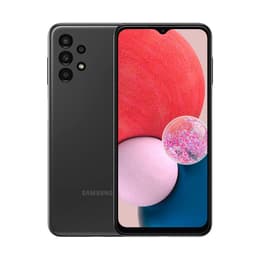


Galaxy A13 Vs Google Pixel 9

Galaxy A13
Galaxy A13
Starting at

Refurbished price:97.00

Versus €249.00 new

See options
Google Pixel 9
Google Pixel 9
Starting at

Refurbished price:376.00

Versus €1,066.71 new

See options

Ratings

The Samsung Galaxy A13, released in March 2022, is a smartphone designed for everyday use, focusing on essential features and a straightforward user experience. In contrast, the Google Pixel 9, launched in August 2024, represents a more advanced device, integrating sophisticated camera technology and a focus on artificial intelligence capabilities. Both devices operate on the Android platform, but they cater to different user expectations regarding performance, camera prowess, and long-term software support.

Scores

Durability

The longevity of a smartphone is influenced by its release timeline, software support, and physical durability.

  • Release Timeline and Software Support: The Galaxy A13, released in March 2022, received two major Android OS updates, reaching Android 14, and continues to receive security updates for a period beyond that. However, major OS updates have concluded as of early 2025. The Google Pixel 9, released in August 2024, benefits from an extended support policy, promising seven years of OS, security, and feature updates, ensuring its software remains current until 2031.
  • Physical Durability: The Galaxy A13 features a glass front protected by Corning Gorilla Glass 5, with a plastic frame and back. The Pixel 9 incorporates Corning Gorilla Glass Victus 2 on both its front and back, offering enhanced scratch and drop resistance. Additionally, the Pixel 9 carries an IP68 rating for water and dust resistance, providing a higher level of protection against environmental elements compared to the A13, which lacks an official IP rating.
  • Expected Practical Lifespan: Users prioritizing a device with the longest possible software and security update lifespan will find the Pixel 9's seven-year commitment more aligned with their needs. The Galaxy A13, while still functional, will not receive further major Android version upgrades.

Year of Release

2022

2024

Compatible with latest Update

No

Yes

OS

Android

Android

Foldable

No

No

Performance

Performance in smartphones is determined by the efficiency of their internal components, impacting how smoothly applications run and how effectively the device handles multitasking.

  • Processing Capabilities: The Galaxy A13 is equipped with a processor suitable for daily tasks such as web browsing, social media, and light applications. Some users have noted occasional sluggishness during app transitions and less optimal performance with demanding games. The Pixel 9, featuring a more advanced processor, delivers a smooth and responsive experience across a wide range of applications, including more intensive tasks and multitasking. While generally performing well, some users have observed that it can warm up during prolonged heavy use and that software animations, while fluid, might feel slightly less immediate compared to some other high-performance Android devices.
  • Memory and Storage: The Galaxy A13 offers various configurations, including 3GB, 4GB, or 6GB of RAM, and storage options from 32GB to 128GB, with the flexibility to expand storage using a microSD card up to 1TB. The Pixel 9 comes with 12GB of RAM and internal storage options of 128GB or 256GB, without support for expandable storage. The larger RAM in the Pixel 9 contributes to more efficient multitasking and smoother operation of numerous applications simultaneously.
  • Battery Behavior: Both devices offer substantial battery capacities. The Galaxy A13 has a 5000 mAh battery, often providing more than a full day of use for many users. The Pixel 9, with a 4700 mAh battery, is also designed to last over 24 hours on a single charge, with optimizations for efficiency. The Pixel 9 supports faster wired charging compared to the Galaxy A13, though some users have noted its charging speed is not as rapid as some competing devices.

Memory (GB)

4 GB

12 GB

Screen quality

The display is a primary interface for smartphone interaction, with technology and specifications significantly influencing the visual experience.

  • Display Technology and Resolution: The Galaxy A13 features a 6.6-inch PLS LCD display with a resolution of 1080 x 2408 pixels, providing clear visuals for everyday content. The 5G variant has a 6.5-inch HD+ PLS IPS display with a lower resolution. The Pixel 9 is equipped with a 6.3-inch Actua OLED display, offering a resolution of 1080 x 2424 pixels, which translates to sharper images and more vibrant colors due to OLED technology's ability to produce deep blacks and high contrast.
  • Brightness and Refresh Rate: The Galaxy A13 typically operates at a standard 60Hz refresh rate, with its 5G variant offering 90Hz for slightly smoother scrolling. Its brightness levels are suitable for indoor use and adequate in many outdoor conditions. The Pixel 9's OLED display supports an adaptive refresh rate ranging from 60Hz to 120Hz, resulting in noticeably smoother scrolling and more fluid animations. It also boasts significantly higher brightness levels, reaching up to 1800 nits for HDR content and a peak of 2700 nits, which enhances visibility in bright outdoor environments.
  • Viewing Experience: The Pixel 9's OLED panel provides a more immersive viewing experience with superior color accuracy and contrast, making it well-suited for media consumption and detailed visual tasks. The Galaxy A13's LCD panel offers a functional viewing experience, though it may not deliver the same depth of color or contrast as an OLED screen.

Resolution

1080 x 2408

1080 x 2424

Screen type

PLS LCD

OLED

Audiovisual

Camera systems are a key differentiator, with hardware and software working in tandem to capture images and videos.

  • Rear Camera System: The Galaxy A13 includes a quad-camera setup on its LTE version, featuring a 50MP main sensor, a 5MP ultrawide, and two 2MP sensors for macro and depth. The 5G version omits the ultrawide lens. The main camera performs adequately in good lighting, but its performance diminishes in low-light conditions, and the auxiliary lenses are generally considered less impactful. The Pixel 9 features a dual-camera system with a 50MP main camera with optical image stabilization and a 48MP ultrawide camera that also supports macro focus. This setup is known for producing consistently high-quality photos with excellent detail, color accuracy, and impressive low-light capabilities, often leveraging computational photography for enhanced results.
  • Front Camera and Video Recording: The Galaxy A13 has an 8MP front camera (LTE) or 5MP (5G) capable of 1080p video recording at 30 frames per second. The Pixel 9 is equipped with a 10.5MP Dual PD selfie camera with autofocus, delivering clear and detailed self-portraits. For video, the Pixel 9 can record in 4K at up to 60 frames per second, offering superior video quality and more advanced features compared to the Galaxy A13's 1080p 30fps limit.
  • Audio Quality: The Pixel 9 offers a robust media consumption experience with good speaker output. While the Galaxy A13 includes a 3.5mm headphone jack, which the Pixel 9 lacks, the overall audio experience for media playback on the Pixel 9 is generally more refined.

Main camera

50 megapixels

50 megapixels

Front camera

8 megapixels

10.5 megapixels

Miscellaneous

Beyond core performance and display, several practical elements contribute to the overall user experience and device utility.

  • Connectivity and Ports: The Galaxy A13 supports 4G (LTE model) or 5G (5G model), Wi-Fi 5, and Bluetooth 5.0. It includes a USB-C port for charging and data transfer, and notably, a 3.5mm headphone jack. The Pixel 9 offers more advanced connectivity with 5G, Wi-Fi 7, and Bluetooth 5.3. It features a USB-C port but does not include a 3.5mm headphone jack. Both devices support dual SIM functionality, with the Pixel 9 offering a combination of physical Nano SIM and eSIM.
  • Biometric Security and Design: The Galaxy A13 incorporates a side-mounted fingerprint sensor for secure unlocking. Its design features a plastic back and frame, contributing to a lighter feel. The Pixel 9 utilizes an in-display fingerprint sensor and also supports Face Unlock for biometric authentication. Its design is characterized by flat side rails and a glass front and back, giving it a more premium and modern aesthetic. The Pixel 9's camera module is integrated into a distinct island on the back.
  • Weight and Dimensions: The Galaxy A13 measures approximately 165.1 x 76.4 x 8.8 mm and weighs around 195g. The Pixel 9 is slightly more compact at 152.8 x 72.0 x 8.5 mm and weighs about 198g, offering a more manageable size for one-handed use while maintaining a solid feel.

Weight

195 g

198 g

Screen size (in)

6.6

6.3

Network

4G

5G

SIM card

Dual Physical SIM

Physical SIM + eSIM

Carrier compatibility

Unlocked

Unlocked

The Samsung Galaxy A13 and Google Pixel 9 cater to distinct user needs and preferences. Users often praise the Galaxy A13 for its long battery life and its ability to handle basic smartphone functions reliably. Some common criticisms include its camera performance in challenging lighting and occasional slowdowns in overall responsiveness.

The Google Pixel 9 receives commendation for its exceptional camera quality, consistent photo results, and the overall smooth performance of its operating system. Its extended software support policy is also a significant advantage. Some users have noted that the device can warm up under heavy load and that its charging speed, while fast, might not match the quickest options available.

Users prioritizing a device for essential communication, social media, and media consumption, who also value a long-lasting battery and expandable storage, may find the Galaxy A13 well-suited to their needs. Conversely, individuals who place a high premium on advanced camera capabilities, a vibrant and fluid display, long-term software updates, and a premium build will likely lean towards the Google Pixel 9. Both devices offer a quality-assured refurbished option for those seeking a sustainable choice.


See all articles

Our recent comparisons