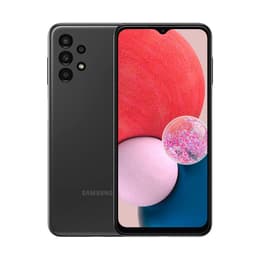



Galaxy A13 Vs Google Pixel 8 Pro

Galaxy A13
Galaxy A13
Starting at

Refurbished price:97.00

Versus €249.00 new

See options
Google Pixel 8 Pro
Google Pixel 8 Pro
Starting at

Refurbished price:293.00

Versus €1,099.00 new

See options

Ratings

The Samsung Galaxy A13, released in March 2022, and the Google Pixel 8 Pro, launched in October 2023, represent distinct segments of the smartphone market. While the Galaxy A13 is an entry-level device running Android 12 at its debut, the Pixel 8 Pro is a flagship offering that arrived with Android 14. These two devices cater to different user needs, with the Pixel 8 Pro focusing on advanced features and performance, and the Galaxy A13 prioritizing essential smartphone functionalities.

Scores

Durability

When considering the longevity of these devices, their release timelines and software support policies are key differentiators.

  • Software Support: The Google Pixel 8 Pro offers an extensive seven years of software, security, and feature updates from its release, ensuring long-term relevance and security. In contrast, the Samsung Galaxy A13 typically receives two major Android OS updates and four years of security updates.
  • Build Materials: The Pixel 8 Pro features a more robust construction with Gorilla Glass Victus 2 on both the front and back, complemented by an aluminum frame and an IP68 rating for dust and water resistance. The Galaxy A13, on the other hand, utilizes a plastic build with Gorilla Glass 5 on the front, and does not carry an official IP rating.
  • Repairability: The Galaxy A13 (LTE model) has been noted for a relatively high repairability score of 8 out of 10, suggesting easier access to components for potential repairs. The Pixel 8 Pro, however, has a moderately low repairability score, around 4 out of 10, due to factors like glued screens and soldered components, making repairs more challenging.

Year of Release

2022

2023

Compatible with latest Update

No

Yes

Foldable

No

No

Performance

The performance capabilities of the Galaxy A13 and the Pixel 8 Pro reflect their different market positions, impacting how smoothly they handle daily tasks and demanding applications.

  • Processing Power: The Pixel 8 Pro is equipped with a current-generation processor designed for advanced tasks, enabling smooth multitasking, efficient handling of demanding applications, and enhanced AI features. The Galaxy A13 features an octa-core processor that capably manages everyday smartphone functions like browsing and social media.
  • System Responsiveness: Users of the Pixel 8 Pro generally report a fluid and responsive user interface, though some have noted occasional lag during rapid camera use or intensive gaming sessions. The Galaxy A13 provides adequate responsiveness for basic use, but some users have experienced slowdowns and stuttering, particularly after several months of use or when running multiple applications simultaneously.
  • Battery Life: Both devices house large batteries, with the Galaxy A13 featuring a 5000 mAh capacity and the Pixel 8 Pro a 5050 mAh capacity. The Galaxy A13 is often praised for its strong battery life, capable of lasting beyond a full day of typical use. The Pixel 8 Pro generally offers sufficient battery life for a full day, though heavy users might find it less exceptional compared to some competitors.

Memory (GB)

4 GB

12 GB

Screen quality

The visual experience on these two smartphones differs significantly due to their display technologies and specifications.

  • Display Technology and Clarity: The Google Pixel 8 Pro features a 6.7-inch LTPO OLED display, offering deep blacks, vibrant colors, and a high resolution of 1344 x 2992 pixels, resulting in sharp and detailed visuals. The Samsung Galaxy A13 comes with a 6.6-inch PLS LCD panel, providing clear visuals with a resolution of 1080 x 2408 pixels, suitable for general viewing.
  • Brightness and Refresh Rate: The Pixel 8 Pro's display can reach up to 2400 nits of peak brightness, making it highly visible even in bright outdoor conditions, and features an adaptive refresh rate that can vary from 1Hz to 120Hz for smooth scrolling and efficient power use. The Galaxy A13 has a standard 60Hz refresh rate and offers adequate brightness for indoor use, though it may be less visible under direct sunlight.
  • Viewing Experience: The Pixel 8 Pro's flat display design contributes to a modern aesthetic and an immersive viewing experience. The Galaxy A13's display, while functional, has slightly thicker bezels and a teardrop notch for the front camera.

Resolution

1080 x 2408

1344 x 2992

Screen type

PLS LCD

LTPO OLED

Audiovisual

The camera systems on the Galaxy A13 and Pixel 8 Pro cater to different photography expectations, with the Pixel 8 Pro offering a more advanced and versatile setup.

  • Rear Camera System: The Pixel 8 Pro boasts a triple camera setup, including a 50 MP main sensor with optical image stabilization (OIS), a 48 MP ultrawide lens, and a 48 MP telephoto lens with 5x optical zoom, providing exceptional detail and versatility for various shooting conditions. The Galaxy A13 features a quad-camera array with a 50 MP main sensor, a 5 MP ultrawide, a 2 MP macro, and a 2 MP depth sensor.
  • Photography Performance: Users generally praise the Pixel 8 Pro for its outstanding photo quality, particularly in challenging lighting conditions, and its strong dynamic range. The Galaxy A13's main camera performs well in good lighting, producing decent images suitable for social media, but its performance diminishes significantly in low-light environments, and its secondary lenses offer limited utility.
  • Video and Audio: The Pixel 8 Pro records high-quality video with effective stabilization, though some users note inconsistencies without specific software enhancements. It also delivers clear audio through its speakers. The Galaxy A13 records video at up to 1080p at 30 frames per second, and its single side speaker provides basic audio output.

Main camera

50 megapixels

50 megapixels

Front camera

8 megapixels

10.5 megapixels

Miscellaneous

Beyond core features, several practical elements distinguish the user experience between these two devices.

  • Connectivity and Ports: The Pixel 8 Pro supports advanced connectivity standards like Wi-Fi 7 and Bluetooth 5.3, along with Ultra-Wideband (UWB) technology, and features a USB-C port. The Galaxy A13 supports Wi-Fi 802.11 a/b/g/n/ac and Bluetooth 5.0, and includes both a USB-C 2.0 port and a traditional 3.5mm headphone jack.
  • Biometric Security: For unlocking and security, the Pixel 8 Pro offers both an under-display fingerprint sensor and secure face unlock. The Galaxy A13 relies on a side-mounted fingerprint sensor for biometric authentication.
  • Physical Design and Handling: The Pixel 8 Pro has a premium feel with its aluminum frame and glass construction, weighing 213 grams and measuring 162.6 x 76.5 x 8.8mm. The Galaxy A13, with its plastic build, weighs 195 grams and measures 165.1 x 76.4 x 8.8 mm, offering a lighter feel in hand.

Weight

195 g

213 g

Screen size (in)

6.6

6.7

Network

4G

5G

SIM card

Dual Physical SIM

Physical SIM + eSIM

Carrier compatibility

Unlocked

Unlocked

The Samsung Galaxy A13 and Google Pixel 8 Pro cater to distinct user profiles, each excelling in different areas. Users frequently praise the Galaxy A13 for its robust battery life and its main camera's capability in well-lit conditions, especially considering its market segment. However, common criticisms include noticeable performance slowdowns over time, particularly with heavy usage, and the limited utility of its secondary cameras.

Conversely, the Google Pixel 8 Pro receives high acclaim for its exceptional camera system, particularly for still photography, its bright and fluid display, and its commitment to long-term software support. Some users, however, have expressed concerns regarding its battery life for intensive use and occasional performance lags during rapid camera operation or demanding gaming.

Users prioritizing an advanced camera experience, a premium display, and extended software longevity will find the Google Pixel 8 Pro well-suited to their needs. Those seeking a device for essential smartphone functions, with strong battery endurance and a more accessible repairability profile, may lean towards the Samsung Galaxy A13. Both devices are available as quality-assured refurbished options, providing an eco-friendly alternative for consumers.


See all articles

Our recent comparisons