

Galaxy A13 Vs Galaxy Z Fold5

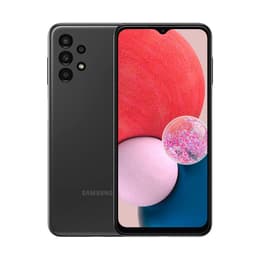
Galaxy A13
Galaxy A13
Starting at

Refurbished price:97.00

Versus €249.00 new

See options
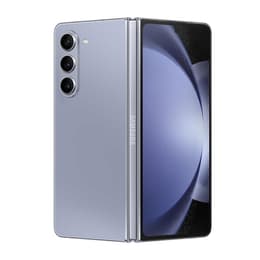
Galaxy Z Fold5
Galaxy Z Fold5
Starting at

Refurbished price:591.00

Versus €1,899.99 new

See options

Ratings

The Samsung Galaxy A13 (released March 2022) and the Samsung Galaxy Z Fold5 (released August 2023) represent distinct approaches to smartphone design and functionality. While the Galaxy A13 offers a traditional smartphone experience, the Galaxy Z Fold5 introduces a foldable design, transforming from a compact device into a larger tablet-like display. These differences extend to their internal components, camera capabilities, and overall user experience, catering to varied user needs within the Android ecosystem.

Scores

Durability

The expected lifespan and software support differ considerably between these two devices, largely due to their release timelines and product categories.

  • Release Timeline: The Galaxy A13, launched in March 2022, is an older model compared to the Galaxy Z Fold5, which debuted in August 2023. This age difference directly impacts their remaining software support.
  • OS Support Duration: The Galaxy A13 originally shipped with Android 12 (4G model) or Android 11 (5G model) and has received updates up to Android 14 (4G model) or Android 13 (5G model). It is expected to have lost major software support around early 2025, though security updates may continue quarterly for a bit longer. The Galaxy Z Fold5, launched with Android 13, is part of Samsung's policy for longer support, receiving four major Android OS upgrades and five years of security updates. It is expected to receive its last major OS upgrade, Android 17, around late 2026 or early 2027.
  • Repairability: The Galaxy A13 has been noted for a relatively high repairability score of 8/10, indicating a design that facilitates easier access and replacement of components. The Galaxy Z Fold5, despite its complex folding mechanism, has shown improvements in repairability over its predecessors, particularly with battery removal, though its intricate design still presents challenges. Its external display uses Gorilla Glass Victus 2, offering good scratch resistance, while the internal folding screen has a plastic protector that is more prone to scratches.

Year of Release

2022

2023

Compatible with latest Update

No

Yes

OS

Android

Android

Foldable

No

Yes

Performance

The performance capabilities of these two devices cater to different user expectations, with the Galaxy Z Fold5 offering a significantly more robust experience.

  • Processor Capabilities: The Galaxy A13 is equipped with a processor designed for everyday tasks and light usage, handling basic applications and web browsing adequately. Users may experience occasional lag or stuttering, especially with more demanding apps or extensive multitasking. The Galaxy Z Fold5 features a current-generation processor optimized for high performance, ensuring smooth operation for demanding applications, intensive gaming, and efficient multitasking across its multiple screens.
  • Multitasking and Responsiveness: With its larger RAM capacity, the Galaxy Z Fold5 excels at managing numerous applications simultaneously, allowing for seamless transitions and sustained performance without significant slowdowns. The Galaxy A13, with its more modest RAM configurations, is better suited for users who typically run fewer applications at once.
  • Storage Options: Both devices offer various internal storage options, with the Galaxy A13 providing up to 128GB and expandable storage via microSD. The Galaxy Z Fold5 offers higher base storage options, ranging from 256GB up to 1TB, without expandable storage, reflecting its premium positioning and target audience for larger files and applications.

Memory (GB)

4 GB

12 GB

Screen quality

The display experience is a primary differentiator, with the Galaxy Z Fold5 offering a versatile and high-quality visual interface.

  • Display Technology and Resolution: The Galaxy A13 features a 6.6-inch PLS TFT LCD with a resolution of 1080x2408 pixels, providing clear visuals for general use. The Galaxy Z Fold5 boasts two Dynamic AMOLED 2X displays: a 6.2-inch cover screen and a 7.6-inch main folding screen, both offering vibrant colors, deep blacks, and high resolutions (2316x904 for cover, 2176x1812 for main).
  • Refresh Rate and Smoothness: The Galaxy A13 has a standard 60Hz refresh rate, which is suitable for typical smartphone interactions. The Galaxy Z Fold5's displays feature a 120Hz adaptive refresh rate, providing a noticeably smoother scrolling experience and more fluid animations, particularly beneficial for gaming and media consumption.
  • Brightness and Viewing Experience: The Galaxy A13 offers adequate brightness for indoor and moderate outdoor use. The Galaxy Z Fold5's AMOLED panels deliver significantly higher brightness levels, ensuring excellent visibility even in bright outdoor conditions, and its larger folding screen provides an immersive viewing experience for videos and productivity.

Resolution

1080 x 2408

1812 x 2176

Screen type

PLS LCD

Foldable Dynamic AMOLED 2X

Audiovisual

The camera systems reflect the different market segments these devices target, with the Galaxy Z Fold5 offering a more advanced and versatile setup.

  • Rear Camera System: The Galaxy A13 includes a quad-camera setup with a 50-megapixel main sensor, a 5-megapixel ultrawide, and two 2-megapixel sensors for macro and depth. The 50MP main camera performs well in good lighting conditions, producing decent images for social media. The Galaxy Z Fold5 features a triple rear camera system comprising a 50-megapixel main sensor with optical image stabilization, a 12-megapixel ultrawide lens, and a 10-megapixel telephoto lens with 3x optical zoom. This setup provides greater flexibility and image quality across various scenarios.
  • Low-Light and Video Performance: The Galaxy A13 struggles in low-light environments due to the absence of a dedicated night mode and slower shutter speeds, often resulting in less detailed images. The Galaxy Z Fold5 offers better low-light performance, capturing more detail and color, and supports video recording up to 8K resolution at 30fps, surpassing the A13's 1080p at 30fps capability.
  • Front Cameras: The Galaxy A13 has an 8-megapixel (or 5MP depending on region) front camera for selfies and video calls. The Galaxy Z Fold5 features a 10-megapixel selfie camera on its cover screen and a 4-megapixel under-display camera on the main folding screen, offering options for different usage scenarios, though the under-display camera's quality is lower.

Main camera

50 megapixels

50 megapixels

Front camera

8 megapixels

4 megapixels

Miscellaneous

Beyond core features, several practical elements distinguish these two Samsung smartphones.

  • Connectivity: The Galaxy A13 is available in both 4G and 5G variants, offering essential network capabilities. The Galaxy Z Fold5 supports 5G connectivity, along with newer Wi-Fi standards (802.11 a/b/g/n/ac/ax) and Bluetooth v5.3, ensuring faster and more reliable wireless connections.
  • Ports and Biometrics: Both devices utilize USB-C for charging and data transfer. The Galaxy A13 includes a 3.5mm headphone jack, a feature absent on the Galaxy Z Fold5. For security, the Galaxy A13 typically features a side-mounted fingerprint sensor. The Galaxy Z Fold5 also integrates a fingerprint sensor into its power button.
  • Build Materials and Handling: The Galaxy A13 features a plastic build, contributing to its lighter weight of 195g and a more utilitarian feel. The Galaxy Z Fold5 combines a more premium construction with its folding design, weighing 253g. Its folded dimensions are more compact than a traditional smartphone, while unfolded it offers a larger screen area. The Z Fold5 also has an IPX8 water resistance rating, meaning it can withstand submersion in water, a durability feature not present on the A13.

Weight

195 g

253 g

Screen size (in)

6.6

7.6

Network

4G

5G

SIM card

Dual Physical SIM

Dual Physical SIM + eSIM

Carrier compatibility

Unlocked

Unlocked

The Samsung Galaxy A13 and Galaxy Z Fold5 cater to fundamentally different user needs and preferences. Users often praise the Galaxy A13 for its strong battery life, which can last up to two days for some users, and its capable primary camera in good lighting conditions. However, common criticisms include its slower performance over time, particularly after several months of use, and the limited utility of its secondary cameras. The display, while decent, is also noted for its standard refresh rate and LCD technology.

The Galaxy Z Fold5, on the other hand, is frequently lauded for its innovative folding design, offering a large, immersive display for productivity and media consumption, and its powerful performance that handles demanding tasks with ease. Its improved hinge design and water resistance are also positive points. Criticisms sometimes point to the quality of the under-display camera and the fact that its camera system, while good, may not always match the absolute best traditional flagship phones in every scenario.

Users prioritizing a straightforward, durable device for essential communication and light media consumption, with a focus on battery longevity, may find the Galaxy A13 well-suited to their needs. Conversely, users who require a versatile device for advanced multitasking, immersive media, and a premium experience, and who value the innovative folding form factor, will likely lean towards the Galaxy Z Fold5. Both models are available as quality-assured refurbished options, providing an eco-friendly alternative for consumers.


See all articles

Our recent comparisons