

iPhone 16 Plus Vs OnePlus 10 Pro

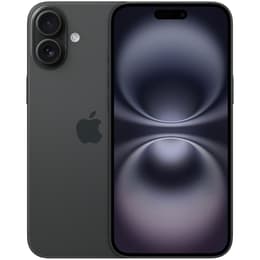
iPhone 16 Plus
iPhone 16 Plus
Starting at

Refurbished price:559.00

Versus €979.00 new

See options
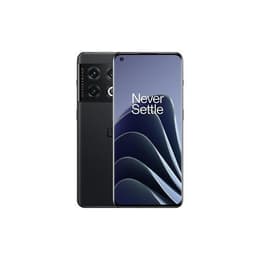
OnePlus 10 Pro
OnePlus 10 Pro
Starting at

Refurbished price:228.00

Versus €999.00 new

See options

Ratings

The iPhone 16 Plus, released in September 2024, and the OnePlus 10 Pro, launched globally in March 2022, are both large-screen smartphones designed for demanding users. While the iPhone operates on Apple's iOS ecosystem, the OnePlus 10 Pro runs on Android, offering distinct user experiences. Key differentiators include their display refresh rates, camera capabilities, and charging technologies.

Scores

Durability

When considering the long-term usability of these devices, their release timelines and software support policies play a significant role. The iPhone 16 Plus, being a more recent release, benefits from a longer expected period of software updates and security patches compared to the OnePlus 10 Pro.

  • Software Longevity: The iPhone 16 Plus launched with iOS 18 and is currently running iOS 26.4, indicating a robust and ongoing commitment to software support from Apple, typically extending for many years. The OnePlus 10 Pro, originally released with Android 12, has received fewer major Android version updates due to its earlier launch date.
  • Physical Durability: The iPhone 16 Plus features a Ceramic Shield front and an aluminum frame, contributing to its overall resilience and scratch resistance. It also carries an IP68 rating for dust and water resistance, providing protection against immersion. The OnePlus 10 Pro utilizes Gorilla Glass Victus for screen protection and has a ceramic rear camera cover, but its IP68 water and dust resistance rating was only consistently available on specific regional variants.
  • Repairability: The iPhone 16 Plus incorporates an electrically de-bonding adhesive for its battery, potentially simplifying battery replacement procedures. Information regarding the ease of repair for the OnePlus 10 Pro is less prominent, suggesting a more conventional repair process.

Year of Release

2024

2022

Compatible with latest Update

Yes

Yes

Foldable

No

No

Performance

The performance of a smartphone is largely determined by its internal components and how efficiently they handle various tasks, from everyday app usage to intensive gaming and multitasking.

  • Processing Power: The iPhone 16 Plus is equipped with Apple's A18 chip, which is optimized for generative artificial intelligence tasks and delivers substantial performance and efficiency for demanding applications and games. The OnePlus 10 Pro is powered by the Qualcomm Snapdragon 8 Gen 1 Mobile Platform, a capable processor for its generation, handling daily tasks and gaming smoothly.
  • Multitasking and Responsiveness: With 8GB of LPDDR5X RAM, the iPhone 16 Plus offers ample memory for fluid multitasking and app switching. The OnePlus 10 Pro is available with either 8GB or 12GB of RAM, providing strong multitasking capabilities, especially with the higher RAM configuration.
  • Battery Behavior: The iPhone 16 Plus features an 18.11 Wh (4674 mAh) battery, offering up to 27 hours of video playback and 100 hours of audio playback, often lasting a full day or more for many users. The OnePlus 10 Pro houses a 5000 mAh battery, which generally provides excellent endurance, often extending to two days of moderate use.

Memory (GB)

8 GB

8 GB

Screen quality

The visual experience on a smartphone is heavily influenced by its display technology, resolution, and refresh rate, impacting everything from browsing to media consumption.

  • Display Technology and Clarity: The iPhone 16 Plus features a 6.7-inch Super Retina XDR OLED display with a resolution of 2796x1290 pixels, delivering deep blacks, vibrant colors, and sharp image quality. The OnePlus 10 Pro boasts a 6.7-inch LTPO2 Fluid AMOLED display with a higher QHD+ resolution of 3216 x 1440 pixels, offering exceptional detail and color accuracy.
  • Refresh Rate and Smoothness: A notable difference lies in the refresh rates. The iPhone 16 Plus maintains a 60Hz refresh rate, which provides a standard smooth scrolling experience. In contrast, the OnePlus 10 Pro features an adaptive refresh rate that can dynamically scale from 1Hz to 120Hz, resulting in noticeably smoother animations and scrolling, while also conserving battery life.
  • Brightness and Outdoor Visibility: Both devices offer high brightness levels for good outdoor visibility. The iPhone 16 Plus reaches up to 1000 nits typical brightness, with peak HDR brightness of 1600 nits and 2000 nits peak outdoor brightness. The OnePlus 10 Pro offers a peak brightness of 1300 nits.

Resolution

1290 x 2796

1440 x 3216

Screen type

Super Retina XDR OLED

LTPO2 Fluid AMOLED

Audiovisual

Both smartphones offer advanced camera systems, each with its own strengths in capturing photos and videos, catering to different photographic preferences.

  • Rear Camera System: The iPhone 16 Plus features an advanced dual-camera system with a 48MP Fusion Main sensor and a 12MP Ultra Wide lens, capable of capturing detailed photos and supporting 2x optical quality telephoto zoom through sensor cropping. It also supports spatial video recording. The OnePlus 10 Pro offers a versatile triple camera setup, including a 48MP main sensor, a 50MP ultra-wide lens with a 150-degree field of view, and an 8MP telephoto lens with 3.3x optical zoom. Its camera system benefits from a collaboration with Hasselblad for color calibration.
  • Photography Features: The iPhone 16 Plus introduces a new Camera Control button for more tactile adjustments and enhanced Photographic Styles for creative image customization. The OnePlus 10 Pro provides a Hasselblad Pro Mode for manual controls and a unique 150-degree ultra-wide mode, along with features like Nightscape and XPan mode.
  • Video Recording: The iPhone 16 Plus supports 4K Dolby Vision video recording up to 60fps, Cinematic mode, and Action mode for stabilized footage. The OnePlus 10 Pro is capable of 8K video recording at 24fps, alongside 4K options, and includes strong stabilization features.

Main camera

48 megapixels

48 megapixels

Front camera

12 megapixels

32 megapixels

Miscellaneous

Beyond core performance and camera, several practical elements contribute to the overall user experience, including connectivity, physical design, and unique features.

  • Connectivity and Ports: The iPhone 16 Plus supports Wi-Fi 7, Bluetooth 5.3, and 5G connectivity, and features a USB-C port, though with USB 2.0 data transfer speeds. The OnePlus 10 Pro supports Wi-Fi 6, Bluetooth 5.2, and 5G, and includes a USB 3.1 GEN1 Type-C port, offering faster data transfer capabilities.
  • Physical Design and Handling: The iPhone 16 Plus measures 160.9 x 77.8 x 7.8 mm and weighs 199g, featuring an aluminum design with a color-infused glass back. The OnePlus 10 Pro is slightly thicker and heavier at 163.0 x 73.9 x 8.9 mm and 200.5g, with a glass back and an aluminum frame.
  • Unique Features: The iPhone 16 Plus includes the Action button, customizable for various functions, and a dedicated Camera Control button for enhanced photography interaction. The OnePlus 10 Pro features an in-display fingerprint sensor, dual stereo speakers, and the signature Alert Slider for quick sound profile changes.

Weight

199 g

201 g

Screen size (in)

6.7

6.7

Network

5G

5G

SIM card

eSIM

Physical SIM

Carrier compatibility

Unlocked

Unlocked

Connector

USB-C (USB 2)

USB-C

The iPhone 16 Plus and OnePlus 10 Pro cater to users with differing priorities, reflecting their respective ecosystems and release timelines. Users often praise the iPhone 16 Plus for its consistent software experience, robust durability, and advanced computational photography features, particularly its ability to capture spatial video. Some users, however, note the 60Hz display as a potential drawback compared to competitors.

The OnePlus 10 Pro is frequently lauded for its vibrant, high-refresh-rate display, exceptionally fast wired charging, and versatile camera system developed in collaboration with Hasselblad. Common criticisms sometimes point to its software update longevity compared to newer devices and the regional inconsistency of its IP rating.

Users prioritizing a long-term software commitment, a highly integrated ecosystem, and advanced video capabilities, especially spatial video, may find the iPhone 16 Plus well-suited to their needs. Conversely, those who value a smoother display experience, rapid charging speeds, and a more customizable Android interface might lean towards the OnePlus 10 Pro. Both devices offer compelling features for different user profiles, and for those considering a more sustainable choice, quality-assured refurbished options for both models are available, providing an eco-friendly alternative.


See all articles

Our recent comparisons