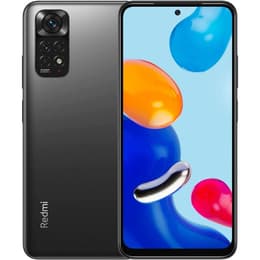
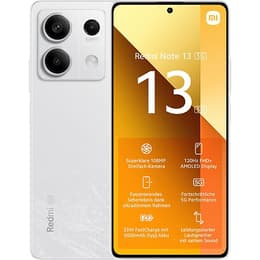


Xiaomi Redmi Note 11 Vs Xiaomi Redmi Note 13

Xiaomi Redmi Note 11
Starting at

Refurbished price:108.00

Versus €249.99 new

See options
Xiaomi Redmi Note 13
Starting at

Refurbished price:137.00

Versus €340.00 new

See options

Ratings

The Xiaomi Redmi Note 11, released in January 2022, and the Xiaomi Redmi Note 13, launched in January 2024, represent two generations of Xiaomi's popular mid-range smartphone series. While both devices aim to deliver a comprehensive smartphone experience, the Redmi Note 13 introduces advancements in display technology, camera capabilities, and overall system performance, building upon the foundation set by its predecessor. Both operate on the Android platform, featuring Xiaomi's custom MIUI or HyperOS interface.

Scores

Durability

When considering the long-term usability of these devices, several factors contribute to their expected lifespan.

  • Release Timeline and Software Support: The Redmi Note 11 was released in January 2022, initially running Android 11 with MIUI 13, and has since received updates to Android 13 and HyperOS. The Redmi Note 13, being a newer device from January 2024, launched with Android 13 and MIUI 14 or HyperOS, and is expected to receive software updates for a longer duration, potentially extending its functional life by an additional year or two compared to the Note 11.
  • Repairability: Both models demonstrate a reasonable degree of repairability. The Redmi Note 11 Pro, a variant of the Note 11 series, has a repairability score of 8.75 out of 10, indicating that components like the battery and screen are relatively accessible for servicing. The Redmi Note 13 also scores well with an 8.0 out of 10 repairability rating, suggesting that common repairs are feasible.
  • Physical Durability: The Redmi Note 11 features Corning Gorilla Glass 3 protection on its display and carries an IP53 rating for dust and splash resistance. The Redmi Note 13 also utilizes Gorilla Glass 3 or 5 for screen protection, depending on the specific variant, and offers an IP54 rating, providing slightly enhanced resistance against dust and splashes.

Year of Release

2022

2024

Compatible with latest Update

No

Yes

OS

Android

Android

Foldable

No

No

Performance

The performance of a smartphone is crucial for daily tasks, from app usage to multitasking and gaming.

  • Processing Power: The Redmi Note 11 is equipped with a processor designed for efficient everyday use and moderate multitasking. The Redmi Note 13, featuring a newer generation processor, offers improved performance, resulting in faster app loading times and a smoother experience when handling more demanding applications or engaging in mobile gaming.
  • Multitasking and Storage: The Redmi Note 11 typically comes with 4GB or 6GB of RAM and 64GB or 128GB of internal storage. The Redmi Note 13 offers more generous configurations, with options for 6GB, 8GB, or 12GB of RAM and storage capacities ranging from 128GB to 512GB, providing greater flexibility for users who require more space for apps and media, and a more fluid multitasking experience.
  • Battery Behavior: Both devices house a 5000mAh battery, supporting 33W fast charging. In real-world usage, the Redmi Note 11 generally provides a full day of power for most users. While the Redmi Note 13 also offers a substantial battery, some users have reported faster battery drain, particularly after software updates, though it still supports rapid charging to mitigate this.

Memory (GB)

4 GB

8 GB

Screen quality

The display is a primary interface for smartphone interaction, and both models offer vibrant viewing experiences.

  • Display Technology and Size: Both the Redmi Note 11 and Redmi Note 13 feature AMOLED displays, known for their deep blacks and vibrant colors. The Redmi Note 11 has a 6.43-inch screen, while the Redmi Note 13 offers a slightly larger 6.67-inch display, providing a more expansive viewing area.
  • Refresh Rate and Brightness: The Redmi Note 11 features a 90Hz refresh rate, contributing to smoother scrolling and animations, with a typical brightness of 700 nits and a peak brightness of 1000 nits. The Redmi Note 13 elevates this with a 120Hz refresh rate for even smoother visuals and significantly higher peak brightness of up to 1800 nits, improving visibility in bright outdoor conditions.
  • Resolution and Clarity: Both smartphones offer a Full HD+ resolution of 1080x2400 pixels, ensuring sharp text and clear images for everyday viewing. The pixel density is sufficient on both for a detailed visual experience.

Resolution

1080 x 2400

1080 x 2400

Screen type

AMOLED

AMOLED

Audiovisual

Camera performance is a key consideration for many users, and these devices offer different photographic capabilities.

  • Rear Camera System: The Redmi Note 11 features a quad-camera setup with a 50-megapixel main sensor, an 8-megapixel ultrawide lens, and two 2-megapixel sensors for macro and depth. The Redmi Note 13 steps up with a 108-megapixel main sensor, accompanied by an 8-megapixel ultrawide and a 2-megapixel macro lens, offering higher resolution for detailed shots.
  • Photography Performance: In well-lit conditions, both phones can capture good images. However, the Redmi Note 11's low-light performance can be challenging, with noticeable noise. The Redmi Note 13's higher resolution main sensor aims to improve detail and clarity, though some users note that the ultrawide and macro lenses may not always deliver consistent quality, and dynamic range can be a limitation.
  • Video Recording and Front Camera: Both the Redmi Note 11 and the base Redmi Note 13 models are generally limited to 1080p video recording at 30 frames per second, without advanced stabilization features. For selfies, the Redmi Note 11 has a 13-megapixel front camera, while the Redmi Note 13 offers a 13-megapixel or 16-megapixel front camera, depending on the variant.

Main camera

50 megapixels

108 megapixels

Front camera

13 megapixels

16 megapixels

Miscellaneous

Beyond core specifications, various practical features contribute to the overall user experience.

  • Connectivity: The Redmi Note 11 supports 4G LTE networks, Wi-Fi 5, and Bluetooth 5.0. The Redmi Note 13 offers a significant upgrade with available 5G connectivity in some variants, along with Wi-Fi 5 or Wi-Fi 6, and Bluetooth 5.2, providing faster data speeds and more stable wireless connections.
  • Ports and Sensors: Both devices include a USB Type-C port for charging and data transfer, and a 3.5mm headphone jack, which is a convenient feature for wired audio. They also feature a side-mounted fingerprint sensor for secure unlocking, along with other essential sensors like an accelerometer, gyroscope, and ambient light sensor.
  • Design and Handling: The Redmi Note 11 has a flat-edge design and weighs around 179 grams. The Redmi Note 13 maintains a similar modern aesthetic with a relatively slim profile. Both phones are generally comfortable to hold, though the larger screen of the Note 13 results in a slightly larger physical footprint.

Weight

179 g

175 g

Screen size (in)

6.43

6.67

Network

4G

5G

SIM card

Dual Physical SIM

Dual Physical SIM

Carrier compatibility

Unlocked

Unlocked

User feedback for the Redmi Note 11 often praises its vibrant AMOLED display, reliable battery life for its time, and the inclusion of stereo speakers and a headphone jack. Common criticisms include its 4G-only connectivity, limitations in video recording quality, and sometimes inconsistent camera performance in challenging lighting.

For the Redmi Note 13, users frequently highlight its improved 120Hz AMOLED display, enhanced main camera resolution, and the availability of 5G connectivity as key advantages. However, some users have expressed concerns regarding potential software-related performance lags, bloatware, and occasional battery drain issues, particularly after updates. The ultrawide and macro cameras are also sometimes noted as areas for improvement.

Users prioritizing a device with a slightly larger, smoother, and brighter display, along with future-proof 5G connectivity and a higher-resolution main camera, may find the Redmi Note 13 better suited to their needs. This could include individuals who consume a lot of media on their phone or require faster mobile data speeds. Conversely, users who value a slightly more compact form factor and a proven, stable software experience, and do not require 5G, might lean towards the Redmi Note 11. Both devices offer a solid foundation for everyday smartphone use, and choosing a quality-assured refurbished option for either model can be an eco-friendly alternative.


See all articles

Our recent comparisons






