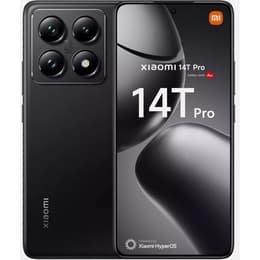



Xiaomi 14T Pro Vs Xiaomi Redmi Note 13

Xiaomi 14T Pro
Xiaomi 14T Pro
Starting at

Refurbished price:395.00

Versus €1,500.00 new

See options
Xiaomi Redmi Note 13
Starting at

Refurbished price:133.00

Versus €340.00 new

See options

Ratings

The Xiaomi 14T Pro, announced in September 2024, and the Xiaomi Redmi Note 13, globally launched in January 2024, represent different segments within Xiaomi's smartphone lineup. While both operate on the Android platform with Xiaomi's HyperOS interface, the 14T Pro is positioned as a more advanced device with a focus on high-end performance and imaging capabilities, whereas the Redmi Note 13 offers a balanced experience for everyday use.

Scores

Durability

When considering the long-term usability of these devices, their release timelines and software support are key factors.

  • Release Timeline: The Xiaomi 14T Pro, being a newer device announced in September 2024, benefits from a more recent starting point for software updates and overall longevity. The Redmi Note 13, with its global launch in January 2024, has a slightly earlier release date.
  • Software Longevity: Both devices run on Android with Xiaomi's HyperOS. The 14T Pro launched with Android 14 and has already seen an update to Android 15 with HyperOS 2, suggesting a commitment to current software. The Redmi Note 13 initially shipped with Android 13 and MIUI 14, also receiving updates to Android 15 with HyperOS 2. The newer release of the 14T Pro typically translates to an additional year of major Android version updates compared to the Redmi Note 13.
  • Physical Durability: The Xiaomi 14T Pro features an IP68 rating for splash, water, and dust resistance, indicating a higher level of protection against environmental elements. The Redmi Note 13 carries an IP54 rating, offering resistance against splashes and dust. The 14T Pro also features a metal frame, contributing to its build quality. The Redmi Note 13's front is protected by Corning Gorilla Glass 3.

Year of Release

2024

2024

Compatible with latest Update

Yes

Yes

OS

Android

Android

Foldable

No

No

Performance

The performance of a smartphone impacts daily responsiveness, app handling, and gaming experiences.

  • Processing Power: The Xiaomi 14T Pro is equipped with a processor designed for demanding tasks, offering robust performance for intensive applications, advanced multitasking, and graphically rich games. The Redmi Note 13 utilizes a processor that provides reliable performance for general daily usage, social media, and less demanding games.
  • Multitasking and Storage: The 14T Pro typically comes with 12GB of RAM and uses UFS 4.0 storage, which contributes to faster app loading and smoother transitions between applications. The Redmi Note 13 offers various RAM configurations, including 6GB, 8GB, and 12GB, and uses UFS 2.2 storage, which is suitable for typical multitasking needs. The Redmi Note 13 also supports expandable storage, a feature not present on the 14T Pro.
  • Battery Behavior: Both devices feature a 5000mAh battery capacity, designed to provide power for a full day of moderate use. The 14T Pro supports 120W wired fast charging and 50W wireless fast charging, allowing for rapid power replenishment. The Redmi Note 13 supports 33W wired fast charging.

Memory (GB)

12 GB

8 GB

Screen quality

The display is a primary interface for user interaction, and both devices offer distinct visual experiences.

  • Display Technology and Resolution: Both the Xiaomi 14T Pro and the Redmi Note 13 feature 6.67-inch AMOLED displays, known for deep blacks and vibrant colors. The 14T Pro offers a higher resolution of 2712x1220 pixels, providing a sharper image. The Redmi Note 13 has a Full HD+ resolution of 2400x1080 pixels.
  • Refresh Rate and Brightness: The 14T Pro boasts a 144Hz refresh rate, which translates to exceptionally smooth scrolling and fluid animations. The Redmi Note 13 features a 120Hz refresh rate, also offering a smooth visual experience for most users. For brightness, the Redmi Note 13 can reach a peak brightness of 1000 nits, ensuring good visibility in various lighting conditions.
  • Viewing Experience: The 14T Pro's higher resolution and refresh rate contribute to a more detailed and responsive visual experience, particularly beneficial for high-definition content and fast-paced gaming. The Redmi Note 13 provides a clear and engaging viewing experience suitable for everyday media consumption and browsing.

Resolution

1220 x 2712

1080 x 2400

Screen type

AMOLED

AMOLED

Audiovisual

Camera capabilities are a significant consideration for many users, and these devices offer different photographic strengths.

  • Rear Camera System: The Xiaomi 14T Pro features a 50MP main camera with a Light Hunter 900 sensor and a triple-lens system covering various focal lengths, including Leica imaging enhancements. This setup is designed for advanced computational photography and detailed image capture. The Redmi Note 13 comes with a triple camera system, headlined by a 108MP main sensor, complemented by an 8MP ultra-wide and a 2MP macro lens.
  • Photography Performance: The 14T Pro's camera system, with its advanced sensor and Leica optimizations, aims for high-quality results across different scenarios, including low-light conditions and specialized portrait modes. The Redmi Note 13's 108MP main sensor is capable of capturing detailed images in good lighting, providing a versatile setup for general photography.
  • Video Recording and Audio: The 14T Pro supports video recording up to 8K resolution at 24/30fps and 4K at 60fps, with features like Dolby Vision and a Director mode for advanced video creation. The Redmi Note 13 records video at Full HD resolution at 30fps. Both devices are expected to offer clear audio capture for calls and recordings, though specific microphone details vary.

Main camera

50 megapixels

108 megapixels

Front camera

32 megapixels

16 megapixels

Miscellaneous

Beyond core features, several practical elements contribute to the overall user experience.

  • Connectivity: The Xiaomi 14T Pro supports 5G connectivity, along with current Wi-Fi standards and Bluetooth. The standard Redmi Note 13 (4G variant) offers 4G connectivity, while other Redmi Note 13 series models support 5G. Both devices include NFC for mobile payments and an IR blaster for controlling home appliances.
  • Ports and Sensors: The 14T Pro uses a USB-C port for charging and data transfer and does not include a 3.5mm headphone jack. The Redmi Note 13 also features a USB-C port and retains a 3.5mm headphone jack. The 14T Pro relies on face recognition and an in-display fingerprint sensor, while the Redmi Note 13 typically has an under-display fingerprint sensor.
  • Design and Handling: The 14T Pro has dimensions of 160.4 x 75.1 x 8.39mm and weighs 209g, featuring a metal frame. The Redmi Note 13 measures 162.24 x 75.55 x 7.97mm and weighs 188.5g, offering a slightly lighter and thinner profile.

Weight

209 g

175 g

Screen size (in)

6.67

6.67

Network

5G

5G

SIM card

Dual Physical SIM

Dual Physical SIM

Carrier compatibility

Unlocked

Unlocked

The Xiaomi 14T Pro and the Xiaomi Redmi Note 13 cater to different user priorities, each offering a distinct set of capabilities. Users often praise the 14T Pro for its advanced processing power, high-resolution and high-refresh-rate display, and sophisticated camera system with features like Leica imaging and 8K video recording. Its faster charging speeds and higher durability rating are also frequently highlighted as strong points. Some users might note the absence of a 3.5mm headphone jack and expandable storage as considerations.

The Redmi Note 13 is generally well-regarded for its balanced performance for everyday tasks, its vibrant AMOLED display with a smooth 120Hz refresh rate, and its capable 108MP main camera. Users appreciate its inclusion of a 3.5mm headphone jack and expandable storage, offering more flexibility. Its 33W fast charging is considered efficient for its segment. Potential criticisms sometimes revolve around its video recording capabilities being limited to Full HD and its processor being more suited for moderate use rather than intensive gaming.

Users prioritizing cutting-edge performance, advanced photography and videography features, and a higher level of water and dust resistance may find the Xiaomi 14T Pro better suited to their needs. Conversely, users seeking a reliable daily driver with a good display, a versatile camera for general use, and practical features like a headphone jack and expandable storage, while also being a sustainable choice through refurbished options, might lean towards the Redmi Note 13. Both devices offer a quality-assured refurbished option, providing an eco-friendly alternative for consumers.


See all articles

Our recent comparisons







