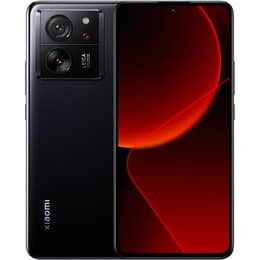



Xiaomi 13T Vs Xiaomi Redmi Note 11

Xiaomi 13T
Xiaomi 13T
Starting at

Refurbished price:183.00

Versus €630.00 new

See options
Xiaomi Redmi Note 11
Starting at

Refurbished price:108.00

Versus €249.99 new

See options

Ratings

The Xiaomi 13T (released September 2023) and the Xiaomi Redmi Note 11 (released January 2022) are both Android smartphones from Xiaomi, but they target different user expectations and offer distinct experiences. The 13T is a more recent device with a focus on advanced camera capabilities and higher performance, while the Redmi Note 11 prioritizes essential smartphone functions and extended battery life.

Scores

Durability

The expected practical lifespan of these devices differs significantly due to their release timelines and software support policies.

  • Software Longevity: The Xiaomi 13T benefits from a more extended software commitment, promising four major Android OS upgrades and five years of security patches, with security updates expected until 2028. In contrast, the Redmi Note 11, released earlier, has reached the end of its update lifecycle as of February 2025, meaning it no longer receives security patches or software updates.
  • Durability Features: The Xiaomi 13T offers IP68 dust and water resistance, providing a higher level of protection against environmental elements. The Redmi Note 11 has an IP53 rating, indicating basic splash and dust resistance. Both devices feature Gorilla Glass for screen protection, with the 13T using Gorilla Glass 5 and the Redmi Note 11 using Gorilla Glass 3.
  • Expected Lifespan: Users prioritizing long-term software support and enhanced protection against water and dust will find the Xiaomi 13T a more future-proof option. The Redmi Note 11, while still functional, will not receive further official software enhancements or security updates.

Year of Release

2023

2022

Compatible with latest Update

Yes

No

OS

Android

Android

Foldable

No

No

Performance

Performance is a key differentiator, with the Xiaomi 13T offering a more robust experience for demanding tasks compared to the Redmi Note 11.

  • Processing Power: The Xiaomi 13T is equipped with a more advanced processor, enabling it to handle demanding applications, intensive multitasking, and graphic-heavy games smoothly. Users report stable performance even during extended gaming sessions. The Redmi Note 11 features a processor that provides acceptable performance for everyday tasks, but some users have noted occasional sluggishness or stutters, particularly when navigating the user interface or browsing the web.
  • Multitasking and Storage: The Xiaomi 13T typically comes with higher RAM configurations (8GB or 12GB) and faster UFS 3.1 storage, contributing to quicker app launches and seamless transitions between applications. The Redmi Note 11 offers 4GB or 6GB of RAM and UFS 2.2 storage, which is sufficient for general use but may show limitations with numerous apps open simultaneously.
  • Battery Behavior: Both devices house a 5000mAh battery. The Redmi Note 11 is widely praised for its excellent battery life, often lasting over a day, and for moderate users, potentially two days on a single charge. The Xiaomi 13T generally provides a full day of mixed usage, but heavy users might find themselves needing to charge it by the evening. Both support fast charging, with the 13T offering 67W wired charging and the Redmi Note 11 offering 33W wired charging.

Memory (GB)

8 GB

4 GB

Screen quality

Both smartphones feature AMOLED displays, but the Xiaomi 13T offers a more advanced visual experience.

  • Display Technology and Clarity: Both devices utilize AMOLED technology, known for deep blacks and vibrant colors. The Xiaomi 13T boasts a 6.67-inch CrystalRes AMOLED display with a resolution of 2712 x 1220 pixels (1.5K), offering a sharper image compared to the Redmi Note 11's 6.43-inch FHD+ AMOLED display with 1080x2400 pixels.
  • Brightness and Smoothness: The Xiaomi 13T features a significantly higher peak brightness of 2600 nits, making it highly readable even in direct sunlight, and supports a 144Hz refresh rate for exceptionally smooth scrolling and animations. The Redmi Note 11 offers a peak brightness of 1000 nits and a 90Hz refresh rate, which is still a good experience for its class, providing smooth visuals for everyday use.
  • Viewing Experience: The larger, higher-resolution, and brighter display of the Xiaomi 13T provides a more immersive and detailed viewing experience, particularly for multimedia consumption and gaming. The Redmi Note 11's display is well-regarded for its clarity and vibrancy within its segment.

Resolution

1220 x 2712

1080 x 2400

Screen type

AMOLED

AMOLED

Audiovisual

The camera systems present a notable difference, with the Xiaomi 13T offering a more versatile and advanced photography experience.

  • Rear Camera System: The Xiaomi 13T features a triple camera setup co-engineered with Leica, including a 50MP main camera with optical image stabilization (OIS), a 50MP telephoto lens with 2x optical zoom, and a 12MP ultrawide lens. This configuration is designed for professional-caliber photography with enhanced detail and color reproduction. The Redmi Note 11 comes with a quad-camera setup comprising a 50MP main camera, an 8MP ultrawide, a 2MP macro, and a 2MP depth sensor. Its camera performance is generally considered average, with some compromises in low-light conditions.
  • Front Camera and Video: For selfies, the Xiaomi 13T has a 20MP front camera, while the Redmi Note 11 features a 13MP front camera. The Xiaomi 13T offers higher video recording capabilities, including 4K at 30fps, and features like HDR10+ and gyro-EIS for stable footage. The Redmi Note 11's video recording is more basic, lacking features like 4K recording.
  • Audio Experience: Both devices are equipped with dual speakers, providing a stereo audio experience for media consumption. The Redmi Note 11 also retains a 3.5mm headphone jack, which is absent on the Xiaomi 13T.

Main camera

50 megapixels

50 megapixels

Front camera

20 megapixels

13 megapixels

Miscellaneous

Beyond core specifications, several practical elements contribute to the overall user experience of each device.

  • Connectivity and Ports: The Xiaomi 13T supports 5G connectivity, Wi-Fi 7, and Bluetooth 5.4, offering faster and more future-proof wireless communication. The Redmi Note 11 is limited to 4G connectivity, Wi-Fi 802.11 a/b/g/n/ac, and Bluetooth v5.0. Both devices feature a USB-C port for charging and data transfer.
  • Security and Sensors: The Xiaomi 13T incorporates an in-screen fingerprint sensor for biometric authentication. The Redmi Note 11 utilizes a side-mounted fingerprint sensor. Both include AI face unlock.
  • Design and Handling: The Xiaomi 13T has dimensions of 162.2mm x 75.7mm x 8.49mm and weighs around 193g (glass variant). The Redmi Note 11 is slightly more compact and lighter at 159.87 x 73.87 x 8.09mm and 179g. The 13T features a glass front (Gorilla Glass 5) and back, with a plastic frame, while the Redmi Note 11 has a glass front (Gorilla Glass 3) and a plastic back and frame.

Weight

193 g

179 g

Screen size (in)

6.67

6.43

Network

5G

4G

SIM card

Dual Physical SIM

Dual Physical SIM

Carrier compatibility

Unlocked

Unlocked

User feedback for the Xiaomi 13T often praises its strong performance, vibrant display, and capable camera system, particularly the Leica co-engineered lenses. Some users, however, have noted that its battery life, while sufficient for most, might not meet the demands of power users without an evening charge. The Redmi Note 11 is frequently lauded for its excellent battery life, bright AMOLED display, and sturdy build quality. Common criticisms include its less powerful processor, which can lead to occasional performance lags, and its average camera performance, especially in challenging lighting conditions. The limited software update policy for the Redmi Note 11 is also a point of concern for some users.

Users prioritizing a modern device with extended software support, higher performance for gaming and demanding applications, and advanced photography features will find the Xiaomi 13T well-suited to their needs. Its brighter, higher-refresh-rate display also offers a more premium visual experience. Conversely, individuals seeking a reliable smartphone with exceptional battery life, a good-quality display for everyday media consumption, and expandable storage, without the need for cutting-edge performance or extensive software longevity, may lean towards the Redmi Note 11. For those considering either device, exploring quality-assured refurbished options can be an eco-friendly alternative to extend the lifecycle of these electronics.


See all articles

Our recent comparisons