

iPhone SE (2020) Vs Xiaomi 12T

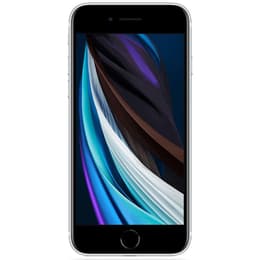
iPhone SE (2020)
iPhone SE (2020)
Starting at

Refurbished price:103.99

Versus €319.00 new

See options
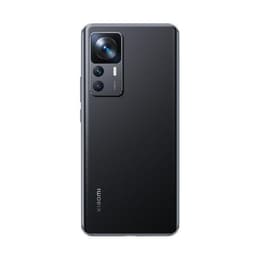
Xiaomi 12T
Xiaomi 12T
Starting at

Refurbished price:131.00

Versus €649.00 new

See options

Ratings

The iPhone SE 2020 and the Xiaomi 12T are two distinct smartphones, released in April 2020 and October 2022, respectively. While the iPhone SE 2020 offers a compact form factor and runs on Apple's iOS ecosystem, the Xiaomi 12T provides a larger display, a more modern design, and operates on Android with Xiaomi's MIUI overlay. These differences cater to varying user preferences in terms of size, operating system experience, and hardware capabilities.

Scores

Durability

The practical lifespan of a smartphone is influenced by its release date, software support, and physical durability. These two devices offer different trajectories in these aspects.

  • Release Timeline: The iPhone SE 2020 was released in April 2020, making it an older device compared to the Xiaomi 12T, which launched in October 2022. This age difference impacts their remaining software support.
  • Software Longevity: The iPhone SE 2020, running iOS, typically receives major OS updates for approximately 5-6 years from its release, with current support extending to iOS 18. The Xiaomi 12T, launched with Android 12, is promised three major Android OS updates, bringing it to Android 15, and four years of security updates until 2026.
  • Physical Durability: The iPhone SE 2020 features a glass front and back with an aluminum frame and an IP67 rating for dust and water resistance. The Xiaomi 12T has a Gorilla Glass 5 front and a plastic back and frame, with an IP53 rating for splash resistance.

Year of Release

2020

2022

Compatible with latest Update

Yes

Yes

OS

iOS

Android

Foldable

No

No

Performance

Both devices are designed to handle everyday tasks, but their underlying hardware and software optimizations lead to different performance characteristics, particularly concerning battery behavior and system responsiveness.

  • Storage Options: The iPhone SE 2020 is available with 64GB, 128GB, or 256GB of internal storage. The Xiaomi 12T offers 128GB or 256GB storage configurations.
  • Battery Behavior: The iPhone SE 2020 has a smaller battery capacity, which means moderate to heavy users may find themselves needing to charge it more frequently to last a full day. The Xiaomi 12T features a larger battery, and while some users report it comfortably lasting a full day, others note that heavy usage, especially with the high refresh rate display, can lead to more frequent charging.
  • System Responsiveness: The iPhone SE 2020 provides smooth performance for daily applications and can handle demanding tasks and gaming due to its capable processor. The Xiaomi 12T also offers responsive performance, handling demanding apps and multitasking smoothly, making it suitable for users who engage in mobile gaming.

Memory (GB)

3 GB

8 GB

Screen quality

The visual experience on these two smartphones differs significantly due to their display technologies, sizes, and refresh rates.

  • Display Technology and Size: The iPhone SE 2020 features a 4.7-inch Retina IPS LCD. The Xiaomi 12T boasts a larger 6.67-inch AMOLED display. The AMOLED technology on the Xiaomi 12T typically offers deeper blacks and higher contrast compared to the LCD on the iPhone SE 2020.
  • Resolution and Clarity: The iPhone SE 2020 has a resolution of 1334 x 750 pixels, resulting in a pixel density of 326 pixels per inch (ppi). The Xiaomi 12T offers a higher resolution of 2712 x 1220 pixels with a pixel density of 446 ppi, providing a sharper viewing experience.
  • Brightness and Refresh Rate: The iPhone SE 2020 has a typical maximum brightness of 625 nits and a standard 60Hz refresh rate. The Xiaomi 12T can reach a peak brightness of 900 nits and features a 120Hz refresh rate, which contributes to smoother scrolling and a more fluid visual experience.

Resolution

750 x 1334

1220 x 2712

Screen type

Retina IPS LCD

AMOLED

Audiovisual

The camera systems on both devices offer different capabilities for capturing photos and videos, catering to various photography needs.

  • Rear Camera System: The iPhone SE 2020 features a single 12MP wide-angle camera with an f/1.8 aperture and optical image stabilization, capable of 4K video recording up to 60fps. The Xiaomi 12T comes with a triple camera setup, including a 108MP main wide-angle camera with OIS, an 8MP ultra-wide camera, and a 2MP macro camera, supporting 4K video up to 30fps.
  • Photography Performance: The iPhone SE 2020 benefits from its processor's computational photography features, offering good image quality in well-lit conditions and Portrait mode, though it lacks a dedicated Night Mode. The Xiaomi 12T's 108MP main sensor is noted for producing vibrant and detailed stills with good dynamic range, and it performs well in low-light conditions with AI enhancements.
  • Front Camera and Video: The iPhone SE 2020 has a 7MP front camera that supports 1080p video recording. The Xiaomi 12T features a 20MP front camera, capable of 1080p video recording. Both devices offer good video recording capabilities, with the iPhone SE 2020 supporting higher frame rates for 4K video.

Main camera

12 megapixels

108 megapixels

Front camera

7 megapixels

20 megapixels

Miscellaneous

Beyond core performance and display, several practical elements contribute to the overall user experience and differentiate these two smartphones.

  • Connectivity and Ports: The iPhone SE 2020 supports 4G LTE, Wi-Fi 6, and Bluetooth 5.0, and uses a Lightning port for charging and data transfer. The Xiaomi 12T offers 5G connectivity, Wi-Fi 6, and Bluetooth 5.3, featuring a USB-C port.
  • Biometric Security: The iPhone SE 2020 utilizes Touch ID, a fingerprint sensor integrated into its home button. The Xiaomi 12T incorporates an in-display fingerprint sensor and also offers AI Face Unlock.
  • Design and Handling: The iPhone SE 2020 is a compact and lightweight device, weighing 148g with dimensions of 138.4 x 67.3 x 7.3 mm, making it easy for one-handed use. The Xiaomi 12T is larger and heavier at 202g, with dimensions of 163.1 x 75.9 x 8.6 mm, offering a more expansive screen experience.

Weight

148 g

220 g

Screen size (in)

4.7

6.67

Network

4G

5G

SIM card

Physical SIM + eSIM

Dual Physical SIM

Carrier compatibility

Unlocked

Unlocked

Connector

Lightning

USB-C

Users often praise the iPhone SE 2020 for its compact size, powerful processor for its class, and the familiar iOS experience. Common criticisms frequently point to its smaller battery capacity and the older display technology. The Xiaomi 12T is often lauded for its vibrant, high-refresh-rate AMOLED display, capable main camera, and fast charging capabilities. Some users have noted that its battery life, despite a large capacity, can be inconsistent, and the secondary cameras may not always meet expectations.

Users prioritizing a compact device with a long software support window and a familiar operating system may find the iPhone SE 2020 well-suited to their needs. Those who value a larger, more immersive display, faster refresh rates, and a versatile camera system with a high-megapixel main sensor might lean towards the Xiaomi 12T. Additionally, users who prefer the Android ecosystem and faster charging will find the Xiaomi 12T a compelling option. Both devices offer distinct advantages, and choosing between them depends on individual priorities for daily use. Exploring quality-assured refurbished options for either model can be a sustainable choice for consumers.


See all articles

Our recent comparisons