
Compare models

iPhone 17 Pro Vs Xiaomi 14

  • 1-year minimum warranty
  • Free delivery on all orders
  • Free 30-day returns
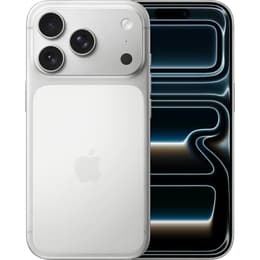
iPhone 17 Pro
iPhone 17 Pro
Starting at

Refurbished price:999.00

Versus €1,339.00 new

See options
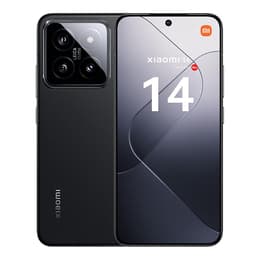
Xiaomi 14
Xiaomi 14
Starting at

Refurbished price:371.00

Versus €1,099.00 new

See options

Differences at a glance

The iPhone 17 Pro, anticipated for release in late 2025, and the Xiaomi 14, launched globally in early 2024, represent distinct approaches to high-end smartphone design and functionality. While both devices offer premium experiences, the iPhone 17 Pro is expected to build upon Apple's established ecosystem with advanced processing and camera capabilities, whereas the Xiaomi 14 delivers a comprehensive Android flagship experience with a focus on display quality and rapid charging.

Scores

Durability

When considering the long-term usability of a smartphone, software support and physical resilience are key factors. These two devices offer different timelines and approaches to longevity.

  • Software Updates: The iPhone 17 Pro is expected to receive major iOS updates for approximately 5 to 7 years from its release, extending its functional lifespan well into the 2030s. The Xiaomi 14, running Android with Xiaomi's HyperOS, typically receives around 4 years of major OS updates and 5 years of security patches.
  • Physical Durability: The Xiaomi 14 features Gorilla Glass Victus 2 for screen protection and an IP68 rating for dust and water resistance. The iPhone 17 Pro is also expected to maintain an IP68 rating and may feature an aluminum frame, a shift from previous titanium models, alongside a redesigned internal layout for improved thermal management.
  • Practical Lifespan: Users prioritizing the longest possible software support and access to the latest operating system features may find the iPhone 17 Pro more aligned with their needs. For those who typically upgrade their device within a few years, the Xiaomi 14 offers robust durability and sufficient software longevity.

Year of Release

2025

2023

Compatible with latest Update

Yes

Yes

OS

iOS

Android

Foldable

No

No

Performance

Both devices are engineered for demanding tasks, but they achieve their performance through different hardware and software optimizations.

  • Processing Power: The iPhone 17 Pro is anticipated to feature Apple's next-generation A-series chip, built on an advanced 3-nanometer process. This is expected to deliver significant improvements in overall speed, handling intensive applications, complex multitasking, and advanced gaming with notable efficiency. The Xiaomi 14 is powered by a current-generation flagship processor, ensuring smooth operation across various apps and providing a fluid experience for gaming and productivity.
  • Multitasking and Responsiveness: With a rumored 12GB of RAM, the iPhone 17 Pro is designed to manage numerous applications simultaneously and support advanced on-device AI features efficiently. The Xiaomi 14 offers configurations with up to 16GB of RAM, contributing to its ability to handle extensive multitasking and maintain system responsiveness.
  • Thermal Management: The iPhone 17 Pro is rumored to include an enhanced cooling system, possibly a vapor chamber, to sustain peak performance during prolonged heavy use. The Xiaomi 14 also incorporates a cooling system to maintain optimal temperatures during intensive usage.

Memory (GB)

12 GB

12 GB

Screen quality

The visual experience on both smartphones is designed to be immersive, though they present slight differences in their display technologies and characteristics.

  • Display Technology and Clarity: The Xiaomi 14 features a 6.36-inch LTPO OLED display with a resolution of 1200 x 2670 pixels, resulting in a sharp pixel density. The iPhone 17 Pro is expected to continue with an OLED display, likely around 6.3 inches, offering deep blacks and vibrant colors, consistent with Apple's ProMotion technology for adaptive refresh rates.
  • Brightness and Smoothness: The Xiaomi 14 boasts an impressive peak brightness of 3000 nits, making it highly legible even in direct sunlight, and features an adaptive refresh rate up to 120Hz for smooth scrolling and animations. The iPhone 17 Pro will also offer a high refresh rate for fluid visuals and is expected to provide excellent brightness for outdoor visibility, though specific peak brightness figures are not yet confirmed.
  • Viewing Experience: Both devices support HDR10+ and Dolby Vision, ensuring a rich and dynamic viewing experience for compatible content. The Xiaomi 14's display is protected by Gorilla Glass Victus 2.

Resolution

2622x1206

1200 x 2670

Screen type

Super Retina XDR

LTPO OLED

Audiovisual

Both smartphones offer advanced camera systems, with a focus on delivering high-quality photography and videography experiences.

  • Rear Camera System: The Xiaomi 14 is equipped with a triple 50MP rear camera system, developed in collaboration with Leica, including a main sensor with optical image stabilization (OIS), a 50MP ultrawide lens, and a 50MP telephoto lens with 3.2x optical zoom and OIS. The iPhone 17 Pro is rumored to feature a significant upgrade, potentially with all three rear cameras (main, ultrawide, and telephoto with Tetraprism technology) utilizing 48MP sensors.
  • Photography Performance: The Xiaomi 14's Leica-engineered cameras are noted for capturing impressive images across various lighting conditions, with good detail and consistent color. The iPhone 17 Pro is expected to deliver enhanced low-light performance and improved image processing, building on Apple's reputation for computational photography.
  • Video Capabilities: The Xiaomi 14 supports 8K video recording at 24 frames per second and offers strong stabilization. The iPhone 17 Pro is also rumored to support 8K video recording and may introduce features like dual video recording, allowing simultaneous capture from front and rear cameras. The front-facing camera on the Xiaomi 14 is 32MP, while the iPhone 17 Pro's front camera is expected to be upgraded to 24MP.

Main camera

48 megapixels

50 megapixels

Front camera

18 megapixels

32 megapixels

Miscellaneous

Beyond core performance, several practical features and design elements differentiate these two devices, influencing daily interaction and user convenience.

  • Connectivity and Ports: The Xiaomi 14 supports 5G, Wi-Fi 6, and Bluetooth 5.4, and includes an infrared blaster. It features a USB-C port. The iPhone 17 Pro is expected to incorporate an Apple-designed Wi-Fi 7 chip for faster and more stable connections, alongside 5G and Bluetooth. It will also feature a USB-C port.
  • Biometrics and Sensors: Both devices include an optical fingerprint sensor integrated into the display for secure authentication on the Xiaomi 14. The iPhone 17 Pro will likely continue to rely on Face ID for secure facial recognition.
  • Design and Handling: The Xiaomi 14 is a compact device with a 6.36-inch display, an aluminum frame, and a glass back, weighing around 188g. The iPhone 17 Pro is expected to have a similar form factor to previous Pro models, potentially featuring an aluminum frame and a redesigned, larger rectangular camera module.

Weight

206 g

188 g

Screen size (in)

6.3

6.36

Network

5G

5G

SIM card

eSIM

Dual Physical SIM

Carrier compatibility

Unlocked

Unlocked

What the community thinks

The iPhone 17 Pro and Xiaomi 14 cater to users with varying priorities, each excelling in different aspects of the smartphone experience. User feedback for the Xiaomi 14 often praises its vibrant display, robust camera system developed with Leica, and impressive fast charging capabilities. Some users note that while its HyperOS offers many features, it can sometimes feel overwhelming. For the iPhone 17 Pro, anticipated praise centers on its expected cutting-edge processor, significant camera advancements, and Apple's long-standing software support. Potential concerns might revolve around its iterative design changes or the continued reliance on Face ID for biometric security.

Users prioritizing a compact Android device with a top-tier display, versatile camera, and exceptionally fast charging will find the Xiaomi 14 well-suited to their needs. Its strong battery life and efficient performance make it a reliable daily driver. Conversely, individuals who value extended software longevity, a highly optimized ecosystem, and the latest advancements in mobile processing and photography may lean towards the iPhone 17 Pro. Its expected performance and camera upgrades are likely to appeal to power users and content creators. Both devices, whether new or as quality-assured refurbished options, offer compelling features for different user profiles, enabling informed and sustainable choices.








