

iPhone 16 Plus Vs Xiaomi Redmi 14C

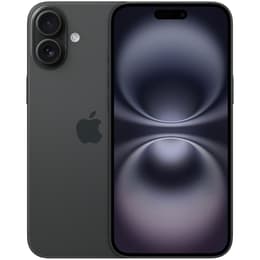
iPhone 16 Plus
iPhone 16 Plus
Starting at

Refurbished price:559.00

Versus €979.00 new

See options
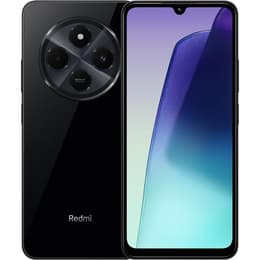
Xiaomi Redmi 14C
Xiaomi Redmi 14C
Starting at

Refurbished price:128.20

Versus €189.00 new

See options

Ratings

The iPhone 16 Plus, released in September 2024, and the Xiaomi Redmi 14C, with its global release in August 2024 and a 5G variant in January 2025, represent distinct approaches to smartphone design and functionality. While both are modern smartphones, they cater to different user expectations through their operating systems and hardware philosophies. The iPhone 16 Plus operates on Apple's iOS, offering a tightly integrated ecosystem and premium features, whereas the Xiaomi Redmi 14C runs on Android 14 with Xiaomi's HyperOS, providing a customizable and feature-rich experience. Key differentiators lie in their display technology, processing power, and camera capabilities.

Scores

Durability

The longevity of a smartphone is influenced by its build quality, software support, and the availability of repairs. These two devices offer different propositions in these areas.

  • Release Timeline and Software Support: The iPhone 16 Plus, launched in September 2024, benefits from Apple's extensive software support, typically receiving major iOS updates for five to seven years from its release. The Xiaomi Redmi 14C, released globally in August 2024, is promised two years of major Android updates and four years of security patches, which is a respectable duration for its category.
  • Physical Durability: The iPhone 16 Plus features Ceramic Shield protection on its display and boasts an IP68 rating for water and dust resistance, allowing it to withstand submersion up to 6 meters for 30 minutes. The Xiaomi Redmi 14C, while undergoing various durability tests for components like power buttons and charging ports, does not typically carry a high official IP rating, though a 5G variant is noted to have an IP52 rating for dust and splashes.
  • Expected Practical Lifespan: Users prioritizing extended software longevity and robust physical protection will find the iPhone 16 Plus designed for a longer practical lifespan. The Redmi 14C offers a solid lifespan for its segment, particularly for users who typically upgrade their devices within a few years.

Year of Release

2024

2024

Compatible with latest Update

Yes

Yes

Foldable

No

No

Performance

Performance is a critical aspect for daily smartphone use, impacting everything from app responsiveness to gaming and multitasking. These devices approach performance with different hardware foundations.

  • Processor Capabilities: The iPhone 16 Plus is powered by Apple's A18 chip, built on a 3nm process, featuring a hexa-core CPU, a 5-core GPU, and a 16-core Neural Engine. This hardware configuration delivers high-end performance, ensuring smooth operation for demanding applications, intensive multitasking, and advanced gaming. The Xiaomi Redmi 14C typically utilizes the MediaTek Helio G81-Ultra processor, an octa-core chipset designed for essential daily tasks and light gaming. A 5G variant of the Redmi 14C uses the Qualcomm Snapdragon 4 Gen 2 processor.
  • Multitasking and Storage: The iPhone 16 Plus comes with 8GB of RAM, providing ample capacity for seamless multitasking and quick app switching. Storage options range from 128GB to 512GB, utilizing NVMe technology for fast data access. The Redmi 14C offers RAM configurations of 4GB, 6GB, or 8GB, with a memory extension feature that can virtually expand RAM up to 16GB. Its storage options are 128GB or 256GB, using eMMC 5.1, which is expandable via a microSD card.
  • Real-World Responsiveness: The iPhone 16 Plus provides a highly responsive and fluid user experience, capable of handling complex tasks and graphically intensive content with ease. The Redmi 14C offers adequate performance for everyday activities like messaging, browsing, and media consumption, though some minor stutters may occur during heavy multitasking.

Memory (GB)

8 GB

4 GB

Screen quality

The display is the primary interface for smartphone interaction, and differences in technology and specifications significantly impact the viewing experience.

  • Display Technology and Resolution: The iPhone 16 Plus features a 6.7-inch Super Retina XDR OLED display, offering deep blacks, vibrant colors, and a high resolution of 2796x1290 pixels, resulting in a sharp 460 pixels per inch (ppi). The Xiaomi Redmi 14C comes with a larger 6.88-inch Dot Drop IPS LCD, which provides an HD+ resolution of 1640x720 pixels, translating to approximately 260 ppi.
  • Brightness and Refresh Rate: The iPhone 16 Plus boasts impressive brightness levels, with a typical maximum of 1000 nits, peaking at 1600 nits for HDR content and up to 2000 nits for outdoor visibility. The Redmi 14C offers a peak brightness of 600 nits (HBM), which is generally adequate for indoor use but may present challenges in direct sunlight. The Redmi 14C features a 120Hz refresh rate, providing a smoother scrolling and navigation experience, while the iPhone 16 Plus also offers a high refresh rate for fluid visuals.
  • Viewing Experience: The iPhone 16 Plus delivers a premium visual experience with its OLED panel, high resolution, and superior brightness, making it well-suited for media consumption and detailed content creation. The Redmi 14C's larger IPS LCD with a 120Hz refresh rate offers a fluid experience for casual browsing and video streaming, though with less sharpness and vibrancy compared to the iPhone.

Resolution

1290 x 2796

720 x 1640

Screen type

Super Retina XDR OLED

IPS LCD

Audiovisual

Camera capabilities are a significant factor for many users, and both devices offer distinct photographic and videographic experiences.

  • Rear Camera System: The iPhone 16 Plus features an advanced dual-camera system, including a 48MP Fusion Main camera with a wide f/1.6 aperture and sensor-shift optical image stabilization. This main sensor also enables a 12MP 2x optical-quality Telephoto zoom. It is complemented by a 12MP Ultra Wide camera with a 120° field of view. The Xiaomi Redmi 14C is equipped with a 50MP main rear camera with an f/1.8 aperture, capable of capturing detailed photos in daylight. It also includes an auxiliary lens, which is primarily for depth perception rather than independent image capture.
  • Front Camera and Video: For selfies and video calls, the iPhone 16 Plus has a 12MP front camera with an f/1.9 aperture and autofocus with Focus Pixels. It supports 4K Dolby Vision video recording at various frame rates, Cinematic Mode, and Spatial Capture for 3D photos and videos. The Redmi 14C features a 13MP front camera with an f/2.0 aperture, offering decent selfies with beautification features and a soft light ring for improved low-light results. Both front and rear cameras on the Redmi 14C are capable of 1080p video recording at 30 frames per second.
  • Photography Features and Audio: The iPhone 16 Plus incorporates advanced computational photography features like Photonic Engine, Deep Fusion, and Smart HDR 5, enhancing image quality across different scenarios. It also introduces a Camera Control button for intuitive adjustments and an Audio Mix feature for refining video sound. The Redmi 14C's camera system includes HDR and portrait modes, and its front camera has a night mode. The device features a mono bottom-firing speaker, while the iPhone offers a more immersive audio experience with Spatial Audio support.

Main camera

48 megapixels

50 megapixels

Front camera

12 megapixels

13 megapixels

Miscellaneous

Beyond core features, several practical elements contribute to the overall user experience, including connectivity, physical design, and additional functionalities.

  • Connectivity and Ports: The iPhone 16 Plus supports 5G (both sub-6 GHz and mmWave), Wi-Fi 7, and Bluetooth 5.3, along with a second-generation Ultra Wideband chip and NFC. It features a USB-C port for charging and data transfer. The Xiaomi Redmi 14C supports dual SIM 4G LTE (with a 5G variant available), Wi-Fi 5, and Bluetooth 5.4. It also includes a USB-C port and retains a 3.5mm headphone jack, which is absent on the iPhone. NFC availability on the Redmi 14C can vary by market.
  • Biometric Security and Design: The iPhone 16 Plus relies on Face ID for secure facial recognition. It has dimensions of 160.9 x 77.8 x 7.8 mm and weighs 199g. The Redmi 14C offers a side-mounted fingerprint scanner and AI face unlock. Its dimensions are 171.88 x 77.8 x 8.22 mm, with a weight ranging from 204g to 211g, depending on the color. The Redmi 14C often features a glass-like back or eco-leather finish, providing a premium feel for its category.
  • Additional Features: The iPhone 16 Plus includes an Action Button, which can be customized for quick access to various functions, and supports MagSafe for wireless charging and accessories. The Redmi 14C offers expandable storage via a microSD card, a feature not present on the iPhone. Both devices feature large batteries, with the iPhone 16 Plus having a 4674 mAh battery and the Redmi 14C a 5160 mAh battery, both supporting 18W fast charging.

Weight

199 g

207 g

Screen size (in)

6.7

6.88

Network

5G

4G

SIM card

eSIM

Dual Physical SIM

Carrier compatibility

Unlocked

Unlocked

Connector

USB-C (USB 2)

USB-C

The iPhone 16 Plus and the Xiaomi Redmi 14C cater to different user needs and priorities, each excelling in specific areas. User sentiment for the iPhone 16 Plus often highlights its powerful performance, advanced camera system with features like Camera Control and Spatial Capture, and the seamless integration within the Apple ecosystem. Users appreciate its vibrant OLED display and long-term software support. Some common criticisms might revolve around its closed ecosystem compared to Android's flexibility.

For the Xiaomi Redmi 14C, users frequently praise its large, smooth 120Hz display, dependable battery life for moderate use, and the inclusion of features like a 3.5mm headphone jack and expandable storage. Its HyperOS interface is generally well-received for its customization options. However, some users note that its processor, while adequate for daily tasks, may not be suitable for heavy gaming or intensive multitasking, and its battery efficiency could be improved compared to some competitors.

Users prioritizing a premium, high-performance device with a top-tier camera, robust durability, and long-term software updates will find the iPhone 16 Plus well-suited to their needs. Its advanced features and integrated ecosystem are ideal for those who value a polished and powerful experience. Conversely, users who prioritize a large, fluid display, customizable Android experience, and practical features like expandable storage and a headphone jack may lean toward the Xiaomi Redmi 14C. It offers a solid everyday smartphone experience for those who do not require the absolute highest performance or advanced photographic capabilities.

Both devices are available as quality-assured refurbished options, providing an eco-friendly alternative for consumers looking to make informed and sustainable choices.


See all articles

Our recent comparisons