

iPhone 16 Plus Vs OnePlus 11

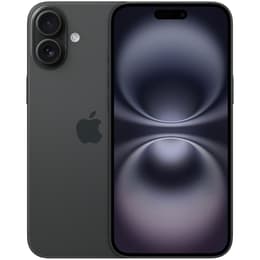
iPhone 16 Plus
iPhone 16 Plus
Starting at

Refurbished price:559.00

Versus €979.00 new

See options
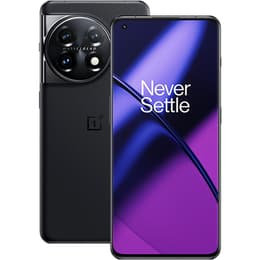
OnePlus 11
OnePlus 11
Starting at

Refurbished price:325.00

Versus €949.00 new

See options

Ratings

The iPhone 16 Plus, released in 2024, and the OnePlus 11, launched in 2023, represent distinct approaches to the premium smartphone experience. While the iPhone 16 Plus operates on Apple's iOS ecosystem, the OnePlus 11 runs on Android with OxygenOS. Key differentiators between these two devices include their display refresh rates, camera system configurations, and charging capabilities.

Scores

Durability

When considering the longevity of a smartphone, software support and physical resilience are important factors. The iPhone 16 Plus, being a 2024 release, benefits from Apple's extended software support, typically offering major iOS updates for approximately five to seven years, with security updates often extending even longer. This means users can expect new features and security patches for a considerable period. The OnePlus 11, released in 2023, launched with Android 13 and is promised four major Android updates and five years of security updates. This policy means the OnePlus 11 is expected to receive updates through Android 17 and security patches for an additional year.

  • Software Updates: The iPhone 16 Plus is expected to receive major iOS updates for a longer duration, typically five to seven years, compared to the OnePlus 11's four major Android updates.
  • Physical Durability: The iPhone 16 Plus features a Ceramic Shield front and an IP68 rating for water and dust resistance, indicating robust protection against immersion. The OnePlus 11 utilizes Gorilla Glass Victus on the front and Gorilla Glass 5 on the back, with an IP64 rating, offering resistance to light water sprays.
  • Expected Lifespan: Both devices are built to last, with Apple's consistent long-term software commitment for the iPhone 16 Plus and OnePlus's improved update policy for the OnePlus 11 contributing to their practical lifespans.

Year of Release

2024

2023

Foldable

No

No

Performance

Performance is central to the daily user experience, influencing everything from app responsiveness to demanding tasks like gaming. The iPhone 16 Plus is equipped with Apple's A18 chip, built on a 3-nanometer process, featuring a 6-core CPU, a 5-core GPU, and an enhanced 16-core Neural Engine designed for advanced AI processing. This hardware configuration is engineered for efficient handling of complex applications and multitasking. The OnePlus 11 is powered by the Qualcomm Snapdragon 8 Gen 2 processor, a capable chip from its release year, known for its efficiency and performance in Android devices.

  • Processing Power: The iPhone 16 Plus's A18 chip is expected to deliver a performance advantage, particularly in tasks leveraging its advanced Neural Engine and improved memory bandwidth. The OnePlus 11's Snapdragon 8 Gen 2 provides smooth operation for everyday use and gaming.
  • Multitasking Capabilities: The iPhone 16 Plus is reported to include at least 8GB of RAM, supporting efficient app management. The OnePlus 11 offers configurations with up to 16GB of RAM, allowing for extensive multitasking without significant slowdowns.
  • Real-world Responsiveness: Both devices offer a fluid user experience, with the iPhone 16 Plus benefiting from its newer chip architecture for potentially faster app loading and smoother transitions, while the OnePlus 11 is noted by users for its rapid and smooth day-to-day operations.

Memory (GB)

8 GB

16 GB

Screen quality

The display is the primary interface for smartphone interaction, and both the iPhone 16 Plus and OnePlus 11 offer vibrant viewing experiences, though with notable differences in their underlying technologies and capabilities. Both devices feature large OLED displays, providing deep blacks and high contrast.

  • Display Technology and Resolution: The iPhone 16 Plus features a 6.7-inch Super Retina XDR OLED display with a resolution of 2796 by 1290 pixels, resulting in 460 pixels per inch. The OnePlus 11 boasts a 6.7-inch LTPO3 AMOLED display with a QHD+ resolution of 3216 x 1440 pixels, offering a higher pixel density of 525 PPI.
  • Refresh Rate and Smoothness: A key distinction lies in the refresh rate; the iPhone 16 Plus maintains a standard 60Hz refresh rate. In contrast, the OnePlus 11 features an adaptive refresh rate that can dynamically adjust from 1Hz to 120Hz, contributing to smoother scrolling and more fluid animations.
  • Brightness Levels: The iPhone 16 Plus offers a typical maximum brightness of 1000 nits, with peak HDR brightness reaching 1600 nits and outdoor peak brightness up to 2000 nits. The OnePlus 11 provides a peak brightness of 1300 nits, which is generally sufficient for outdoor visibility.

Resolution

1290 x 2796

1440 x 3216

Audiovisual

Camera capabilities are a significant consideration for many users, and both the iPhone 16 Plus and OnePlus 11 offer advanced systems designed to capture high-quality images and videos, albeit with different hardware and software philosophies. The iPhone 16 Plus focuses on a refined dual-camera setup, while the OnePlus 11 provides a versatile triple-camera system with Hasselblad tuning.

  • Rear Camera Systems: The iPhone 16 Plus includes a dual-camera system with a 48MP main sensor and a 12MP ultrawide camera, designed for strong everyday photography and computational enhancements. The OnePlus 11 features a triple-camera setup, co-developed with Hasselblad, comprising a 50MP main sensor with optical image stabilization, a 48MP ultrawide lens, and a 32MP telephoto lens with 2x optical zoom.
  • Photography Performance: The iPhone 16 Plus is expected to deliver consistent image quality across various conditions, benefiting from Apple's image processing. The OnePlus 11 is praised for its clean, sharp, and well-exposed images in daylight with accurate color reproduction, and its main camera performs well in low-light environments.
  • Video Recording and Front Camera: Both devices support 4K video recording. The iPhone 16 Plus has a 12MP front camera. The OnePlus 11 can record up to 8K video and features a 16MP front camera, though some users note its performance can be less consistent in challenging lighting.

Miscellaneous

Beyond core performance and camera features, several practical elements contribute to the overall user experience of a smartphone. These include connectivity, physical design, and additional functionalities that enhance daily use.

  • Connectivity and Ports: Both the iPhone 16 Plus and OnePlus 11 support 5G connectivity for fast mobile data. The iPhone 16 Plus features a USB-C port, aligning with modern standards. The OnePlus 11 also uses a USB-C port, though it operates at USB 2.0 speeds. The iPhone 16 Plus is expected to support Wi-Fi 7, while the OnePlus 11 supports Wi-Fi 6E.
  • Biometrics and Physical Features: The iPhone 16 Plus relies on Face ID for secure authentication. The OnePlus 11 incorporates an in-display fingerprint sensor for biometric security. The iPhone 16 Plus introduces an Action Button for customizable shortcuts and a new Capture button for camera functions. The OnePlus 11 retains the physical alert slider, a signature feature for quick sound profile changes.
  • Build Materials and Handling: The iPhone 16 Plus features an aluminum frame and a frosted glass back, with Ceramic Shield on the front for enhanced durability. The OnePlus 11 also uses an aluminum frame with Gorilla Glass Victus on the front and Gorilla Glass 5 on the back, offering a premium feel.

Weight

199 g

205 g

Screen size (in)

6.7

6.7

Network

5G

5G

SIM card

eSIM

Physical SIM

Carrier compatibility

Unlocked

Unlocked

The iPhone 16 Plus and OnePlus 11 cater to users with differing priorities, reflecting their respective ecosystems and design philosophies. Users frequently praise the OnePlus 11 for its exceptional battery life, often lasting a full day or more even with heavy use, and its remarkably fast 100W wired charging, which can fully charge the device in under 30 minutes. Its smooth 120Hz display and responsive performance are also commonly highlighted. However, some users have noted that the camera, while solid, may not always match the performance of some higher-priced competitors in all scenarios, and its IP64 rating offers less water resistance than some flagships.

For the iPhone 16 Plus, anticipated user sentiment often centers on the seamless integration within the Apple ecosystem, consistent software updates, and the expected reliability of its camera system and overall performance. The inclusion of features like the Action Button and a dedicated Capture button are likely to be well-received for enhancing usability. Potential criticisms might revolve around the 60Hz display, which some users might find less fluid compared to devices with higher refresh rates, and the absence of a dedicated telephoto lens in the Plus model.

Users prioritizing a highly fluid display, rapid charging speeds, and a versatile Android experience with a strong camera system may find the OnePlus 11 well-suited to their needs. Conversely, those who value long-term software support, a robust ecosystem, and a consistent, user-friendly experience with advanced computational photography will likely lean towards the iPhone 16 Plus. Both devices offer compelling features, and for those seeking quality-assured refurbished options, both models can be found, providing an eco-friendly alternative for making an informed purchasing decision.

See all articles

Our recent comparisons