
iPhone

Compare models
Differences at a glance
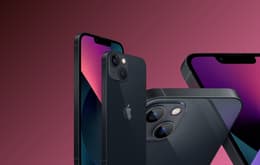
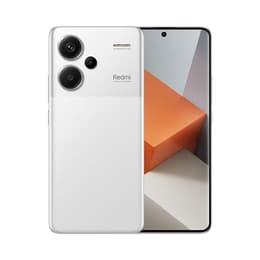
The iPhone 15 Plus, released in September 2023, and the Xiaomi Redmi Note 13 Pro+, launched globally in January 2024, are both large-screen smartphones offering distinct experiences. While the iPhone 15 Plus operates on Apple's iOS ecosystem, the Redmi Note 13 Pro+ runs on Android with Xiaomi's MIUI overlay. Key differentiators include their camera systems, display technologies, and overall software approaches, catering to different user preferences.
Colour
Storage
The practical lifespan of a smartphone is influenced by its physical resilience and ongoing software support. The iPhone 15 Plus, released in September 2023, typically receives iOS updates for an extended period, often five to six years from its launch, ensuring long-term software longevity. It features a Ceramic Shield front and a color-infused glass back, encased in an aluminum frame, offering robust protection. The device also carries an IP68 rating, signifying resistance to dust and water immersion up to 6 meters for 30 minutes.
The Xiaomi Redmi Note 13 Pro+, introduced globally in January 2024, generally receives three to four major Android OS updates and four to five years of security updates, providing a solid software lifecycle. Its display is protected by Corning Gorilla Glass Victus, a durable glass designed for enhanced drop and scratch resistance. The Redmi Note 13 Pro+ also boasts an IP68 rating for dust and water resistance, matching the iPhone's protection level. Both devices are built to withstand daily use, with the iPhone potentially offering a longer period of major OS updates.
Year of Release
Compatible with latest Update
OS
Foldable
The performance of these devices is tailored to their respective operating systems and user ecosystems. The iPhone 15 Plus is equipped with a powerful current-generation processor, enabling smooth navigation, rapid app launches, and efficient handling of demanding applications and games. Its system architecture is optimized for seamless multitasking and responsive interactions across the iOS platform.
The Xiaomi Redmi Note 13 Pro+ features a capable processor designed to deliver a fluid user experience for everyday tasks and mobile gaming. It offers generous RAM configurations, which contribute to its ability to manage multiple applications simultaneously without significant slowdowns. Both phones provide ample storage options to accommodate a large volume of apps, photos, and videos.
The visual experience on both smartphones is a highlight, though they approach display technology with different characteristics. The iPhone 15 Plus features a 6.7-inch Super Retina XDR OLED display, known for its deep blacks, vibrant colors, and excellent contrast. It offers a high resolution of 2796x1290 pixels, resulting in a sharp image with 460 pixels per inch. The display can reach a peak brightness of 2000 nits outdoors, ensuring good visibility even in bright sunlight.
The Xiaomi Redmi Note 13 Pro+ also sports a 6.67-inch AMOLED display, delivering rich colors and strong contrast. Its 1.5K resolution (2712x1220 pixels) provides a clear viewing experience with 446 pixels per inch. A notable feature is its 120Hz refresh rate, which contributes to smoother scrolling and more fluid animations compared to the iPhone's standard 60Hz refresh rate. The Redmi Note 13 Pro+ also achieves a peak brightness of 1800 nits.
Resolution
Screen type
Both devices offer capable camera systems and immersive audio experiences, though with different specifications and features. The iPhone 15 Plus is equipped with an advanced dual-camera system, featuring a 48MP main sensor with sensor-shift optical image stabilization and a 12MP ultra-wide lens. It excels in capturing detailed photos with vibrant colors and strong low-light performance, and includes a 2x telephoto option enabled by its main sensor. Video recording capabilities include 4K Dolby Vision HDR, and the front-facing 12MP TrueDepth camera supports autofocus and advanced portrait features. The iPhone 15 Plus also features stereo speakers for a balanced audio output.
The Xiaomi Redmi Note 13 Pro+ boasts a triple camera setup, highlighted by a 200MP main sensor with optical image stabilization (OIS) and 2x/4x lossless in-sensor zoom, an 8MP ultra-wide camera, and a 2MP macro lens. This high-resolution main sensor is designed for capturing intricate details and performs well in various lighting conditions. Its 16MP front camera is suitable for selfies and video calls. For audio, the Redmi Note 13 Pro+ includes dual stereo speakers with Dolby Atmos support, providing an enhanced media consumption experience.
Main camera
Front camera
Beyond core features, several practical elements distinguish these two smartphones. The iPhone 15 Plus has transitioned to a USB-C port for charging and data transfer, aligning with modern connectivity standards. It supports Wi-Fi 6 and Bluetooth 5.3 for wireless connectivity, along with 5G capabilities. For biometric security, it relies on Face ID. The device features an aluminum frame and a glass back, contributing to its premium feel. A notable software integration is the Dynamic Island, which provides interactive alerts and live activities around the front camera cutout.
The Xiaomi Redmi Note 13 Pro+ also utilizes a USB-C port for charging and data. It supports Wi-Fi 6 and Bluetooth 5.3, offering current wireless standards, and is 5G-enabled. For security, it incorporates an in-display fingerprint sensor. The phone's build includes a glass back, with some variants offering a vegan leather finish, and it features a curved display. Its dimensions are 161.4 x 74.2 x 8.9 mm, and it weighs 204.5 grams.
Weight
Screen size (in)
Network
SIM card
Carrier compatibility
User sentiment for the iPhone 15 Plus often highlights its exceptional battery life, with many users reporting it comfortably lasts through a full day of heavy use and often longer. Its large, bright display and the integration of the Dynamic Island are also frequently praised. Some common criticisms include the 60Hz refresh rate, which some users find less fluid compared to higher refresh rate displays on other devices. The camera system is generally well-regarded for its consistency and computational photography capabilities.
For the Xiaomi Redmi Note 13 Pro+, users frequently commend its vibrant 120Hz AMOLED display and its rapid 120W fast charging, which can fully charge the device in a short amount of time. The 200MP main camera is often noted for its detail capture, though some reviews suggest that overall camera processing could be refined. Battery life is generally considered good, often lasting a day or more for typical usage. Criticisms sometimes point to the software experience, with MIUI occasionally being described as less intuitive than some competitors.
Users prioritizing extended battery life, a consistent software experience, and a robust ecosystem may find the iPhone 15 Plus well-suited to their needs. Conversely, individuals who value a high refresh rate display, extremely fast charging, and a high-megapixel camera with versatile zoom options might lean towards the Xiaomi Redmi Note 13 Pro+. Both devices offer compelling features for different user profiles, and exploring quality-assured refurbished options can provide an eco-friendly alternative for either model.