
iPhone 15 Plus Vs Xiaomi 14

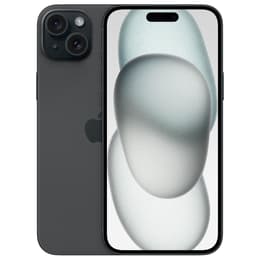
iPhone 15 Plus
iPhone 15 Plus
Starting at

Refurbished price:421.00

Versus €979.00 new

See options
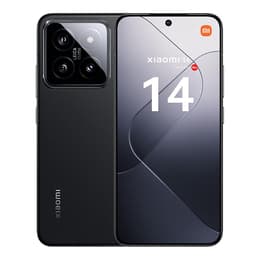
Xiaomi 14
Xiaomi 14
Starting at

Refurbished price:384.00

Versus €1,099.00 new

See options

Ratings

The iPhone 15 Plus, released in September 2023, and the Xiaomi 14, which saw its global launch in February 2024, represent two distinct approaches to high-end smartphones. While both offer robust performance and advanced camera systems, they differ in their operating systems and display technologies. The iPhone 15 Plus runs on Apple's iOS, known for its integrated ecosystem, while the Xiaomi 14 operates on Android 14 with Xiaomi's HyperOS, offering a customizable experience.

Scores

Durability

Evaluating the practical lifespan of a smartphone involves considering its software support, physical resilience, and ease of repair.

  • Software Longevity: The iPhone 15 Plus launched with iOS 17 and is expected to receive major iOS updates for approximately 5-6 years, extending its software compatibility well into the future. The Xiaomi 14, running Android 14 with HyperOS, is promised four generations of Android OS upgrades and five years of security patches, offering a comparable long-term software commitment.
  • Physical Durability: The iPhone 15 Plus features a Ceramic Shield front and a color-infused glass back, contributing to its overall resilience, along with an IP68 rating for water and dust resistance, allowing submersion up to 6 meters for 30 minutes. The Xiaomi 14 incorporates Gorilla Glass Victus 2 for display protection.
  • Repairability: The Xiaomi 14 has a reported repairability score of 8.0 out of 10, indicating a moderate ease of repair, with accessible components like the screen and battery, though some plastic covers may need removal. Information regarding the iPhone 15 Plus's repairability score was not explicitly detailed in the search results, but Apple generally designs its devices with specific repair processes.

Year of Release

2023

2023

Compatible with latest Update

Yes

Yes

OS

iOS

Android

Foldable

No

No

Performance

Both devices are equipped with powerful internal components designed to handle demanding applications and multitasking efficiently.

  • Processing Power: The iPhone 15 Plus utilizes a capable processor that ensures smooth operation across various tasks, from everyday browsing to more intensive applications and gaming. The Xiaomi 14 features a current-generation processor, enabling it to deliver strong performance for any app or game, with users reporting no slowdown or stuttering even during heavy gaming sessions.
  • Multitasking and Responsiveness: The iPhone 15 Plus, with its internal memory configuration, provides a responsive user experience, allowing for efficient app switching and background processes. The Xiaomi 14 offers various internal memory options, contributing to its ability to manage multiple applications simultaneously without significant delays.
  • Battery Behavior: The iPhone 15 Plus is noted for its extended battery life, often lasting more than a full day even with heavy usage, and offering up to 26 hours of video playback. The Xiaomi 14 also provides strong battery endurance, with users reporting approximately 1.5 days of usage, or around 43 hours, for moderate to heavy use.

Memory (GB)

6 GB

16 GB

Screen quality

The visual experience on both smartphones is a key differentiator, with each offering distinct display characteristics.

  • Display Technology and Clarity: The iPhone 15 Plus features a 6.7-inch Super Retina XDR OLED display, providing deep blacks and vibrant colors with a resolution of 2796x1290 pixels and a pixel density of 460 PPI. The Xiaomi 14 comes with a 6.36-inch LTPO AMOLED display, offering a resolution of 2670x1200 pixels and a pixel density of 460 PPI, ensuring crisp text and images.
  • Brightness and Outdoor Visibility: The iPhone 15 Plus can reach a peak outdoor brightness of up to 2000 nits, making it easily readable in direct sunlight. The Xiaomi 14 boasts an even higher peak brightness of up to 3000 nits, which can be beneficial for visibility in very bright conditions.
  • Refresh Rate and Smoothness: The iPhone 15 Plus features a standard 60Hz refresh rate. In contrast, the Xiaomi 14 offers an adaptive refresh rate that can scale from 1Hz to 120Hz, providing smoother scrolling and more fluid animations, particularly noticeable in gaming and fast-paced content.

Resolution

1290 x 2796

1200 x 2670

Screen type

Super Retina XDR OLED

LTPO OLED

Audiovisual

Both devices offer advanced camera systems, though with different configurations and photographic philosophies.

  • Rear Camera System: The iPhone 15 Plus features a dual-camera system with a 48MP main sensor (f/1.6) and a 12MP ultra-wide lens (f/2.4). The 48MP main sensor allows for 2x optical-quality telephoto zoom through sensor cropping. The Xiaomi 14 boasts a triple 50MP camera system developed in collaboration with Leica, including a 50MP main sensor (f/1.6, OIS), a 50MP ultra-wide lens, and a 50MP telephoto lens with 3.2x optical zoom.
  • Photography Performance: The iPhone 15 Plus delivers improved low-light performance and detailed photos, benefiting from features like Photonic Engine and Smart HDR 5. The Xiaomi 14's Leica-tuned cameras are praised for producing impressive images across various lighting conditions, with consistent color science across its lenses and specific Leica Authentic and Vibrant modes.
  • Video Recording and Audio: Both phones are capable of high-quality video recording. The iPhone 15 Plus supports 4K video at up to 60 frames per second. The Xiaomi 14 can record video up to 8K resolution at 24 frames per second, and 4K at 60 frames per second, with its video performance often highlighted as a strong point among Android devices.

Main camera

48 megapixels

50 megapixels

Front camera

12 megapixels

32 megapixels

Miscellaneous

Beyond core specifications, several practical features and design elements contribute to the overall user experience.

  • Connectivity and Ports: The iPhone 15 Plus has transitioned to a USB-C port, offering improved compatibility with other devices, though it operates at USB 2.0 speeds. It also supports Wi-Fi 6 and Bluetooth 5.3. The Xiaomi 14 features a USB-C port with USB 3.2 speeds, and supports newer wireless standards like Wi-Fi 7 and Bluetooth 5.4, offering faster data transfer and connectivity. Both support 5G connectivity.
  • Biometrics and User Interface: The iPhone 15 Plus incorporates Face ID for secure authentication and features the Dynamic Island, an interactive area around the front camera that displays alerts and activities. The Xiaomi 14 includes an under-display optical fingerprint sensor for unlocking and security.
  • Design and Handling: The iPhone 15 Plus measures 160.9 x 77.8 x 7.8 mm and weighs 201 grams, offering a large screen experience. The Xiaomi 14 is a more compact device, measuring 152.8 x 71.5 x 8.2 mm and weighing 193 grams, which some users find more comfortable for one-handed use.

Weight

171 g

188 g

Screen size (in)

6.7

6.36

Network

5G

5G

SIM card

eSIM

Dual Physical SIM

Carrier compatibility

Unlocked

Unlocked

User feedback for the iPhone 15 Plus frequently highlights its exceptional battery life and large, vibrant display as major advantages. The inclusion of USB-C and the Dynamic Island are also praised as significant quality-of-life improvements. Some users note that while the camera system is very good, the 60Hz refresh rate can feel less fluid compared to competitors, and the real-world performance might not feel drastically different from its immediate predecessor.

The Xiaomi 14 receives commendation for its powerful performance, fast charging capabilities, and versatile Leica-tuned camera system. Its compact form factor, while still offering a substantial screen, is often cited as a positive, especially for those seeking a high-end Android device that is not excessively large. Some users find Xiaomi's HyperOS to be feature-rich but potentially overwhelming, and while the camera is strong, some specific aspects like telephoto performance or selfie camera autofocus have received mixed reviews.

Users prioritizing a large display, extended battery life, and a highly integrated software experience may find the iPhone 15 Plus well-suited to their needs. Conversely, individuals who value a compact design, a high refresh rate display, rapid charging, and a feature-rich, customizable Android experience with a versatile camera system might lean towards the Xiaomi 14. Both devices offer compelling features for different user preferences, and considering a quality-assured refurbished option for either model can be an eco-friendly alternative.

See all articles

Our recent comparisons