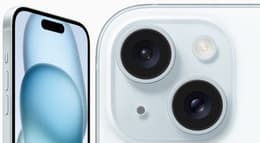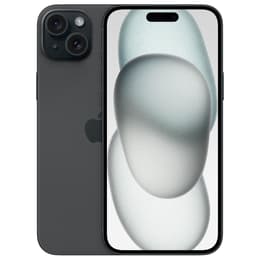
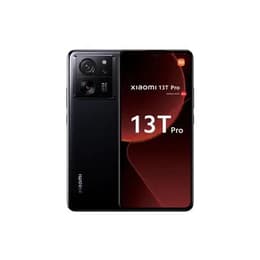


iPhone 15 Plus Vs Xiaomi 13T Pro

iPhone 15 Plus
iPhone 15 Plus
Starting at

Refurbished price:421.00

Versus €979.00 new

See options
Xiaomi 13T Pro
Xiaomi 13T Pro
Starting at

Refurbished price:241.00

Versus €900.00 new

See options

Ratings

The iPhone 15 Plus (released September 2023) and the Xiaomi 13T Pro (also released September 2023) are contemporary smartphones offering distinct experiences within their respective ecosystems. While the iPhone 15 Plus operates on Apple's iOS, the Xiaomi 13T Pro runs on Android, specifically MIUI. Key differentiators include their display refresh rates, camera systems, and approach to performance and battery management.

Scores

Durability

Both devices were released in September 2023, indicating a similar starting point for their lifecycle. However, their operating system support and repairability approaches differ.

  • Software Longevity: Apple typically provides iOS updates for 5-6 years from a device's release, suggesting the iPhone 15 Plus will receive updates until approximately 2028-2029. The Xiaomi 13T Pro is expected to receive four major Android OS updates and five years of security updates, which is a strong commitment for an Android device, extending its software relevance.
  • Repairability: The iPhone 15 Plus has seen improvements in repairability, with some reports indicating a score of 7/10, allowing for easier part replacement and calibration through Apple's Repair Assistant. The Xiaomi 13T Pro, while not having a widely published iFixit score, generally follows Android device trends where repairability can vary, but parts availability might be more open.
  • Physical Durability: The iPhone 15 Plus features a Ceramic Shield front and a color-infused glass back with an aluminum frame, offering robust protection and an IP68 rating for dust and water resistance. The Xiaomi 13T Pro also boasts an IP68 rating and uses Gorilla Glass 5 for its front display, with options for a glass or vegan leather back.

Year of Release

2023

2023

Compatible with latest Update

Yes

Yes

OS

iOS

Android

Foldable

No

No

Performance

Both smartphones deliver strong performance for daily tasks and demanding applications, though they achieve this through different hardware and software optimizations.

  • Processing Power: The iPhone 15 Plus is equipped with a powerful processor that handles demanding apps, multitasking, and graphics-intensive games smoothly, ensuring a responsive user experience. The Xiaomi 13T Pro features a current-generation processor designed for flagship-level performance, providing fluid navigation and efficient handling of complex tasks and gaming.
  • Storage and RAM: The iPhone 15 Plus offers storage options up to 512GB, paired with sufficient RAM for smooth iOS operation. The Xiaomi 13T Pro provides more generous configurations, with storage options up to 1TB and up to 16GB of RAM, which can benefit extensive multitasking and storage of large files and media.
  • Battery Behavior: The iPhone 15 Plus is noted for its excellent battery life, often lasting a full day or more even with heavy usage, making it a reliable choice for users who prioritize endurance. The Xiaomi 13T Pro also features a large battery capacity, generally providing a full day of use.

Memory (GB)

6 GB

12 GB

Screen quality

The display on both devices offers a high-quality visual experience, but with distinct characteristics that cater to different preferences.

  • Display Technology and Resolution: The iPhone 15 Plus features a 6.7-inch Super Retina XDR OLED display with a resolution of 2796 x 1290 pixels, resulting in sharp images and vibrant colors. The Xiaomi 13T Pro comes with a 6.67-inch AMOLED display, offering a resolution of 2712 x 1220 pixels, also providing clear and colorful visuals.
  • Brightness and Outdoor Visibility: The iPhone 15 Plus can reach a peak brightness of 2000 nits outdoors, ensuring good visibility even in bright sunlight. The Xiaomi 13T Pro surpasses this with a peak brightness of 2600 nits, offering exceptional clarity in very bright environments.
  • Refresh Rate: A notable difference is the refresh rate; the iPhone 15 Plus has a standard 60Hz refresh rate. In contrast, the Xiaomi 13T Pro features a higher 144Hz refresh rate, which contributes to smoother scrolling and a more fluid visual experience, particularly noticeable in fast-paced content and gaming.

Resolution

1290 x 2796

1220 x 2712

Screen type

Super Retina XDR OLED

AMOLED

Audiovisual

Both smartphones offer capable camera systems, designed to capture high-quality photos and videos, though with different strengths and features.

  • Main Camera System: The iPhone 15 Plus features a dual-camera system with a 48MP main sensor that produces detailed 24MP photos by default, and a 12MP ultrawide lens. It also offers an effective 2x optical zoom by cropping the main sensor. The Xiaomi 13T Pro boasts a triple camera setup, including a 50MP main sensor, a 50MP telephoto lens with 2x optical zoom, and a 12MP ultrawide lens, co-engineered with Leica for specific color science.
  • Photography Performance: The iPhone 15 Plus excels in color reproduction and detail across various lighting conditions, with strong low-light performance and advanced portrait capabilities. The Xiaomi 13T Pro also delivers strong photo and video quality, particularly noted for its night mode and portrait shots, with users appreciating the Leica-tuned image processing.
  • Video Recording: The iPhone 15 Plus supports 4K video recording up to 60fps, with features like Cinematic mode for depth effects. The Xiaomi 13T Pro offers up to 8K video recording at 24fps and 4K at 60fps, providing more resolution options for videographers.

Main camera

48 megapixels

50 megapixels

Front camera

12 megapixels

20 megapixels

Miscellaneous

Beyond core features, several practical elements contribute to the overall user experience and differentiate these two devices.

  • Connectivity and Ports: Both phones support 5G connectivity. The iPhone 15 Plus includes Wi-Fi 6 and Bluetooth 5.3, and notably transitions to a USB-C port for charging and data transfer. The Xiaomi 13T Pro supports the newer Wi-Fi 7 standard and Bluetooth 5.4, also featuring a USB-C port.
  • Biometric Security: The iPhone 15 Plus relies on Face ID for secure facial recognition. The Xiaomi 13T Pro offers an in-display fingerprint sensor and AI face unlock for biometric authentication.
  • Design and Handling: The iPhone 15 Plus has an aluminum design with a Ceramic Shield front and a color-infused glass back, weighing 201 grams. The Xiaomi 13T Pro is slightly heavier at 206 grams for the glass version (200 grams for vegan leather) and features a plastic frame.

Weight

171 g

200 g

Screen size (in)

6.7

6.67

Network

5G

5G

SIM card

eSIM

Physical SIM + eSIM

Carrier compatibility

Unlocked

Unlocked

Connector

USB-C (USB 2)

USB-C

User sentiment indicates that the iPhone 15 Plus is praised for its exceptional battery life, consistent performance, and reliable camera system, making it a solid choice for those seeking a dependable and long-lasting device within the Apple ecosystem. Some users note its 60Hz display as a point of comparison to higher refresh rate Android phones.

The Xiaomi 13T Pro receives acclaim for its vibrant 144Hz AMOLED display, fast charging capabilities, and versatile camera system co-engineered with Leica. Users appreciate its strong performance for gaming and multitasking, along with a commitment to extended software updates. Some criticisms have been noted regarding its battery efficiency compared to some other flagship devices, despite its large capacity.

Users prioritizing a smooth, high-refresh-rate display, extensive storage options, and advanced camera features with a distinct photographic style may find the Xiaomi 13T Pro well-suited to their needs. Conversely, those who value extended software support, a highly optimized user experience, and robust battery endurance, particularly within the Apple ecosystem, may lean toward the iPhone 15 Plus. Both devices represent strong contenders in their respective categories, and considering a quality-assured refurbished option can be an eco-friendly alternative for either model.


See all articles

Our recent comparisons