
iPhone 13 Pro Vs Xiaomi 14

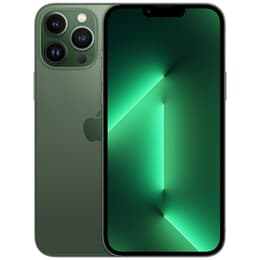
iPhone 13 Pro
iPhone 13 Pro
Starting at

Refurbished price:313.00

Versus €1,149.00 new

See options
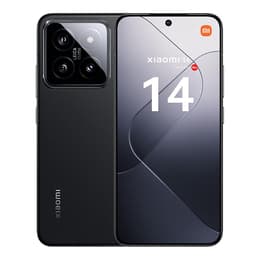
Xiaomi 14
Xiaomi 14
Starting at

Refurbished price:384.00

Versus €1,099.00 new

See options

Ratings

The iPhone 13 Pro, released in September 2021, and the Xiaomi 14, launched globally in February 2024, represent distinct approaches to high-performance smartphones. While both devices offer advanced capabilities, they differ significantly in their operating systems and some core hardware philosophies. The iPhone 13 Pro operates on Apple's iOS ecosystem, known for its long-term software support and integrated services, whereas the Xiaomi 14 runs on Xiaomi HyperOS, based on Android, offering a more open and customizable experience. These differences extend to their camera systems and display technologies, catering to varied user preferences.

Scores

Durability

When considering the long-term usability of a smartphone, software support and physical durability are key factors. Both the iPhone 13 Pro and the Xiaomi 14 are built with robust materials and designed for extended use, though their release timelines impact their expected software longevity.

  • Software Longevity: The iPhone 13 Pro, launched in late 2021, shipped with iOS 15 and is compatible with the current iOS 26. It is anticipated to receive major iOS updates until at least iOS 28, likely extending its support into late 2027 or early 2028, potentially even longer. The Xiaomi 14, a more recent device from early 2024, is expected to receive four years of operating system updates and five years of security updates from its release.
  • Physical Durability: The iPhone 13 Pro features a Ceramic Shield front cover and an IP68 rating for water and dust resistance. The Xiaomi 14 also boasts an IP68 rating and uses Gorilla Glass Victus 2 for screen protection, along with an aluminum alloy frame. Both devices are designed to withstand daily exposure to dust and water.
  • Practical Lifespan: Users of the iPhone 13 Pro have reported good battery health retention and overall device performance even after two years of use, suggesting a practical lifespan that extends well beyond its initial release. The newer Xiaomi 14 benefits from more recent component advancements, which could contribute to its longevity.

Year of Release

2021

2023

Compatible with latest Update

Yes

Yes

OS

iOS

Android

Foldable

No

No

Performance

The performance of a smartphone is crucial for handling demanding applications, multitasking, and ensuring a smooth user experience. Both the iPhone 13 Pro and the Xiaomi 14 are equipped with powerful internal components designed for high efficiency and responsiveness.

  • Processing Power: The iPhone 13 Pro features a high-performance processor that enables smooth navigation, rapid app loading, and efficient handling of graphics-intensive tasks like gaming and video editing. The Xiaomi 14 incorporates a newer generation processor, which provides substantial power for complex computations, advanced AI features, and seamless multitasking, often resulting in quicker processing times for demanding applications.
  • Multitasking and Storage: The iPhone 13 Pro comes with 6GB of RAM, which supports fluid transitions between multiple open applications. Storage options range from 128GB up to 1TB. The Xiaomi 14 offers more generous RAM configurations, starting from 8GB and going up to 16GB, paired with UFS 4.0 storage, which contributes to faster data access and improved multitasking capabilities, especially with numerous applications running simultaneously.
  • Battery Behavior: The iPhone 13 Pro is equipped with a 3095 mAh battery, and its ProMotion display, which can adapt its refresh rate, contributes to efficient power consumption, often allowing for a full day of use for many users. The Xiaomi 14 houses a larger 4610 mAh battery, designed to provide extended usage times. It also supports rapid wired and wireless charging, allowing for quick power replenishment.

Memory (GB)

6 GB

16 GB

Screen quality

The display is a primary interface for smartphone interaction, and both devices offer high-quality viewing experiences, though with some distinctions in their underlying technology and specifications.

  • Display Technology and Clarity: The iPhone 13 Pro features a 6.1-inch Super Retina XDR OLED display, providing deep blacks, vibrant colors, and excellent contrast. Its resolution of 2532 x 1170 pixels results in a sharp 460 pixels per inch (ppi). The Xiaomi 14 comes with a slightly larger 6.36-inch C8 AMOLED display, also offering rich colors and high contrast. It has a resolution of 2670 x 1200 pixels, matching the iPhone's 460 ppi for clarity.
  • Brightness and Refresh Rate: Both phones feature adaptive refresh rates for smooth scrolling and efficient power use. The iPhone 13 Pro's ProMotion display dynamically adjusts from 10Hz to 120Hz, with a typical brightness of 1000 nits and a peak HDR brightness of 1200 nits. The Xiaomi 14's LTPO display also offers an adaptive refresh rate from 1Hz to 120Hz. It boasts a higher peak brightness of 3000 nits, which can be beneficial for outdoor visibility, and a typical HBM (High Brightness Mode) of 1000 nits.
  • Viewing Experience: Both displays support HDR10+ and Dolby Vision, ensuring a high-quality viewing experience for compatible content. The Xiaomi 14 also supports a 12-bit color depth, allowing for a wider range of colors.

Resolution

1170 x 2532

1200 x 2670

Screen type

Super Retina XDR OLED

LTPO OLED

Audiovisual

Both the iPhone 13 Pro and the Xiaomi 14 are equipped with advanced camera systems designed to capture high-quality photos and videos, each with its own strengths and features.

  • Rear Camera Systems: The iPhone 13 Pro features a triple 12-megapixel camera system, including a wide, ultra-wide, and telephoto lens with 3x optical zoom. It incorporates a LiDAR Scanner for improved depth sensing and low-light focusing. The Xiaomi 14 boasts a triple 50-megapixel camera system, co-engineered with Leica, featuring a main lens with a large sensor, a telephoto lens with 3.2x optical zoom, and an ultra-wide lens.
  • Photography Performance: The iPhone 13 Pro is known for its consistent image processing, excellent low-light performance across all lenses, and features like Cinematic Mode for video with shallow depth of field, and ProRes video recording for professional-grade footage. The Xiaomi 14's camera system, with its larger sensors and Leica optics, is praised for capturing dynamic images with rich detail and accurate colors, even in challenging lighting conditions.
  • Video Capabilities and Front Camera: The iPhone 13 Pro can record 4K video at up to 60 frames per second and offers advanced video features like Cinematic Mode and ProRes. The Xiaomi 14 supports video recording up to 8K at 24 frames per second and features a 32-megapixel front-facing camera for selfies and video calls. The iPhone 13 Pro has a 12-megapixel TrueDepth front camera.

Main camera

12 megapixels

50 megapixels

Front camera

12 megapixels

32 megapixels

Miscellaneous

Beyond the core specifications, several practical elements contribute to the overall user experience and daily functionality of these smartphones.

  • Connectivity and Ports: Both devices support 5G connectivity for fast mobile data. The iPhone 13 Pro includes Wi-Fi 6 and Bluetooth 5.0, utilizing a Lightning port for charging and data transfer. The Xiaomi 14 offers more advanced connectivity with Wi-Fi 7 and Bluetooth 5.4, and features a USB-C port, which is a more universal standard.
  • Design and Handling: The iPhone 13 Pro measures 146.7 x 71.5 x 7.65 mm and weighs 204 grams, featuring a stainless steel frame that contributes to its solid feel. The Xiaomi 14 is slightly taller but has a similar width and thickness at 152.8 x 71.5 x 8.2 mm, weighing 193 grams for the glass version, making it a compact device for its screen size.
  • Additional Features: The iPhone 13 Pro relies on Face ID for secure authentication. The Xiaomi 14 incorporates an in-display optical fingerprint sensor for biometric security. The Xiaomi 14 also includes an IR blaster, a feature not found on the iPhone, which allows it to control various home appliances. Both devices offer stereo speakers for an enhanced audio experience.

Weight

203 g

188 g

Screen size (in)

6.1

6.36

Network

5G

5G

SIM card

Physical SIM + eSIM

Dual Physical SIM

Carrier compatibility

Unlocked

Unlocked

The iPhone 13 Pro and Xiaomi 14 cater to users with differing priorities, reflecting their respective ecosystems and design philosophies. The iPhone 13 Pro, with its release in 2021, continues to offer a highly refined user experience within the Apple ecosystem, characterized by its robust software support, consistent camera performance, and premium build. Users often praise its intuitive iOS interface and the seamless integration with other Apple devices. However, some users might find its Lightning port less versatile compared to the more widely adopted USB-C standard.

The Xiaomi 14, a more recent entrant from 2024, presents a compelling alternative, particularly for those who value cutting-edge hardware and a customizable Android experience. Its advanced camera system, high peak brightness display, and faster charging capabilities are frequently highlighted by users. The inclusion of an IR blaster and a universal USB-C port also adds to its practical appeal. Some users might find the HyperOS interface a departure from stock Android, which could be a point of adjustment.

Users prioritizing a long-established ecosystem with extensive software longevity and a familiar interface may find the iPhone 13 Pro well-suited to their needs. Conversely, those who prioritize the latest hardware advancements, faster charging, and a more open, customizable operating system might lean toward the Xiaomi 14. Both devices represent strong contenders in the smartphone market, and for those seeking a quality-assured refurbished option, both models are available, offering a sustainable choice for consumers.


See all articles

Our recent comparisons