

Compare models

iPhone 13 Pro Vs iPhone XS

  • 1-year minimum warranty
  • Free delivery on all orders
  • Free 30-day returns
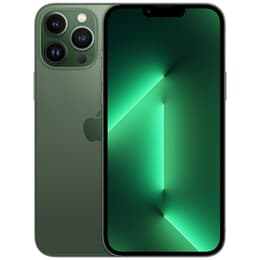
iPhone 13 Pro
iPhone 13 Pro
Starting at

Refurbished price:323.00

Versus €1,149.00 new

See options
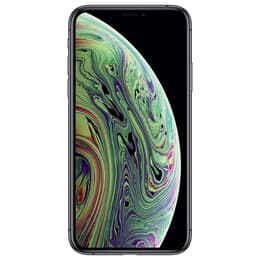
iPhone XS
iPhone XS
Starting at

Refurbished price:128.00

Versus €489.00 new

See options

Differences at a glance

The iPhone 13 Pro, released in September 2021, and the iPhone Xs, launched in September 2018, represent different stages in Apple's smartphone development. While both devices operate on the familiar iOS platform, offering a consistent user experience, a three-year gap separates their introductions. This period brought notable advancements, particularly in display technology, battery efficiency, and photographic capabilities. The primary distinctions between these two models lie in the iPhone 13 Pro's enhanced screen responsiveness and its more versatile camera system, contrasting with the iPhone Xs's more traditional approach.

Scores

Durability

When considering the long-term usability of these devices, their release timelines and subsequent software support are key factors.

  • Software Longevity: The iPhone 13 Pro, being a newer device, is expected to receive major iOS updates for several more years, potentially until 2028 or 2029. This provides a longer window for new features and security patches. In contrast, the iPhone Xs has reached the later stages of its official software support cycle, with major iOS updates ending around September 2025, though security updates may continue for a period after that.
  • Physical Resilience: The iPhone 13 Pro features a Ceramic Shield front cover, designed to offer improved protection against drops compared to the glass used on the iPhone Xs. Both devices incorporate a stainless steel frame and glass back, contributing to a sturdy feel. The iPhone 13 Pro also boasts a higher water resistance rating, allowing for deeper submersion for longer durations.
  • Practical Lifespan: Users prioritizing the latest software features and extended security updates will find the iPhone 13 Pro offers a longer practical lifespan. For those who do not require the newest software and are content with current app compatibility, the iPhone Xs can still function effectively for basic tasks, though its update window is closing.

Year of Release

2021

2018

Compatible with latest Update

Yes

Yes

OS

iOS

iOS

Foldable

No

No

Performance

The internal components of the iPhone 13 Pro and iPhone Xs lead to distinct differences in daily performance and user experience.

  • System Responsiveness: The iPhone 13 Pro handles demanding applications and intensive multitasking with greater fluidity. Its internal hardware allows for quicker app launches and more stable background processes, making for a smoother overall interaction. The iPhone Xs, while still capable for everyday tasks, may occasionally exhibit slower loading times or minor stutters with more resource-intensive applications.
  • Battery Endurance: There is a significant difference in how long these devices last on a single charge. The iPhone 13 Pro is equipped with a larger battery and more efficient components, often providing enough power for a full day of heavy use. The iPhone Xs, with its smaller battery capacity, may require more frequent charging, especially for active users. For instance, the iPhone 13 Pro can support up to 22 hours of video playback, while the iPhone Xs offers around 14 hours.
  • Storage and Multitasking: The iPhone 13 Pro offers a wider range of storage capacities, including options up to 1TB, catering to users who store large amounts of media or data. It also features 6GB of RAM, which contributes to its ability to manage multiple applications simultaneously without needing to reload them as frequently. The iPhone Xs typically comes with 4GB of RAM and a maximum storage of 512GB, which can be sufficient for many users but offers less flexibility for extensive storage needs or heavy multitasking.

Memory (GB)

6 GB

4 GB

Screen quality

The display is a key area where the generational gap between these two iPhones becomes apparent, influencing visual clarity and interaction smoothness.

  • Display Technology and Clarity: Both devices feature OLED technology, which delivers deep blacks and high contrast. However, the iPhone 13 Pro utilizes a Super Retina XDR display, offering enhanced brightness and color accuracy. It has a resolution of 2532 x 1170 pixels, while the iPhone Xs features a Super Retina HD display with a resolution of 2436 x 1125 pixels.
  • Brightness and Outdoor Visibility: The iPhone 13 Pro's screen can achieve significantly higher brightness levels, reaching up to 1000 nits typical brightness and 1200 nits peak brightness for HDR content. This makes it considerably easier to view the screen in direct sunlight compared to the iPhone Xs, which has a typical maximum brightness of 625 nits.
  • Refresh Rate and Smoothness: A notable upgrade in the iPhone 13 Pro is its ProMotion display, which offers an adaptive refresh rate up to 120Hz. This results in noticeably smoother scrolling, more fluid animations, and a more responsive feel during interactions and gaming. The iPhone Xs maintains a standard 60Hz refresh rate, which, while still good, does not offer the same level of visual fluidity.

Resolution

1170 x 2532

1125 x 2436

Screen type

Super Retina XDR OLED

Super Retina OLED

Audiovisual

The camera systems on the iPhone 13 Pro and iPhone Xs offer different levels of versatility and image quality, reflecting advancements over time.

  • Lens Versatility: The iPhone 13 Pro features a triple-camera system, including a Wide, Ultra Wide, and Telephoto lens, providing a broader range of photographic options. The Ultra Wide lens is particularly useful for capturing expansive landscapes or fitting more into a tight indoor shot. The iPhone Xs has a dual-camera setup with Wide and Telephoto lenses, lacking the ultra-wide perspective.
  • Low-Light Performance and Features: A significant improvement in the iPhone 13 Pro is the inclusion of Night Mode across all its lenses, enabling clear and detailed photos in very dark environments where the iPhone Xs would struggle with graininess and loss of detail. The 13 Pro also introduces Cinematic Mode for video, allowing for depth-of-field effects, and supports ProRes video recording for professional-grade footage. The front camera on the 13 Pro is 12MP, while the Xs has a 7MP front camera.
  • Video Recording Quality: Both devices can record 4K video, but the iPhone 13 Pro offers more advanced video capabilities, including higher frame rates for 4K on the front camera and the aforementioned Cinematic Mode and ProRes support.

Main camera

12 megapixels

12 megapixels

Front camera

12 megapixels

7 megapixels

Miscellaneous

Beyond core performance and display, several practical elements differentiate the user experience between these two iPhone models.

  • Connectivity and Ports: The iPhone 13 Pro supports 5G networks, offering faster cellular data speeds in compatible areas, a feature absent from the iPhone Xs, which relies on 4G LTE. Both devices utilize the Lightning port for charging and data transfer.
  • Biometric Security and Design: Both phones employ Face ID for secure unlocking and authentication. The iPhone 13 Pro features a slightly smaller notch housing the Face ID sensors. In terms of physical design, the iPhone 13 Pro has flat edges, reminiscent of older iPhone designs, while the iPhone Xs maintains curved edges.
  • Weight and Dimensions: The iPhone Xs is generally lighter and more compact, weighing 177g with dimensions of 143.6 x 70.9 x 7.7 mm. The iPhone 13 Pro is heavier at 204g and slightly larger at 146.7 x 71.5 x 7.65 mm, partly due to its larger battery and more advanced camera hardware. This difference in weight and size can impact one-handed use and pocketability.

Weight

203 g

177 g

Screen size (in)

6.1

5.8

Network

5G

4G

SIM card

Physical SIM + eSIM

Physical SIM + eSIM

Carrier compatibility

Unlocked

Unlocked

Connector

Lightning

Lightning

What the community thinks

User sentiment often highlights the iPhone Xs for its comfortable, compact size and its enduring premium feel. However, common criticisms in recent years point to its battery life requiring more frequent charging and the absence of an ultra-wide camera or Night Mode. The iPhone 13 Pro, conversely, receives praise for its exceptionally smooth 120Hz display and its ability to maintain power through a demanding workday. Users frequently commend its significantly improved camera system and overall performance.

Users who prioritize a device with a longer software support window, superior camera capabilities for diverse photography and videography, and extended battery life for heavy usage will find the iPhone 13 Pro well-suited to their needs. Its high-refresh-rate display also offers a noticeably smoother visual experience. For individuals who value a more compact and lighter device for basic communication, social media, and light browsing, and who are less concerned with cutting-edge features or the latest software updates, the iPhone Xs can still be a functional choice. Opting for a quality-assured refurbished model for either device presents an eco-friendly alternative, allowing access to these technologies while supporting sustainable consumption habits.






