

iPhone 13 mini Vs OnePlus 10 Pro

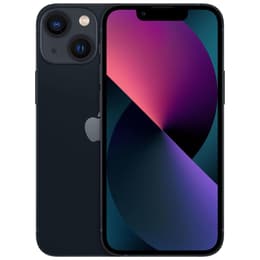
iPhone 13 mini
iPhone 13 mini
Starting at

Refurbished price:228.00

Versus €829.00 new

See options
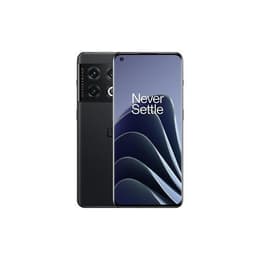
OnePlus 10 Pro
OnePlus 10 Pro
Starting at

Refurbished price:228.00

Versus €999.00 new

See options

Ratings

The iPhone 13 Mini, released in September 2021, and the OnePlus 10 Pro, which saw its global launch in March 2022, represent distinct approaches to smartphone design and user experience. While the iPhone 13 Mini offers a compact form factor running on Apple's iOS, the OnePlus 10 Pro provides a larger display and a customizable Android experience. These devices primarily differentiate themselves through their operating systems, physical size, and camera philosophies.

Scores

Durability

When considering the long-term usability of these devices, several factors contribute to their expected lifespan, including software support and physical resilience.

  • Software Longevity: The iPhone 13 Mini, running iOS, typically receives major software updates for approximately five to six years from its release date. The OnePlus 10 Pro, an Android device, generally receives three to four years of major Android version updates and an additional year of security patches. This means the iPhone 13 Mini is likely to receive software support for a longer duration.
  • Physical Durability: The iPhone 13 Mini features a Ceramic Shield front cover and an IP68 rating for water and dust resistance, offering robust protection against everyday elements. The OnePlus 10 Pro also incorporates Gorilla Glass Victus for screen protection and an IP68 rating in some regions, though some durability tests have highlighted concerns regarding its structural integrity under specific stress conditions.
  • Repairability: The iPhone 13 Mini has received varying repairability scores, with iFixit initially giving it a 5/10, which was later adjusted to 6/10 with a software fix for Face ID, but older iPhone models have since been retroactively rated 4/10 due to ongoing repair challenges. The OnePlus 10 Pro generally scores around 6/10 for repairability, indicating that while some components are accessible, adhesive use can make repairs more complex.

Year of Release

2021

2022

Compatible with latest Update

Yes

Yes

OS

iOS

Android

Foldable

No

No

Performance

The performance of a smartphone is crucial for daily tasks, from navigating applications to demanding gaming sessions. Both devices offer capable hardware, but their real-world performance can differ.

  • System Responsiveness: The iPhone 13 Mini is equipped with a powerful processor that ensures smooth operation across iOS applications, quick app loading times, and efficient multitasking. Users generally experience fluid navigation and consistent performance even with intensive use.
  • Multitasking and App Handling: The OnePlus 10 Pro features a high-end processor designed to handle demanding applications and extensive multitasking with ease. Its larger RAM configurations contribute to maintaining multiple apps in memory without significant slowdowns, providing a responsive experience for power users.
  • Storage Options: Both devices offer a range of internal storage capacities, typically starting from 128GB and going up to 512GB, providing ample space for applications, photos, and videos. Neither device supports expandable storage via a microSD card.

Memory (GB)

4 GB

8 GB

Screen quality

The display is a primary interface for any smartphone, and both the iPhone 13 Mini and OnePlus 10 Pro offer high-quality viewing experiences with distinct characteristics.

  • Display Technology and Size: The iPhone 13 Mini features a compact 5.4-inch Super Retina XDR OLED display, known for its deep blacks and vibrant colors. The OnePlus 10 Pro boasts a larger 6.7-inch Fluid AMOLED LTPO 2.0 display, which also delivers rich colors and excellent contrast.
  • Resolution and Clarity: The iPhone 13 Mini offers a resolution of 2340x1080 pixels, resulting in a sharp 476 pixels per inch (ppi). The OnePlus 10 Pro provides a higher QHD+ resolution of 3216x1440 pixels, leading to a pixel density of 525 ppi, offering slightly more detail on its larger screen.
  • Refresh Rate and Brightness: The iPhone 13 Mini has a standard 60Hz refresh rate, while the OnePlus 10 Pro features an adaptive 120Hz refresh rate, which can make scrolling and animations appear smoother. Both devices offer high peak brightness levels, with the iPhone 13 Mini reaching 1200 nits for HDR content and the OnePlus 10 Pro reaching 1300 nits, ensuring good visibility in various lighting conditions.

Resolution

1080 x 2340

1440 x 3216

Screen type

Super Retina XDR OLED

LTPO2 Fluid AMOLED

Audiovisual

Camera capabilities are a significant consideration for many users, and both smartphones offer advanced systems for capturing photos and videos.

  • Rear Camera System: The iPhone 13 Mini features a dual 12MP camera system with a wide and an ultra-wide lens, including sensor-shift optical image stabilization on the main sensor for improved low-light performance and stability. The OnePlus 10 Pro offers a versatile triple camera setup co-developed with Hasselblad, comprising a 48MP main, 50MP ultrawide with a wide 150° field of view, and an 8MP telephoto lens with 3.3x optical zoom and OIS.
  • Photography Features: Both devices include features like Night mode, Portrait mode, and advanced HDR processing for enhanced image quality in various scenarios. The OnePlus 10 Pro also offers a Hasselblad Pro Mode for more control over image capture, including 12-bit RAW+ format, and a unique 150° ultrawide mode.
  • Video Recording: The iPhone 13 Mini supports 4K video recording up to 60 frames per second and includes Cinematic mode for shallow depth-of-field effects in videos. The OnePlus 10 Pro can record 8K video at 24fps and 4K video at up to 120fps, offering more options for high-resolution and slow-motion video capture.

Main camera

12 megapixels

48 megapixels

Front camera

12 megapixels

32 megapixels

Miscellaneous

Beyond core specifications, several practical elements contribute to the overall user experience and daily functionality of a smartphone.

  • Connectivity: Both devices support 5G connectivity, Wi-Fi 6 (802.11ax), and NFC for mobile payments. The OnePlus 10 Pro features Bluetooth 5.2, a slightly newer standard than the iPhone 13 Mini's Bluetooth 5.0.
  • Ports and Biometrics: The iPhone 13 Mini uses Apple's proprietary Lightning port, while the OnePlus 10 Pro features a more universal USB-C port. For security, the iPhone 13 Mini relies on Face ID facial recognition, whereas the OnePlus 10 Pro uses an in-display optical fingerprint sensor in addition to facial recognition.
  • Design and Handling: The iPhone 13 Mini is notably compact and lightweight, measuring 131.5 x 64.2 x 7.65 mm and weighing 141 grams, making it ideal for one-handed use. The OnePlus 10 Pro is a larger device at 163.0 x 73.9 x 8.55 mm and weighs around 200.5 grams, offering a more expansive screen but requiring a two-handed grip for most users.

Weight

140 g

201 g

Screen size (in)

5.4

6.7

Network

5G

5G

SIM card

Physical SIM + eSIM

Physical SIM

Carrier compatibility

Unlocked

Unlocked

Connector

Lightning

USB-C

User feedback for the iPhone 13 Mini often praises its compact size, making it comfortable for one-handed use and easy pocketability, a rare trait in modern smartphones. Users also appreciate its consistent camera performance and the smooth, intuitive iOS experience. Common criticisms sometimes point to its smaller battery capacity, which may require more frequent charging for heavy users, and the 60Hz display refresh rate, which some find less fluid compared to higher refresh rate screens.

The OnePlus 10 Pro is frequently lauded for its vibrant, high-refresh-rate display, fast charging capabilities, and the versatility of its Hasselblad-tuned camera system. Users often highlight its strong performance for gaming and demanding applications. Some common concerns have included its durability in certain stress tests and the software experience, which, while generally well-regarded, has seen changes over time.

Users prioritizing a highly portable device with a long software support window and a consistent user experience may find the iPhone 13 Mini more suitable. Its compact design is a significant differentiator for those who prefer smaller phones. Conversely, individuals seeking a larger, high-refresh-rate display, faster charging, and a more versatile camera system with advanced controls might lean towards the OnePlus 10 Pro. Both devices offer compelling features for different user needs, and considering a quality-assured refurbished option can be an eco-friendly alternative for either model.


See all articles

Our recent comparisons