
Compare models

Google Pixel 10 Pro XL Vs iPhone 14 Pro Max

  • 1-year minimum warranty
  • Free delivery on all orders
  • Free 30-day returns
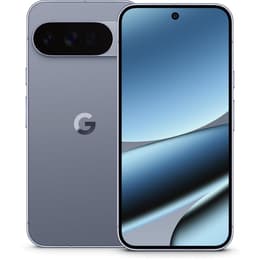
Google Pixel 10 Pro XL
Starting at

Refurbished price:€697.00

Versus €1,371.85 new

See options
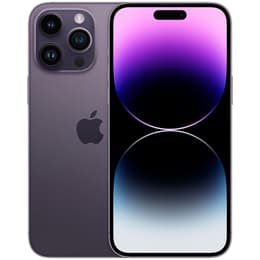
iPhone 14 Pro Max
Starting at

Refurbished price:€496.00

Versus €1,489.00 new

See options

Differences at a glance

The Google Pixel 10 Pro XL (2025) and the Apple iPhone 14 Pro Max (2022) are large-format flagship smartphones catering to users seeking expansive screens and high-tier capabilities. While they belong to different operating systems and release windows, both devices offer robust feature sets designed for productivity and media consumption. Choosing between them involves weighing Android flexibility against iOS integration alongside generational hardware refinements.

Available Models

Colour

Storage (GB)

Scores

Durability

The Google Pixel 10 Pro XL and the Apple iPhone 14 Pro Max approach software support and hardware longevity from different timelines, affecting their long-term viability.

  • Release timeline and update support: The Pixel 10 Pro XL launched running Android 16, aligning with extended multi-year update commitments. The iPhone 14 Pro Max debuted on iOS 16 with Apple's historically long software lifecycle support.
  • Repairability and build durability: Both models feature robust glass and metal construction with high-level water resistance ratings, though component replacement accessibility varies slightly by manufacturer service guidelines.
  • Expected practical lifespan: Generational differences mean the Pixel model benefits from a fresher hardware baseline for future software requirements, whereas the iPhone relies on optimized system efficiency to maintain longevity.

Year of Release

2025

2022

Compatible with latest Update

Yes

Yes

OS

Android

iOS

Foldable

No

No

Performance

Performance and multitasking characteristics differ notably due to distinct internal hardware architectures and memory allocations.

  • Memory and multitasking: The Pixel 10 Pro XL features expansive system memory to handle heavy background tasks and artificial intelligence processing smoothly. The iPhone 14 Pro Max utilizes tighter software-hardware integration to deliver fluid app switching despite lower memory capacity.
  • Everyday responsiveness: Both devices load demanding applications instantly and navigate complex interfaces without stuttering, though thermal management under prolonged high-load usage varies between the platforms.
  • Storage configurations: Both models offer spacious tier options starting from generous baseline capacities, accommodating large media libraries and offline files without frequent cleanup.

Screen quality

Display engineering on both devices prioritizes high peak brightness levels and fluid refresh rates for comfortable outdoor and indoor viewing.

  • Display technology and resolution: Both smartphones utilize advanced organic light-emitting diode panels with high pixel densities, delivering deep black levels and crisp text rendering.
  • Brightness and outdoor visibility: High peak luminance capabilities on both screens ensure content remains legible under direct sunlight, though peak metrics favor the newer release generation.
  • Refresh rate smoothness: Adaptive refresh technology scales dynamically from low rates to rapid cycles on both panels, ensuring fluid scrolling and responsive touch interaction.

Resolution

1344 x 2992

1290 x 2796

Screen type

OLED

LTPO Super Retina XDR OLED

Audiovisual

Imaging hardware and software processing pipelines provide versatile options for everyday photography and detailed video capture.

  • Rear camera systems: Both devices house high-resolution main sensors alongside ultra-wide options and optical telephoto lenses for distant subjects.
  • Computational photography and low light: The Pixel 10 Pro XL leverages advanced machine learning tools for scene optimization, while the iPhone 14 Pro Max uses rapid multi-frame pipelines to manage challenging lighting conditions.
  • Video and audio performance: High-definition video recording features robust stabilization on both models, supported by multi-microphone arrays that capture clear dialogue and reduce background noise during playback.

Front camera

42 megapixels

12 megapixels

Miscellaneous

Physical dimensions and connectivity standards shape how each device handles in daily use and integrates into accessory ecosystems.

  • Physical handling and weight: Both models represent large, heavy form factors due to their expansive screen sizes, making two-handed operation common for extended tasks.
  • Connectivity and standards: Modern wireless protocols including fast cellular data and updated short-range communication standards are supported across both platforms.
  • Security and authentication: Biometric security relies on facial recognition algorithms or secure fingerprint sensors depending on the specific device architecture.

Weight

232 g

120 g

Screen size (in)

6.8

6.7

Network

5G

5G

SIM card

Physical SIM + eSIM

Physical SIM + eSIM

Carrier compatibility

Unlocked

Unlocked

Connector

USB-C

Lightning

What the community thinks

User discussions and community feedback highlight distinct preferences for each device based on software ecosystem loyalties. Owners of the Google Pixel 10 Pro XL frequently praise its versatile camera software, deep integration of assistant features, and flexible Android customization options. Conversely, users of the Apple iPhone 14 Pro Max often emphasize the stability of the iOS ecosystem, reliable long-term performance consistency, and seamless synchronization with other Apple hardware.

Users prioritizing flexible file management, advanced on-device AI tools, and an updated hardware release cycle will find the Google Pixel 10 Pro XL well-suited to their needs. Meanwhile, users who value a tightly integrated software ecosystem, long-standing application optimization, and familiar interface conventions may lean toward the quality-assured refurbished option of the Apple iPhone 14 Pro Max as a sustainable choice. Evaluating individual workflow preferences and ecosystem compatibility remains the most effective way to determine the ideal fit.