

Google Pixel 8 Pro Vs OnePlus 11

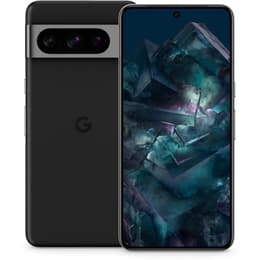
Google Pixel 8 Pro
Google Pixel 8 Pro
Starting at

Refurbished price:293.00

Versus €1,099.00 new

See options
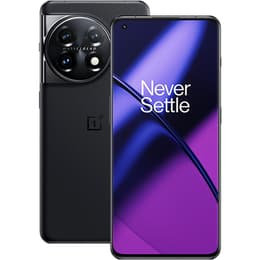
OnePlus 11
OnePlus 11
Starting at

Refurbished price:325.00

Versus €949.00 new

See options

Ratings

The Google Pixel 8 Pro, released in October 2023, and the OnePlus 11, launched globally in January 2023, are both prominent Android smartphones. While they share a premium build and focus on a high-end user experience, they diverge in their core strengths. The Pixel 8 Pro emphasizes advanced computational photography and a long-term software commitment, whereas the OnePlus 11 prioritizes raw performance and rapid charging capabilities.

Scores

Durability

When considering the longevity of these devices, several factors come into play, including software support and physical durability.

  • Software Updates: The Google Pixel 8 Pro offers an extended commitment of seven years of operating system updates and security patches from its release date, providing a longer period of software support. The OnePlus 11, in contrast, is slated to receive four generations of Android operating system upgrades and five years of security updates.
  • Build Materials: The Pixel 8 Pro features Corning Gorilla Glass Victus 2 on both its front and back, paired with an aluminum frame, and boasts an IP68 rating for dust and water resistance. The OnePlus 11 utilizes Corning Gorilla Glass Victus for its front display and Gorilla Glass 5 for its back panel, also with an aluminum frame. While some regional variants may have an IP64 rating, the global version typically does not carry an official IP rating for water and dust resistance.
  • Practical Lifespan: Users prioritizing the longest possible software support and robust environmental protection may find the Pixel 8 Pro more aligned with their needs. The OnePlus 11 still offers substantial software longevity, suitable for many users, though its official water resistance may vary.

Year of Release

2023

2023

Foldable

No

No

Performance

Both smartphones deliver capable performance for daily tasks and demanding applications, though they approach it with different underlying architectures.

  • Processing Power: The Google Pixel 8 Pro is equipped with a processor optimized for artificial intelligence and computational photography tasks, which contributes to its advanced camera features and on-device AI capabilities. While it handles everyday applications and multitasking smoothly, some users have noted that intensive tasks, such as processing high-resolution images, can take a moment longer compared to devices with a different processor architecture. The OnePlus 11 features a processor known for its strong raw performance, providing a responsive experience for gaming, heavy multitasking, and quickly launching applications.
  • Memory and Storage: The Pixel 8 Pro typically comes with 12 GB of RAM, offering ample capacity for running multiple applications simultaneously. The OnePlus 11 is available with various RAM configurations, including 8 GB, 12 GB, or 16 GB, allowing for extensive multitasking, particularly with its higher RAM options. Both devices offer various internal storage options, providing sufficient space for apps, media, and files.
  • Battery Behavior: The Pixel 8 Pro houses a 5050 mAh battery, designed to provide all-day power for many users, with optimizations for efficiency. The OnePlus 11 includes a 5000 mAh battery, also capable of sustaining a full day of typical use.

Memory (GB)

12 GB

16 GB

Screen quality

The visual experience on both devices is immersive, featuring large displays with high refresh rates, though there are distinctions in their panel technology and brightness.

  • Display Technology and Clarity: The Google Pixel 8 Pro features a 6.7-inch LTPO OLED display with a resolution of 1344 x 2992 pixels, offering deep blacks and vibrant colors. The OnePlus 11 also has a 6.7-inch LTPO AMOLED display, providing a slightly higher resolution of 1440 x 3216 pixels, which translates to sharp visuals.
  • Brightness and Smoothness: The Pixel 8 Pro's display can reach a peak brightness of up to 2400 nits, enhancing visibility in bright outdoor conditions and for HDR content. The OnePlus 11 offers a peak brightness of up to 1300 nits, which is also suitable for most viewing environments. Both phones feature an adaptive refresh rate of up to 120 Hz, allowing for smooth scrolling and fluid animations while conserving battery life by adjusting the refresh rate based on content.
  • Viewing Experience: Both devices provide a large and engaging viewing area, ideal for media consumption and productivity. The Pixel 8 Pro's higher peak brightness may offer an advantage in extremely bright outdoor settings.

Resolution

1344 x 2992

1440 x 3216

Audiovisual

Both smartphones offer versatile camera systems, but they differ in their photographic approach and specific lens configurations.

  • Rear Camera Systems: The Google Pixel 8 Pro features a triple-camera setup, including a 50 MP main sensor, a 48 MP ultrawide sensor with autofocus, and a 48 MP telephoto lens capable of 5x optical zoom. Its camera system is heavily supported by computational photography and artificial intelligence, which enhances image quality and offers unique editing features. The OnePlus 11 also comes with a triple-camera system, comprising a 50 MP main sensor, a 48 MP ultrawide sensor with autofocus, and a 32 MP telephoto lens providing 2x optical zoom. This system benefits from Hasselblad color calibration, aiming for natural and accurate color reproduction.
  • Front Camera and Video: The Pixel 8 Pro includes a 10.5 MP front camera, while the OnePlus 11 has a 16 MP front camera. Both devices are capable of recording video at up to 8K resolution, offering high-quality video capture.
  • Audio Experience: The OnePlus 11 is equipped with dual speakers that support Dolby Atmos, providing an immersive audio experience for media playback. The Pixel 8 Pro also features stereo speakers, delivering clear audio for calls and media.

Miscellaneous

Beyond the core features, several practical elements distinguish these two devices in terms of connectivity, physical design, and additional sensors.

  • Connectivity and Ports: The Google Pixel 8 Pro supports Wi-Fi 7 and Bluetooth 5.3, and features a USB-C 3.2 port for faster data transfer speeds. The OnePlus 11 also supports Wi-Fi 7 and Bluetooth 5.3, but it includes a USB-C 2.0 port. Both devices offer 5G connectivity.
  • Sensors and Biometrics: The Pixel 8 Pro includes a unique temperature sensor on its camera bar, which can measure surface temperatures. Both smartphones incorporate an in-display fingerprint sensor for secure unlocking and authentication, along with face recognition capabilities.
  • Physical Characteristics: The Pixel 8 Pro measures 162.6 x 76.5 x 8.8 mm and weighs 213 g. The OnePlus 11 is slightly taller and narrower at 163.1 x 74.1 x 8.5 mm, and is marginally lighter at 205 g. These differences contribute to a slightly different feel in hand, with the OnePlus 11 being a bit more slender.

Weight

213 g

205 g

Screen size (in)

6.7

6.7

Network

5G

5G

SIM card

Physical SIM + eSIM

Physical SIM

Carrier compatibility

Unlocked

Unlocked

User feedback for the Google Pixel 8 Pro often highlights its exceptional camera capabilities and the long-term software support as significant advantages. Many appreciate the advanced AI features that enhance photography and overall user experience. However, some users have noted that its processor, while capable for most tasks, might not match the raw performance benchmarks of some competitors, leading to slightly longer processing times for very demanding operations.

The OnePlus 11 is frequently praised for its robust performance, offering a very smooth experience for gaming and heavy application use. Its fast charging technology is also a common point of appreciation, allowing for quick power-ups. Some users, however, point to its shorter software update commitment compared to the Pixel, and the varying IP rating for water resistance, as areas where it differs from some other flagship devices.

Users prioritizing a cutting-edge camera system, extensive AI features, and a prolonged period of software updates may find the Google Pixel 8 Pro to be a more suitable choice. Conversely, individuals who value top-tier raw performance, rapid charging, and a slightly lighter, narrower design might lean towards the OnePlus 11. Both devices represent strong options in the Android ecosystem, and considering a quality-assured refurbished option for either model can be an eco-friendly alternative to purchasing new.


See all articles

Our recent comparisons