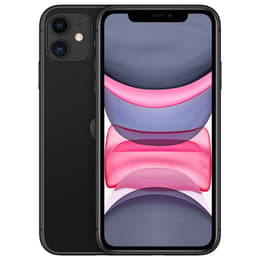
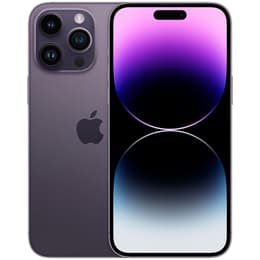


iPhone 11 Vs iPhone 14 Pro Max

iPhone 11
iPhone 11
Starting at

Refurbished price:149.08

Versus €589.00 new

See options
iPhone 14 Pro Max
iPhone 14 Pro Max
Starting at

Refurbished price:446.00

Versus €1,489.00 new

See options

Ratings

The iPhone 11, released in September 2019, and the iPhone 14 Pro Max, launched in September 2022, represent different generations within Apple's smartphone lineup. While both devices operate on the iOS ecosystem, the iPhone 14 Pro Max introduces significant advancements in display technology, camera capabilities, and overall processing power. This comparison will explore the practical differences between these two models to help users understand which device aligns best with their needs.

Scores

Durability

The longevity of a smartphone is influenced by its release timeline, software support, and physical resilience. The iPhone 11 and iPhone 14 Pro Max offer varying degrees of expected lifespan and durability features.

  • Software Support: The iPhone 14 Pro Max, being a newer device, is expected to receive iOS updates for a longer duration compared to the iPhone 11. The iPhone 11 is still compatible with current iOS versions, such as iOS 26, indicating continued software support for several years after its release. The iPhone 14 Pro Max will likely outlast the iPhone 11 in terms of receiving the latest software features and security updates.
  • Physical Durability: The iPhone 14 Pro Max features Ceramic Shield front cover, which offers enhanced drop performance compared to the iPhone 11's dual-ion exchange-strengthened glass. Both models carry an IP68 rating for dust and water resistance, but the iPhone 14 Pro Max can withstand submersion in up to 6 meters of water for 30 minutes, whereas the iPhone 11 is rated for up to 2 meters for the same duration.
  • Repairability: The iPhone 11 received an iFixit repairability score of 6 out of 10, indicating a moderate ease of repair. The iPhone 14 Pro Max, while initially noted for some internal redesigns that could improve repair access, saw its repairability score downgraded by iFixit from 7 to 4 out of 10 due to software restrictions and part pairing requirements that complicate independent repairs.

Year of Release

2019

2022

Compatible with latest Update

Yes

Yes

OS

iOS

iOS

Foldable

No

No

Performance

Performance is a key differentiator, impacting how smoothly applications run and how efficiently tasks are completed. The iPhone 14 Pro Max offers a more advanced experience due to its newer internal components.

  • Processing Power: The iPhone 14 Pro Max features a significantly newer generation processor, which translates to faster application loading times, more fluid multitasking, and a more responsive experience, particularly with demanding applications and graphics-intensive games. While the iPhone 11 still handles everyday tasks competently, users may notice a difference in speed and efficiency when performing intensive operations.
  • Multitasking and Storage: The iPhone 14 Pro Max includes 6GB of RAM, providing more capacity for running multiple applications simultaneously without slowdowns. The iPhone 11 comes with 4GB of RAM. Both devices offer various internal storage options, with the iPhone 14 Pro Max extending up to 1TB, while the iPhone 11 is available with up to 256GB.
  • Battery Behavior: The iPhone 14 Pro Max generally offers extended battery life, providing longer usage times on a single charge, especially for heavy users. The iPhone 11 also provides a full day of use for many users, but its battery capacity is smaller than that of the 14 Pro Max.

Memory (GB)

4 GB

6 GB

Screen quality

The visual experience is largely defined by the display technology, and there are notable differences between these two iPhone models.

  • Display Technology and Size: The iPhone 14 Pro Max features a larger 6.7-inch Super Retina XDR OLED display, offering deep blacks, vibrant colors, and excellent contrast. The iPhone 11 has a 6.1-inch Liquid Retina IPS LCD display, which provides good color accuracy but does not achieve the same level of contrast or true blacks as an OLED panel.
  • Resolution and Brightness: The iPhone 14 Pro Max boasts a higher resolution of 2796 x 1290 pixels at 460 pixels per inch (ppi), resulting in sharper images and text. It also achieves significantly higher peak brightness levels, up to 2000 nits, making it easier to view content in bright outdoor conditions. The iPhone 11 has a resolution of 1792 x 828 pixels at 326 ppi and a typical maximum brightness of 625 nits.
  • Refresh Rate and Features: The iPhone 14 Pro Max incorporates ProMotion technology, offering an adaptive refresh rate up to 120Hz for smoother scrolling and more fluid animations. The iPhone 11 has a standard 60Hz refresh rate. Additionally, the iPhone 14 Pro Max introduces the Dynamic Island, an interactive area around the front camera that displays alerts and background activities.

Resolution

828 x 1792

1290 x 2796

Screen type

Liquid Retina IPS LCD

LTPO Super Retina XDR OLED

Audiovisual

The camera systems on these two iPhones offer distinct capabilities, with the newer model providing more advanced features and improved image quality.

  • Rear Camera System: The iPhone 14 Pro Max features a versatile triple-camera setup, including a 48MP main sensor, a 12MP ultra-wide lens, and a 12MP telephoto lens, allowing for optical zoom and greater detail capture. The iPhone 11 has a dual-camera system with 12MP wide and ultra-wide lenses. The larger main sensor and wider aperture on the 14 Pro Max significantly improve low-light photography.
  • Video Recording and Features: The iPhone 14 Pro Max offers advanced video capabilities such as Cinematic Mode for shallow depth-of-field video and Action Mode for smoother handheld footage. It also supports higher quality video recording with improved stabilization. The iPhone 11 provides solid video recording but lacks these specialized modes.
  • Front Camera and Audio: The iPhone 14 Pro Max includes a 12MP front camera with autofocus and a wider aperture, leading to sharper selfies and better low-light performance for video calls. Both devices offer good microphone quality for calls and recordings, but the iPhone 14 Pro Max delivers a fuller and louder audio experience through its speakers, with enhanced bass.

Main camera

12 megapixels

48 megapixels

Front camera

12 megapixels

12 megapixels

Miscellaneous

Beyond core performance and display, several practical elements contribute to the overall user experience of these devices.

  • Connectivity: The iPhone 14 Pro Max supports 5G cellular connectivity, offering faster download and upload speeds in compatible areas, along with newer Wi-Fi 6 (802.11ax) and Bluetooth 5.3 standards. The iPhone 11 supports 4G LTE, Wi-Fi 6 (802.11ax), and Bluetooth 5.0.
  • Physical Design and Handling: The iPhone 14 Pro Max has a larger form factor, weighing 240 grams and measuring 160.7 x 77.6 x 7.85 mm. It features a flat-edged design and a stainless steel frame with a frosted glass back. The iPhone 11 is lighter at 194 grams and slightly smaller at 150.9 x 75.7 x 8.3 mm, with a curved-edge design and an aluminum frame with a glossy glass back. Both devices utilize the Lightning port for charging and data transfer.
  • Additional Features: Both phones include Face ID for secure authentication. The iPhone 14 Pro Max introduces features like an Always-On Display and Crash Detection, which are not present on the iPhone 11. The iPhone 14 Pro Max also lacks a physical SIM card tray in some regions, relying solely on eSIM.

Weight

194 g

120 g

Screen size (in)

6.1

6.7

Network

4G

5G

SIM card

Physical SIM + eSIM

Physical SIM + eSIM

Carrier compatibility

Unlocked

Unlocked

Connector

Lightning

Lightning

Users frequently praise the iPhone 14 Pro Max for its exceptional display quality, particularly the 120Hz refresh rate and high brightness, as well as its significantly upgraded camera system and extended battery life. Some users note that the performance difference, while present, might not be immediately obvious for light daily tasks when upgrading from an iPhone 11, but the overall smoothness and responsiveness are enhanced. Criticisms for the 14 Pro Max sometimes revolve around its larger size and weight, which can impact one-handed use.

The iPhone 11 is often lauded for its continued solid performance for everyday use and its comfortable, rounded design. However, common concerns for the iPhone 11 include its LCD display, which lacks the vibrancy and contrast of newer OLED panels, and its less advanced camera system compared to more recent models.

Users prioritizing a large, vibrant, and smooth display, advanced photography and videography capabilities, and the longest possible software support will find the iPhone 14 Pro Max well-suited to their needs. Its robust performance handles demanding applications and multitasking with ease. Conversely, users who value a more compact and lighter device, or who primarily use their phone for general communication, social media, and casual photography, may find the iPhone 11 still meets their requirements effectively. For those considering either model, exploring quality-assured refurbished options can provide an eco-friendly alternative.


See all articles

Our recent comparisons