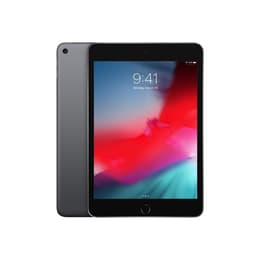
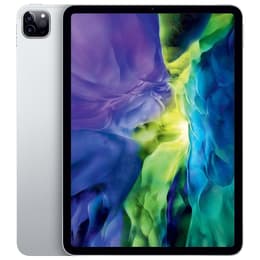


iPad mini 5 (2019, A12 series) Vs iPad Pro (2020, A12 series)

iPad mini 5 (2019, A12 series)
Starting at

Refurbished price:195.00

Versus €469.00 new

See options
iPad Pro (2020, A12 series)
Starting at

Refurbished price:379.00

Versus €1,019.00 new

See options

Ratings

The iPad Mini (5th generation), released in March 2019, and the iPad Pro (4th generation), launched in March 2020, represent distinct approaches to Apple's tablet lineup. While both devices operate on iPadOS and share a foundation in the A12 series of processors, they cater to different user needs through their size, display technology, and accessory support. The iPad Mini prioritizes portability and a compact form factor, whereas the iPad Pro focuses on expansive screen real estate and advanced capabilities for creative and professional workflows.

Scores

Durability

When considering the longevity of these tablets, several factors come into play, including their release dates, software support, and repairability.

  • Release Timeline: The iPad Mini (2019) was released a year prior to the iPad Pro (2020). This difference means the iPad Pro generally benefits from an additional year of expected software updates and hardware relevance.
  • Software Support: Apple typically provides major iPadOS updates for approximately 5 to 7 years after a device's release. As of 2026, both the iPad Mini 5th Gen and the iPad Pro (2020) are still receiving iPadOS updates, with the iPad Pro likely to maintain full support for a slightly longer period. Users on Reddit have noted that the iPad Mini 5th Gen is compatible with iPadOS 26, though some report performance issues after updating. The iPad Pro (2020) is also expected to handle iPadOS 26, with some users optimistic about its continued support due to its capable A12Z Bionic chip.
  • Repairability: Both models present challenges for repair due to Apple's design philosophy, which often involves significant adhesive use. The iPad Mini 5 received a low repairability score of 2 out of 10 from iFixit, primarily due to the extensive use of adhesive for components like the battery and screen. While the iPad Pro (2020) also features a sealed design, later iPad Pro models have seen slight improvements in repairability scores, though accessing internal components still carries a risk of screen damage.

Year of Release

2019

2020

Compatible with latest Update

Yes

Yes

OS

iPadOS

iPadOS

Maximum Operating System supported

iPadOS 18

iPadOS 18

Performance

The performance of these two iPads, while both powered by A12-series chips, differs in their capabilities for various tasks.

  • Processor Capabilities: The iPad Mini (2019) features the A12 Bionic chip, which provides robust performance for everyday applications, gaming, and even some video editing. The iPad Pro (2020) is equipped with the A12Z Bionic chip, an enhanced version of the A12 Bionic with an 8-core GPU, compared to the A12's 4-core GPU. This difference translates to a significant boost in graphics performance, making the iPad Pro better suited for demanding graphics-intensive tasks, 4K video editing, rendering, and augmented reality applications.
  • Multitasking and Responsiveness: The iPad Mini (2019) comes with 3GB of RAM, which is sufficient for general multitasking. The iPad Pro (2020) features 6GB of RAM across all storage configurations, allowing for smoother handling of multiple demanding applications simultaneously and more complex professional workflows.
  • Battery Behavior: Both devices are designed to offer approximately 10 hours of web browsing on a single charge. The iPad Mini (2019) has a 19.1 Wh battery, while the iPad Pro (2020) has a larger battery (28.65 Wh for the 11-inch model, 36.71 Wh for the 12.9-inch model) to power its larger display and more powerful components.

Memory (GB)

3 GB

6 GB

Processor

Apple A12 Bionic

Apple A12Z Bionic

Screen quality

The visual experience on these two tablets is a key differentiator, primarily due to their display technologies and sizes.

  • Display Technology and Clarity: The iPad Mini (2019) features a 7.9-inch Retina IPS LCD display with a resolution of 2048 x 1536 pixels, resulting in a pixel density of 326 pixels per inch (ppi). This provides a sharp and clear viewing experience for reading and general content consumption. The iPad Pro (2020) offers a Liquid Retina IPS LCD display, available in 11-inch (2388 x 1668 pixels) or 12.9-inch (2732 x 2048 pixels) sizes, both at 264 ppi. While the pixel density is slightly lower than the Mini, the larger screen sizes offer a more expansive canvas.
  • Brightness and Color: Both tablets feature True Tone technology, which adjusts the display's white balance to match ambient light, and support for the P3 wide color gamut, providing vibrant and accurate colors. The iPad Mini (2019) offers up to 500 nits of brightness, suitable for various lighting conditions. The iPad Pro (2020) also provides a brightness of up to 600 nits, offering a slightly brighter experience, particularly useful for outdoor use.
  • Refresh Rate and Smoothness: A notable difference is the iPad Pro's ProMotion technology, which enables an adaptive refresh rate of up to 120Hz. This results in noticeably smoother scrolling, more fluid animations, and a more responsive feel, especially beneficial for drawing with the Apple Pencil or fast-paced content. The iPad Mini (2019) has a standard 60Hz refresh rate.

Resolution

2048 x 1536

2388 x 1668

True Tone

Yes

Yes

Pro-Motion

No

Yes

Screen type

Retina display

Liquid Retina display

Pixel density

326ppp

264ppp

Brightness

500 nits brightness

600 nits brightness max

Sound quality

Speakers

Stereo speakers

Four speaker audio

Audiovisual

The camera systems on these two iPads reflect their intended uses, with the iPad Pro offering more advanced capabilities.

  • Rear Camera System: The iPad Mini (2019) is equipped with an 8-megapixel rear camera with an f/2.4 aperture, capable of capturing decent photos and 1080p video. The iPad Pro (2020) features a more versatile dual-camera system, including a 12-megapixel wide-angle lens (f/1.8) and a 10-megapixel ultra-wide-angle lens (f/2.4). It also includes a LiDAR Scanner, which enhances augmented reality (AR) experiences and improves depth sensing for photography. The iPad Pro can record 4K video at up to 60 frames per second.
  • Front Camera Performance: Both tablets feature a 7-megapixel front-facing camera with an f/2.2 aperture, suitable for video calls and selfies. The iPad Mini's front camera was a significant upgrade from its predecessor. The iPad Pro's TrueDepth front camera also supports Face ID for secure authentication.
  • Audio Experience: The iPad Mini (2019) includes dual stereo speakers, providing a clear audio experience for media consumption. The iPad Pro (2020) features a four-speaker audio system, delivering a richer and more immersive sound experience, particularly beneficial for watching movies or listening to music without headphones.

Miscellaneous

Beyond core specifications, several practical elements differentiate the user experience of these two tablets.

  • Connectivity Options: Both devices support Wi-Fi (802.11ac) and Bluetooth 5.0. The iPad Pro (2020) offers Wi-Fi 6 (802.11ax), providing potentially faster and more reliable wireless connections in compatible environments.
  • Port Types: The iPad Mini (2019) utilizes a Lightning port for charging and accessories, and retains a 3.5mm headphone jack. The iPad Pro (2020) features a USB-C port, offering greater versatility for connecting to external displays, cameras, and other peripherals, but it lacks a traditional headphone jack.
  • Biometric Security: The iPad Mini (2019) uses Touch ID, integrated into the home button, for fingerprint authentication. The iPad Pro (2020) employs Face ID, using its TrueDepth camera system for facial recognition.
  • Design and Handling: The iPad Mini (2019) is significantly smaller and lighter, weighing around 300-308 grams and measuring 6.1mm thick, making it highly portable and comfortable for one-handed use. The iPad Pro (2020) is larger and heavier, with the 11-inch model weighing around 471-473 grams and the 12.9-inch model around 641-643 grams, both at 5.9mm thick. Its larger size is better suited for desk-based work or two-handed operation.
  • Accessory Support: The iPad Mini (2019) supports the 1st generation Apple Pencil. The iPad Pro (2020) supports the 2nd generation Apple Pencil, which attaches magnetically and charges wirelessly, and also features a Smart Connector for accessories like the Magic Keyboard and Smart Keyboard Folio.

Weight

300 g

471 g

Width

13.48 cm

17.85 cm

Height

23.32 cm

24.76 cm

Depth

0.61 cm

0.59 cm

Screen size (in)

7.9

11

Network

Wi-Fi

Wi-Fi

Carrier compatibility

Without SIM Port

Without SIM Port

Wi-Fi technology

Wi-Fi 6 802.11a/b/g/n/ac

Wi-Fi 6 802.11ax

Bluetooth Version

Bluetooth 5.0

Bluetooth 5.0

Face ID

No

Yes

Touch ID

Yes

No

Connector

Lightning connector

USB Type-C

The iPad Mini (2019) and iPad Pro (2020) cater to distinct user preferences, each excelling in different areas. User feedback often praises the iPad Mini (2019) for its exceptional portability and compact design, making it an ideal companion for reading, casual browsing, and light gaming. Many appreciate its ability to fit into smaller bags and its comfortable one-handed use. Its performance, driven by the A12 Bionic chip, is generally considered more than adequate for most daily tasks, with some users even noting its capability for video editing.

Conversely, the iPad Pro (2020) receives acclaim for its larger, high-refresh-rate display, powerful A12Z Bionic processor, and advanced camera system. Users frequently highlight its suitability for creative professionals, students, and anyone requiring a more robust tablet for demanding applications, multitasking, and content creation. The USB-C port and support for the 2nd generation Apple Pencil and Magic Keyboard are often cited as significant advantages for productivity.

Common criticisms for the iPad Mini (2019) often revolve around its older design, including larger bezels and the Lightning port, as well as its reliance on the 1st generation Apple Pencil. Some users also note that its smaller screen can feel restrictive for intensive work. For the iPad Pro (2020), while highly capable, some users have pointed out that its camera system, while advanced for a tablet, may not always be a primary selling point for a device of its size.

Users prioritizing a highly portable device for media consumption, reading, and general use will find the iPad Mini (2019) well-suited to their needs. Those who require a larger screen, superior graphics performance, and advanced accessory support for professional or creative tasks will likely lean towards the iPad Pro (2020). Both models offer a quality-assured refurbished option, providing an eco-friendly alternative for consumers seeking reliable devices.


See all articles

Our recent comparisons