

Compare models

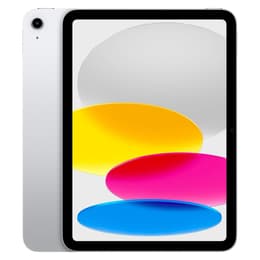
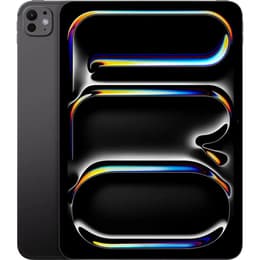
iPad 10 (2022, A14 series) Vs iPad Pro (2025, M5 series)

  • 1-year minimum warranty
  • Free delivery on all orders
  • Free 30-day returns
iPad 10 (2022, A14 series)
Starting at

Refurbished price:360.00

Versus €449.00 new

See options
iPad Pro (2025, M5 series)
Starting at

Refurbished price:934.00

Versus €1,319.00 new

See options

Differences at a glance

The iPad 10 (2022) and the iPad Pro (2025) represent two entirely different segments of Apple's tablet lineup, catering to distinct user expectations and everyday workflows. While both run on iPadOS, they are separated by three years of hardware evolution, featuring vastly different internal capabilities, design philosophies, and target audiences.

Available Models

Colour

Storage (GB)

Scores

Durability

When examining hardware longevity and physical endurance, both devices offer solid structural construction while differing in their software support windows and expected operational lifespans.

  • Release timeline and software support: The iPad 10 launched in late 2022, whereas the iPad Pro debuted in late 2025, giving the Pro model a three-year advantage in its overall software update lifecycle.
  • Repairability and durability: Both models utilize sturdy aluminum enclosures, though standard repair procedures remain typical for modern sealed tablet hardware across the industry.

Year of Release

2022

2025

Compatible with latest Update

Yes

Yes

OS

iPadOS

iPadOS

Performance

Daily operation and responsiveness vary significantly depending on task demands, multitasking requirements, and internal memory allocations between these two models.

  • System responsiveness and multitasking: The iPad Pro handles heavy video editing, multi-window workflows, and complex rendering smoothly, while the iPad 10 manages standard web browsing, streaming, and light productivity apps efficiently.
  • Storage capacity configurations: The iPad 10 provides entry-level to mid-tier storage tiers suited for general media storage, whereas the iPad Pro scales up to extensive capacities designed for professional files and large media libraries.

Processor

Apple A14 Bionic

Apple M5

Screen quality

Visual output and display technologies differ notably, impacting color depth, brightness handling, and overall viewing comfort during extended media consumption.

  • Display technology and clarity: The iPad Pro utilizes an advanced OLED panel providing deep contrast and high brightness for professional color work, whereas the iPad 10 features a standard Liquid Retina IPS LCD screen suitable for everyday viewing.
  • Refresh rate and smoothness: The iPad Pro incorporates a high refresh rate technology for fluid scrolling and responsive stylus interaction, while the iPad 10 relies on a traditional 60Hz refresh rate.

Resolution

2360 x 1640

2420 x 1668

True Tone

Yes

Yes

Pro-Motion

No

Yes

Screen type

Liquid Retina display

Ultra Retina XDR display

Sound quality

Speakers

Stereo speakers

Four speaker audio

Audiovisual

Optics and media recording capabilities vary to accommodate casual snapshots versus advanced digital creation and communication needs.

  • Camera systems and low-light performance: The iPad Pro features a multi-lens rear array equipped with depth-sensing technology for advanced scanning, while the iPad 10 includes a single reliable rear sensor suited for everyday capture.
  • Audio and microphone output: The iPad Pro integrates a multi-speaker array with spatial audio support for immersive media playback, whereas the iPad 10 utilizes a standard stereo speaker configuration oriented for landscape use.

Miscellaneous

Physical dimensions, connectivity standards, and daily handling characteristics define how each tablet integrates into mobile environments.

  • Connectivity and ports: The iPad Pro offers high-speed Thunderbolt and advanced wireless standards for fast data transfer, while the iPad 10 provides standard USB-C connectivity and dependable wireless networking.
  • Handling and physical profile: The iPad Pro maintains an exceptionally thin and lightweight profile, whereas the iPad 10 features a slightly thicker aluminum frame that remains comfortable for daily handheld use.

Weight

477 g

444 g

Screen size (in)

10.9

11

Network

Wi-Fi

Wi-Fi

Carrier compatibility

Without SIM Port

Without SIM Port

Face ID

No

Yes

Touch ID

Yes

No

Connector

USB Type-C

USB Type-C

What the community thinks

User discussions across community forums highlight the iPad 10 as a practical, straightforward option for daily web browsing, streaming, and casual educational use, though some users note limitations with heavy multitasking. Conversely, the iPad Pro receives praise for its fluid display and immense processing headroom, though critics point out its high tier complexity is unnecessary for basic tasks. Users prioritizing everyday media consumption and simple workflows will find the iPad 10 well-suited to their needs. Meanwhile, users prioritizing demanding creative workloads, advanced stylus precision, and maximum longevity may prefer the iPad Pro. Choosing a quality-assured refurbished option provides a sustainable way to access these devices while reducing electronic waste. Ultimately, selecting either model depends heavily on matching individual performance requirements with the appropriate hardware tier.


Our recent comparisons