

Google Pixel Fold Vs Xiaomi 13T Pro

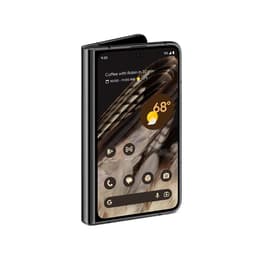
Google Pixel Fold
Google Pixel Fold
Starting at

Refurbished price:454.00

Versus €1,750.29 new

See options
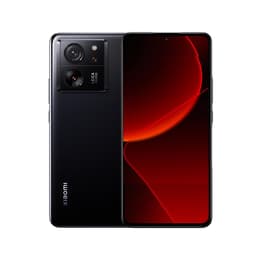
Xiaomi 13T Pro
Xiaomi 13T Pro
Starting at

Refurbished price:241.00

Versus €900.00 new

See options

Ratings

The Google Pixel Fold, released in June 2023, marks Google's entry into the foldable smartphone market, offering a unique form factor that transforms from a compact device into a larger tablet-like screen. The Xiaomi 13T Pro, launched in September 2023, is a traditional high-performance smartphone known for its robust specifications. While the Pixel Fold emphasizes a versatile, dual-screen experience with Google's signature computational photography, the Xiaomi 13T Pro focuses on delivering a powerful, conventional smartphone experience with a strong camera system co-engineered with Leica. Both devices run on the Android operating system, though with distinct user interfaces.

Scores

Durability

When considering the long-term usability of these devices, both offer substantial software support and varying degrees of physical resilience.

  • Software Longevity: The Google Pixel Fold typically receives five years of security updates and three major Android operating system updates from its release date. The Xiaomi 13T Pro, being a slightly newer device, is promised four generations of Android updates and five years of security patches, potentially offering a longer period of major OS upgrades.
  • Physical Durability: The Pixel Fold features an IPX8 water resistance rating, meaning it can withstand submersion in water, and its outer display is protected by Corning Gorilla Glass Victus. However, the inner folding screen, common to all foldable devices, presents a different set of durability considerations. The Xiaomi 13T Pro boasts an IP68 rating for dust and water resistance, indicating comprehensive protection against both elements, and uses Corning Gorilla Glass 5 on its front display for scratch resistance.
  • Expected Lifespan: The practical lifespan for both devices is influenced by software support and physical care. While the Pixel Fold offers a novel design, the Xiaomi 13T Pro's traditional form factor might present fewer long-term mechanical concerns related to a folding mechanism.

Year of Release

2023

2023

Compatible with latest Update

Yes

Yes

OS

Android

Android

Foldable

Yes

No

Performance

The performance of a smartphone is crucial for daily tasks, app responsiveness, and demanding applications, and both devices offer capable hardware.

  • System Responsiveness: The Google Pixel Fold is powered by a Google-designed processor, which ensures smooth operation across its dual-screen interface and handles multitasking effectively. Users generally report a fluid experience when navigating the system and switching between applications.
  • Demanding Applications: The Xiaomi 13T Pro features a high-performance MediaTek processor, designed to manage intensive tasks such as advanced gaming and video editing with efficiency. This results in consistently strong performance, even under heavy load.
  • Memory and Storage: The Pixel Fold comes with 12GB of RAM and offers storage options of 256GB or 512GB. The Xiaomi 13T Pro provides more flexibility with RAM configurations up to 16GB and storage options extending to 1TB, catering to users with higher demands for memory and storage capacity.

Memory (GB)

12 GB

12 GB

Screen quality

The visual experience is a key differentiator, especially given the Pixel Fold's unique design compared to the Xiaomi 13T Pro's traditional display.

  • Display Technology and Size: The Google Pixel Fold features two OLED displays: a 5.8-inch outer screen and a 7.6-inch inner folding screen. Both offer vibrant colors and deep blacks characteristic of OLED technology. The Xiaomi 13T Pro has a single 6.67-inch AMOLED flat display, providing a large, immersive viewing area.
  • Resolution and Clarity: The Pixel Fold's outer screen has a resolution of 1080 x 2092 pixels (408 ppi), while its inner screen is 2208 x 1840 pixels (380 ppi). The Xiaomi 13T Pro offers a resolution of 1220 x 2712 pixels (446 ppi), resulting in a sharp and clear image on its single display.
  • Brightness and Refresh Rate: Both devices feature a 120Hz refresh rate on their main displays for smooth scrolling and responsiveness. The Xiaomi 13T Pro, however, can reach a higher peak brightness of 2600 nits, compared to the Pixel Fold's outer screen peak of 1550 nits and inner screen peak of 1450 nits, which can be beneficial for outdoor visibility.

Resolution

1840 x 2208

1220 x 2712

Screen type

Foldable OLED

AMOLED

Audiovisual

Both smartphones offer advanced camera systems, though they approach photography with different philosophies and hardware configurations.

  • Rear Camera Systems: The Google Pixel Fold is equipped with a triple rear camera setup, including a 48 MP main sensor with optical image stabilization, a 10.8 MP ultrawide lens, and a 10.8 MP telephoto lens capable of 5x optical zoom. The Xiaomi 13T Pro also features a triple rear camera system, co-engineered with Leica, comprising a 50 MP main sensor with OIS, a 12 MP ultrawide lens, and a 50 MP telephoto lens with 2x optical zoom.
  • Photography Performance: The Pixel Fold leverages Google's computational photography for consistent image quality, particularly excelling in various lighting conditions. The Xiaomi 13T Pro, with its Leica partnership, focuses on detailed images and distinct color science, offering a versatile shooting experience.
  • Video and Audio: Both devices support 4K video recording at 60 frames per second. The Xiaomi 13T Pro extends its video capabilities to 8K recording at 24 frames per second. For audio, the Xiaomi 13T Pro includes stereo speakers with Dolby Atmos support, providing a rich media consumption experience.

Main camera

48 megapixels

50 megapixels

Front camera

8 megapixels

20 megapixels

Miscellaneous

Beyond the core features, several practical elements contribute to the overall user experience and daily convenience of these devices.

  • Connectivity and Ports: The Google Pixel Fold supports 5G, Wi-Fi 6E, and Bluetooth 5.2, featuring a USB-C 3.2 port for data transfer and charging. The Xiaomi 13T Pro offers more advanced connectivity with 5G, Wi-Fi 7, and Bluetooth 5.4, though its USB-C port operates at the slower 2.0 standard.
  • Biometric Security: The Pixel Fold incorporates a side-mounted fingerprint sensor and supports Face Unlock for secure access. The Xiaomi 13T Pro utilizes an under-display optical fingerprint sensor, alongside Face Unlock.
  • Design and Handling: The Pixel Fold's foldable design means it has different dimensions and weight when folded (139.7 x 79.5 x 12.1 mm, 283 g) compared to when unfolded (139.7 x 158.7 x 5.8 mm). This offers a compact phone experience that expands into a larger screen. The Xiaomi 13T Pro is a more conventional slab phone, measuring 162.2 x 75.7 x 8.5 mm and weighing around 200-206 g, depending on the back material.

Weight

283 g

200 g

Screen size (in)

7.6

6.67

Network

5G

5G

SIM card

Physical SIM + eSIM

Physical SIM + eSIM

Carrier compatibility

Unlocked

Unlocked

Connector

USB-C

USB-C

User feedback for the Google Pixel Fold often highlights its innovative foldable form factor and the quality of its camera system, which benefits from Google's advanced image processing. Some users have noted its weight and the visible crease on the inner display as areas for consideration. The Xiaomi 13T Pro is frequently praised for its strong overall performance, vibrant display, and fast charging capabilities, along with its capable Leica-tuned cameras. Criticisms sometimes point to its software experience or the absence of wireless charging.

Users prioritizing a versatile device that offers both a traditional smartphone experience and a larger tablet-like display for productivity or media consumption may find the Google Pixel Fold well-suited to their needs. Conversely, individuals seeking a high-performance, conventional smartphone with a focus on photography, a fast refresh rate display, and rapid charging might lean towards the Xiaomi 13T Pro. Both devices cater to different user profiles, offering distinct advantages. For those considering either device, exploring quality-assured refurbished options can be an eco-friendly alternative to purchasing new.


See all articles

Our recent comparisons






