

Google Pixel Fold Vs iPhone 13 mini

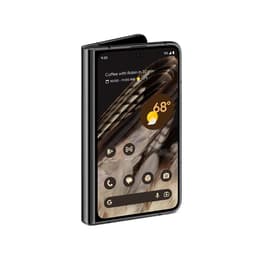
Google Pixel Fold
Google Pixel Fold
Starting at

Refurbished price:454.00

Versus €1,750.29 new

See options
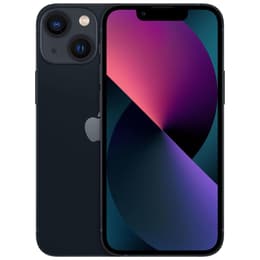
iPhone 13 mini
iPhone 13 mini
Starting at

Refurbished price:228.00

Versus €829.00 new

See options

Ratings

The Google Pixel Fold, released in June 2023, represents Google's entry into the foldable smartphone market, offering a large, adaptable screen experience. In contrast, the iPhone 13 Mini, launched in September 2021, is a compact smartphone designed for single-handed use and portability. These devices cater to distinct user preferences, with the Pixel Fold emphasizing a versatile, tablet-like display and the iPhone 13 Mini focusing on a traditional, pocket-friendly form factor. Both run on their respective advanced operating systems, Android and iOS, providing different software ecosystems.

Scores

Durability

The expected practical lifespan of a smartphone is influenced by its release timeline, software support, and physical durability. The Pixel Fold, being a newer device, generally benefits from a longer projected software support window compared to the iPhone 13 Mini.

  • Software Longevity: The Google Pixel Fold, released in June 2023, is expected to receive several years of Android updates, potentially extending its usable life further into the future. The iPhone 13 Mini, released in September 2021, has already received multiple iOS updates and is anticipated to continue receiving support for a few more years, though its update cycle will likely conclude sooner than the Pixel Fold's.
  • Repairability: The Pixel Fold, despite its complex foldable design, has received a repairability score of 6.5 out of 10, with some components like the USB-C port being relatively easy to replace due to modularity. However, the foldable screen itself and battery removal can present challenges. The iPhone 13 Mini initially received a lower repairability score, around 4 out of 10, due to issues with component interoperability, though this improved to 6 out of 10 with software updates addressing Face ID repair.
  • Physical Durability: The Pixel Fold features a glass front (cover), plastic front (unfolded), aluminum frame, and glass back, with the inner foldable screen being more delicate than a traditional slab phone display. The iPhone 13 Mini features a Ceramic Shield front cover and glass back with an aluminum frame, offering robust protection against drops. The foldable nature of the Pixel Fold introduces potential vulnerabilities related to the hinge and inner screen, which users should consider.

Year of Release

2023

2021

Compatible with latest Update

Yes

Yes

OS

Android

iOS

Foldable

Yes

No

Performance

Performance in both devices is designed to handle daily tasks efficiently, though their underlying architectures and optimization strategies differ significantly.

  • Processing Power: The Pixel Fold is equipped with a processor that handles demanding applications and multitasking smoothly, optimized for Google's Android ecosystem and AI features. The iPhone 13 Mini features a powerful processor that ensures fluid navigation, rapid app launches, and capable handling of graphics-intensive games, maintaining strong performance even years after its release.
  • Multitasking and Responsiveness: The Pixel Fold's larger internal display is well-suited for running multiple applications side-by-side, with a taskbar feature enhancing productivity. The iPhone 13 Mini, with its compact size, is primarily designed for single-app focus and quick transitions, though it remains highly responsive for everyday use.
  • Storage Options: Both devices offer various storage configurations to suit user needs. The Pixel Fold is available with 256GB or 512GB of internal storage. The iPhone 13 Mini offers 128GB, 256GB, and 512GB options.
  • Battery Behavior: The Pixel Fold features a 4821 mAh battery, with users reporting it can last a full day with moderate use, though heavy use of the inner screen can lead to faster drainage. The iPhone 13 Mini, with a 2406 mAh battery, is noted for offering decent battery life for its size, often lasting a full day for average users, but heavy usage may require more frequent charging.

Memory (GB)

12 GB

4 GB

Screen quality

The display experience is a primary differentiator between these two smartphones, offering distinct approaches to visual interaction.

  • Display Technology and Size: The Pixel Fold features a 7.6-inch foldable OLED main display with a 120Hz refresh rate and a 5.8-inch OLED cover display, also with a 120Hz refresh rate, providing a versatile viewing experience that transitions from a traditional smartphone to a small tablet. The iPhone 13 Mini has a 5.4-inch Super Retina XDR OLED display with a 60Hz refresh rate, offering a vibrant and sharp visual experience in a compact form.
  • Resolution and Clarity: The Pixel Fold's main display has a resolution of 2208 x 1840 pixels, and its cover display is 2092 x 1080 pixels, both delivering clear and detailed images. The iPhone 13 Mini's display features a resolution of 2340 x 1080 pixels at 476 pixels per inch, resulting in a very sharp and clear image for its size.
  • Brightness and Viewing Experience: Both devices offer high brightness levels for good visibility in various lighting conditions. The Pixel Fold's displays support up to 1550 nits peak brightness on the cover screen and 1450 nits on the inner screen, ensuring content remains visible outdoors. The iPhone 13 Mini's Super Retina XDR display offers improved typical brightness up to 800 nits and max brightness up to 1200 nits, making it easy to view under direct sunlight. The Pixel Fold's wider aspect ratio on the cover screen is often praised for being more usable than other foldables, while its inner screen's aspect ratio is better for productivity than media consumption.

Resolution

1840 x 2208

1080 x 2340

Screen type

Foldable OLED

Super Retina XDR OLED

Audiovisual

Both smartphones offer capable camera systems, leveraging their respective software optimizations for photography and videography.

  • Rear Camera System: The Pixel Fold features a triple camera setup with a 48 MP main sensor, a 10.8 MP ultrawide, and a 10.8 MP telephoto lens with 5x optical zoom, designed to capture detailed photos with Google's computational photography. The iPhone 13 Mini includes a dual 12 MP camera system with a wide and an ultrawide lens, known for producing high-quality, color-accurate photos and videos.
  • Photography Performance: The Pixel Fold is praised for its excellent photos, especially with features like Night Sight for low-light conditions and Real Tone for accurate skin tones. The iPhone 13 Mini also performs well in various lighting, with improvements in low-light photography over its predecessors and features like Cinematic mode for video.
  • Video Recording: Both devices are capable of recording high-quality video. The iPhone 13 Mini supports 4K video recording at up to 60 frames per second.
  • Front Camera: The Pixel Fold has a 9.5 MP front camera on the cover display and an 8 MP camera on the inner display for selfies and video calls. The iPhone 13 Mini features a 12 MP front camera, which delivers clear selfies and supports Face ID.

Main camera

48 megapixels

12 megapixels

Front camera

8 megapixels

12 megapixels

Miscellaneous

Beyond their core functionalities, several practical elements contribute to the overall user experience of these devices.

  • Connectivity: Both the Pixel Fold and iPhone 13 Mini support 5G connectivity for faster mobile data speeds. The Pixel Fold also includes Wi-Fi 6E and Bluetooth 5.2, while the iPhone 13 Mini supports Wi-Fi 6 and Bluetooth 5.0.
  • Ports and Biometrics: The Pixel Fold uses a USB-C port for charging and data transfer and features a side-mounted fingerprint sensor along with Face Unlock. The iPhone 13 Mini utilizes Apple's proprietary Lightning connector and relies on Face ID for secure authentication.
  • Dimensions and Weight: The Pixel Fold is a larger and heavier device, weighing 283 grams. When folded, it measures 139.7 x 79.5 x 12.1 mm, and when unfolded, it is 139.7 x 158.7 x 5.8 mm. The iPhone 13 Mini is significantly more compact and lighter at 141 grams, with dimensions of 131.5 x 64.2 x 7.65 mm, making it ideal for one-handed use.
  • Build Materials: The Pixel Fold combines a glass cover, plastic inner screen, aluminum frame, and glass back. The iPhone 13 Mini features a Ceramic Shield front, glass back, and an aluminum frame.

Weight

283 g

140 g

Screen size (in)

7.6

5.4

Network

5G

5G

SIM card

Physical SIM + eSIM

Physical SIM + eSIM

Carrier compatibility

Unlocked

Unlocked

Connector

USB-C

Lightning

The Google Pixel Fold and iPhone 13 Mini cater to fundamentally different user needs and preferences. User sentiment for the Pixel Fold often highlights its innovative foldable design and the utility of a larger screen for productivity and media consumption when unfolded. Many appreciate its wider cover screen compared to other foldables, making it more usable as a traditional phone. Criticisms sometimes point to its weight and the visibility of the crease on the inner display. Some users have also noted that the processor can run warm under heavy load.

The iPhone 13 Mini is frequently praised for its compact size, powerful performance, and capable camera system, making it a preferred choice for those who value portability and single-handed operation. Users often commend its battery life for a device of its size, though heavy users might find themselves needing to charge more frequently. A common sentiment is that it offers a full iPhone experience in a small package. However, some users might find the smaller screen less ideal for extensive media consumption or gaming.

Users prioritizing a versatile device that can transform from a compact smartphone to a larger tablet-like screen for multitasking and immersive viewing may find the Google Pixel Fold well-suited to their needs. Conversely, users who value extreme portability, comfortable one-handed use, and a powerful, traditional smartphone experience will likely lean toward the iPhone 13 Mini. Both devices offer distinct advantages, and choosing between them depends on whether a user prioritizes screen real estate and adaptability or ultimate compactness and ease of handling. For those considering either device, exploring quality-assured refurbished options can provide an eco-friendly alternative.

See all articles

Our recent comparisons