

Google Pixel Fold Vs iPhone 12 mini

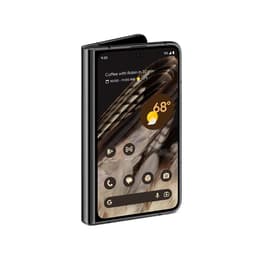
Google Pixel Fold
Google Pixel Fold
Starting at

Refurbished price:454.00

Versus €1,750.29 new

See options
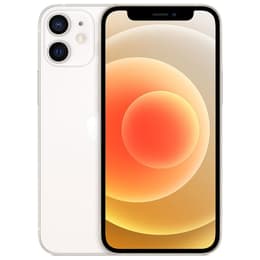
iPhone 12 mini
iPhone 12 mini
Starting at

Refurbished price:146.50

Versus €689.00 new

See options

Ratings

The Google Pixel Fold, released in June 2023, and the iPhone 12 Mini, launched in November 2020, represent distinct approaches to smartphone design and user experience. While the Pixel Fold offers a large, adaptable folding screen running on Android, the iPhone 12 Mini provides a compact, traditional smartphone experience powered by iOS. These devices cater to different user preferences, primarily differing in their form factor, display technology, and operating system ecosystems.

Scores

Durability

The expected practical lifespan of a smartphone is influenced by its release timeline, software support, and physical durability features.

  • Release Timeline & Software Support: The Google Pixel Fold, being a newer device from June 2023, is projected to receive OS and security updates until at least June 2028, offering approximately five years of support from its release. In contrast, the iPhone 12 Mini, released in November 2020, is expected to receive major iOS updates until around 2027, with security updates potentially extending beyond that. This means the Pixel Fold generally offers a longer remaining period of guaranteed software support.
  • Durability Features: The Pixel Fold features an IPX8 water resistance rating, indicating protection against submersion in water, though it does not have an official dust resistance rating for its first generation. Its hinge is designed to be sturdy. The iPhone 12 Mini boasts a Ceramic Shield front cover for enhanced drop performance and an IP68 rating, signifying robust water and dust resistance, capable of withstanding submersion up to 6 meters for 30 minutes.
  • Repairability & Longevity: While specific repairability scores vary, the folding mechanism of the Pixel Fold introduces additional components that could influence long-term repair considerations compared to the more traditional design of the iPhone 12 Mini. User sentiment for the Pixel Fold has noted concerns regarding the durability of the inner display.

Year of Release

2023

2020

Compatible with latest Update

Yes

Yes

OS

Android

iOS

Foldable

Yes

No

Performance

Performance in both devices is designed to handle daily tasks efficiently, though their underlying architectures and capabilities differ due to their respective release years and form factors.

  • Processing Power: The Google Pixel Fold is equipped with a current-generation processor that enables smooth multitasking and efficient handling of demanding applications and games. It comes with 12GB of RAM, which supports fluid transitions between numerous open applications. The iPhone 12 Mini, while older, features a capable processor that delivers strong performance for everyday use, including gaming and app usage, without noticeable lag. It includes 4GB of RAM.
  • System Responsiveness: Both devices offer a responsive user experience within their respective operating systems. The Pixel Fold's newer hardware generally provides more headroom for future software advancements and more intensive applications. The iPhone 12 Mini, despite its age, maintains a high level of responsiveness for its operating system and applications.
  • Storage Options: The Pixel Fold is available with 256GB or 512GB of internal storage. The iPhone 12 Mini offers storage configurations of 64GB, 128GB, and 256GB.
  • Battery Behavior: The Pixel Fold houses a 4821 mAh battery, which generally provides enough power for a full day of typical use, though heavy usage can deplete it more quickly. Charging speeds are noted as relatively slow. The iPhone 12 Mini has a 2227 mAh battery, and users often report that heavy use may require more frequent charging throughout the day.

Memory (GB)

12 GB

4 GB

Screen quality

The display experience is a primary differentiator, with the Pixel Fold offering a versatile dual-screen setup and the iPhone 12 Mini focusing on a high-quality compact panel.

  • Display Technology & Clarity: Both devices utilize OLED technology, known for deep blacks and vibrant colors. The Pixel Fold features a 5.8-inch OLED cover display and a 7.6-inch foldable OLED inner display, both offering sharp resolutions (408 ppi on cover, 380 ppi on inner) suitable for detailed viewing. The iPhone 12 Mini has a 5.4-inch Super Retina XDR OLED display with a pixel density of 476 ppi, providing excellent clarity in a smaller form factor.
  • Refresh Rate & Smoothness: The Pixel Fold's displays both support a 120Hz refresh rate with LTPO technology, allowing for dynamically adjusted refresh rates to provide smooth scrolling and animations while optimizing battery life. The iPhone 12 Mini features a standard 60Hz refresh rate, which is consistent for its generation but offers less fluidity compared to higher refresh rate displays.
  • Brightness & Viewing Experience: The Pixel Fold's cover display can reach a peak brightness of 1550 nits, and its inner display up to 1450 nits, ensuring good visibility in various lighting conditions. The iPhone 12 Mini offers a typical maximum brightness of 625 nits, with HDR content peaking at 1200 nits, providing a bright and clear viewing experience for its size. The Pixel Fold's wider aspect ratio on its cover screen is often preferred for single-handed use compared to other foldables.

Resolution

1840 x 2208

1080 x 2340

Screen type

Foldable OLED

Super Retina XDR OLED

Audiovisual

Both devices offer capable camera systems, but they differ in their hardware configurations and computational photography strengths.

  • Camera System Capabilities: The Google Pixel Fold features a triple rear camera setup, including a 48 MP main sensor, a 10.8 MP ultrawide lens, and a 10.8 MP telephoto lens with 5x optical zoom. It also has a 9.5 MP front camera on the cover display and an 8 MP inner camera. The iPhone 12 Mini comes with a dual 12 MP rear camera system, comprising a wide and an ultrawide lens, and a 12 MP front camera. It lacks a dedicated telephoto lens, relying on digital zoom.
  • Photography Performance: The Pixel Fold is praised for its Pixel-quality photos, offering strong performance in various conditions, including good low-light capabilities and effective telephoto zoom. Its computational photography enhances image quality. The iPhone 12 Mini delivers excellent photos in good lighting and features improved low-light performance over its predecessors, with Night mode available across all cameras.
  • Video Recording & Features: Both devices are capable of recording 4K video. The Pixel Fold supports 4K video recording. The iPhone 12 Mini can record 4K video at up to 60 frames per second, with cinematic video stabilization. A notable feature of the Pixel Fold is the ability to use its higher-quality rear cameras for selfies by using the cover screen as a viewfinder.
  • Audio Experience: Both devices provide clear audio for calls and media consumption, typical of their respective brands.

Main camera

48 megapixels

12 megapixels

Front camera

8 megapixels

12 megapixels

Miscellaneous

Beyond core features, several practical elements contribute to the overall user experience and daily utility of these smartphones.

  • Connectivity: Both the Google Pixel Fold and the iPhone 12 Mini support 5G connectivity, enabling faster mobile data speeds where available. They also include modern Wi-Fi standards and Bluetooth for wireless connections.
  • Ports & Biometrics: The Pixel Fold uses a USB-C port for charging and data transfer. It features a fingerprint sensor integrated into the power button for secure unlocking. The iPhone 12 Mini utilizes Apple's Lightning port. For biometric security, it relies on Face ID, Apple's facial recognition system.
  • Dimensions & Handling: The Pixel Fold is a larger and heavier device, weighing 283g, and its dimensions change significantly when folded (139.7 x 79.5 x 12.1 mm) versus unfolded (139.7 x 158.7 x 5.8 mm). This design offers a tablet-like experience when unfolded but is thicker when closed. The iPhone 12 Mini is significantly more compact and lighter at 135g, with dimensions of 131.5 x 64.2 x 7.4 mm, making it easy for one-handed use and pocketability.
  • Build Materials: The Pixel Fold features Gorilla Glass Victus on its cover and back, with an Ultra Thin Glass cover for the inner display. The iPhone 12 Mini incorporates a Ceramic Shield front cover and a glass back.

Weight

283 g

135 g

Screen size (in)

7.6

5.4

Network

5G

5G

SIM card

Physical SIM + eSIM

Physical SIM + eSIM

Carrier compatibility

Unlocked

Unlocked

Connector

USB-C

Lightning

The Google Pixel Fold and iPhone 12 Mini cater to fundamentally different user needs, primarily defined by their form factors and operating systems. User feedback for the Pixel Fold often praises its innovative folding design, the versatility of its dual screens, and its capable camera system, which benefits from Google's computational photography. However, some users have expressed concerns about its weight, the durability of the inner display, and the optimization of some apps for the folding screen.

The iPhone 12 Mini is frequently lauded for its compact size, making it highly portable and comfortable for one-handed use, a feature many users appreciate in a market dominated by larger phones. Its performance and camera quality are generally well-regarded for its class. The most common criticism revolves around its battery life, which some heavy users find requires frequent charging. Additionally, its 60Hz display is a point of comparison for users accustomed to higher refresh rates on newer devices.

Users prioritizing a large, adaptable screen for productivity, media consumption, and a modern Android experience, along with a strong camera with optical zoom, may find the Google Pixel Fold well-suited to their needs. Those who value extreme portability, a traditional smartphone experience, and the iOS ecosystem, with a focus on ease of use and a compact design, will likely lean towards the iPhone 12 Mini. Both devices offer distinct advantages, and for those considering a more sustainable choice, quality-assured refurbished options are available for both models, providing an eco-friendly alternative to purchasing new.

See all articles

Our recent comparisons