

Google Pixel 9 Vs Xiaomi Redmi Note 13 Pro+

Google Pixel 9
Google Pixel 9
Starting at

Refurbished price:376.00

Versus €1,066.71 new

See options
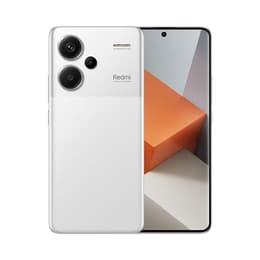
Xiaomi Redmi Note 13 Pro+
Starting at

Refurbished price:198.00

Versus €449.00 new

See options

Ratings

The Google Pixel 9 (released in August 2024) and the Xiaomi Redmi Note 13 Pro+ (launched globally in January 2024) are contemporary smartphones offering distinct approaches to the user experience. While the Pixel 9 emphasizes advanced computational photography and a streamlined Android experience, the Redmi Note 13 Pro+ focuses on high-resolution imaging and rapid charging capabilities. Both devices operate on the Android platform, but they offer different software philosophies and update commitments.

Scores

Durability

When considering the long-term usability of these devices, their release timelines and software support policies are key factors.

  • Software Longevity: The Google Pixel 9 is designed for extended software support, offering seven years of OS and security updates from its August 2024 release, ensuring it remains current until at least August 2031. In contrast, the Xiaomi Redmi Note 13 Pro+, released in January 2024, is committed to receiving two to three major Android OS updates and four years of security patches, extending its support until January 2028.
  • Physical Durability: Both smartphones feature robust build quality. The Pixel 9 includes Gorilla Glass Victus 2 on its display and an IP68 rating for dust and water resistance. The Redmi Note 13 Pro+ also boasts an IP68 rating and uses Gorilla Glass Victus for screen protection, with some variants featuring a glass back.
  • Practical Lifespan: Users prioritizing the longest possible software support and access to the latest Android features will find the Pixel 9's update policy more aligned with their needs. For those who typically upgrade their device within a few years, the Redmi Note 13 Pro+'s support duration is still substantial.

Year of Release

2024

2023

Compatible with latest Update

Yes

Yes

OS

Android

Android

Foldable

No

No

Performance

The performance of a smartphone is crucial for daily tasks, from navigating applications to engaging in demanding activities like gaming.

  • Processing Capabilities: The Google Pixel 9 is powered by a current-generation processor, designed to handle demanding applications and multitasking smoothly, with a focus on efficient AI processing. The Xiaomi Redmi Note 13 Pro+ features a processor that delivers capable performance for its category, ensuring a responsive experience for everyday use and gaming.
  • Multitasking and Storage: The Pixel 9 typically comes with 12GB of RAM, providing ample capacity for running multiple applications simultaneously without slowdowns. It offers storage options of 128GB or 256GB. The Redmi Note 13 Pro+ is available with 8GB or 12GB of RAM and offers storage configurations of 256GB or 512GB, utilizing UFS 3.1 for data access.
  • Battery Behavior: The Pixel 9 is equipped with a 4700 mAh battery, and user reports indicate it can comfortably last through a full day of use. The Redmi Note 13 Pro+ has a larger 5000 mAh battery, generally providing about 1.5 days of use on a single charge. However, some user experiences suggest its battery life, while adequate, might not always exceed expectations for its capacity.

Memory (GB)

12 GB

12 GB

Screen quality

The display is a primary interface for any smartphone, and both devices offer vibrant viewing experiences with distinct characteristics.

  • Display Technology and Clarity: Both the Google Pixel 9 and the Xiaomi Redmi Note 13 Pro+ feature OLED/AMOLED display technology, known for deep blacks and vibrant colors. The Pixel 9 has a 6.3-inch OLED screen with a 2400x1080 pixel resolution, resulting in clear visuals. The Redmi Note 13 Pro+ offers a slightly larger 6.67-inch AMOLED display with a 2712x1220 pixel (1.5K) resolution, providing a high pixel density for sharp images.
  • Brightness and Smoothness: Both phones feature a 120Hz refresh rate, contributing to smooth scrolling and fluid animations. The Pixel 9's display can reach a peak brightness of 1800 nits, ensuring good visibility in various lighting conditions. The Redmi Note 13 Pro+ also achieves a peak brightness of 1800 nits, with a High Brightness Mode of 1200 nits, making it suitable for outdoor use.
  • Additional Display Features: The Pixel 9 supports HDR and includes adaptive brightness and a new Adaptive Touch technology for improved responsiveness in challenging conditions. The Redmi Note 13 Pro+ supports HDR10+ and Dolby Vision, offers 12-bit color depth, and boasts a high 2160Hz instantaneous touch sampling rate, which can be beneficial for gaming.

Resolution

1080 x 2424

1220 x 2712

Screen type

OLED

AMOLED

Audiovisual

Both smartphones offer capable camera systems, but they approach photography with different strengths and feature sets.

  • Rear Camera Systems: The Google Pixel 9 features a dual-camera setup, including a 50MP main sensor with optical image stabilization (OIS) and a 48MP ultrawide lens that also supports macro focus. The Xiaomi Redmi Note 13 Pro+ comes with a triple-camera system, highlighted by a 200MP main camera with OIS and electronic image stabilization (EIS), an 8MP ultrawide camera, and a 2MP macro lens.
  • Photography Features: The Pixel 9 leverages its computational photography for features like Astrophotography, Night Sight, Panorama with Night Sight, Top Shot, and 'Add Me' for group photos. Its ultrawide lens is noted for capturing more light and enabling macro shots. The Redmi Note 13 Pro+ emphasizes its 200MP sensor for high detail and offers 2x/4x lossless in-sensor zoom, providing flexibility for distant subjects. It also includes features for clear night views and ultra-color imaging.
  • Video and Front Camera: For video, the Pixel 9 records in 4K at various frame rates. Its front camera is a 10.5MP sensor with autofocus. The Redmi Note 13 Pro+ records 4K video at 30fps and has a 16MP front camera.

Main camera

50 megapixels

200 megapixels

Front camera

10.5 megapixels

16 megapixels

Miscellaneous

Beyond core performance and display, several practical elements contribute to the overall user experience and device handling.

  • Connectivity and Ports: The Google Pixel 9 supports Wi-Fi 7 and Bluetooth 5.3, along with 5G connectivity and a USB-C 3.2 port. The Xiaomi Redmi Note 13 Pro+ supports Wi-Fi 6 and Bluetooth 5.3, also offering 5G and a USB Type-C port.
  • Biometric Security and Sensors: The Pixel 9 features an upgraded ultrasonic fingerprint sensor for secure unlocking. It also includes a Titan M2 security module for enhanced data protection. The Redmi Note 13 Pro+ incorporates an under-display fingerprint sensor.
  • Design and Handling: The Pixel 9 has dimensions of 152.8 x 72.0 x 8.5mm and weighs 198g, offering a balanced feel. The Redmi Note 13 Pro+ is slightly larger and heavier at 161.4 x 74.2 x 8.9mm and 204.5g, featuring a curved display and a glass back. The Redmi Note 13 Pro+ also includes an infrared transmitter, a feature not commonly found on many smartphones.

Weight

198 g

204 g

Width

7.198 cm

7,42 cm

Height

15.283 cm

16,14 cm

Depth

8.54 cm

0,89 cm

Screen size (in)

6.3

6.67

Network

5G

5G

SIM card

Physical SIM + eSIM

Dual Physical SIM

Carrier compatibility

Unlocked

Unlocked

The Google Pixel 9 and Xiaomi Redmi Note 13 Pro+ cater to different user priorities, each excelling in specific areas. Users often praise the Pixel 9 for its consistent camera performance, particularly its computational photography features and long-term software support. Criticisms sometimes point to its charging speed not being as fast as some competitors. The Redmi Note 13 Pro+ is frequently lauded for its high-resolution main camera, vibrant display, and exceptionally fast charging capabilities. Some users have noted that its battery life, despite the large capacity, might not always translate to significantly longer usage times compared to other devices.

Users prioritizing a streamlined Android experience with extensive software updates and advanced AI-driven camera features may find the Google Pixel 9 to be a suitable choice. Its compact size and robust build also appeal to those seeking a durable and manageable device. Conversely, individuals who value a high-megapixel camera for detailed shots, a larger and immersive display, and industry-leading fast charging will likely lean towards the Xiaomi Redmi Note 13 Pro+. Both devices offer compelling features, and choosing between them often comes down to which aspects of the smartphone experience are most important to the individual user. For those considering either of these models, exploring quality-assured refurbished options can provide an eco-friendly alternative.


See all articles

Our recent comparisons