
Google Pixel 8 Vs Google Pixel Fold

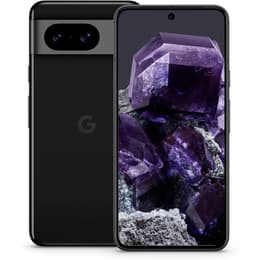
Google Pixel 8
Google Pixel 8
Starting at

Refurbished price:235.00

Versus €999.00 new

See options
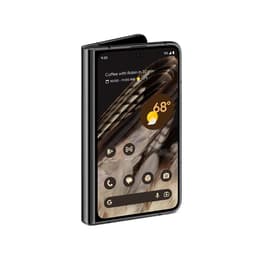
Google Pixel Fold
Google Pixel Fold
Starting at

Refurbished price:454.00

Versus €1,750.29 new

See options

Ratings

The Google Pixel 8, released in October 2023, is a traditional smartphone, while the Google Pixel Fold, launched in June 2023, represents Google's entry into the foldable smartphone market. The primary distinction lies in their form factors: the Pixel 8 offers a conventional slab design, whereas the Pixel Fold features a dual-screen setup that allows it to transform from a compact device into a larger tablet-like display. Both devices operate on the Android platform, offering a consistent software experience, but cater to different user preferences regarding portability and screen real estate.

Scores

Durability

The longevity of a smartphone is significantly influenced by its software support and physical durability.

  • Software Support: The Pixel 8 benefits from an extended software commitment, receiving seven years of OS upgrades, security updates, and feature drops, ensuring support until at least October 2030. The Pixel Fold receives five years of OS and security updates, extending its support until at least June 2028. This provides the Pixel 8 with a longer period of guaranteed software updates.
  • Physical Durability: The Pixel 8 uses Gorilla Glass Victus for its front and back, with an aluminum frame, and carries an IP68 rating for dust and water resistance. The Pixel Fold utilizes Gorilla Glass Victus on its cover screen and back, and Ultra Thin Glass for its inner foldable display. It boasts an IPX8 water resistance rating, with Google marketing its hinge as durable.
  • Practical Lifespan: Users prioritizing the longest software longevity will find the Pixel 8 more suitable. The Pixel Fold, while offering a unique form factor, has a shorter official software support window.

Year of Release

2023

2023

Compatible with latest Update

Yes

Yes

OS

Android

Android

Foldable

No

Yes

Performance

The performance experience on both devices is designed to be smooth, though they are powered by different generations of Google's custom silicon.

  • Processing Power: The Pixel 8 features a newer generation processor, offering faster CPU and GPU speeds for responsive app loading, smoother multitasking, and enhanced performance in demanding applications. The Pixel Fold, with its previous generation processor, handles everyday tasks efficiently but may show a slight difference in speed with intensive workloads.
  • Memory and Storage: The Pixel 8 includes 8GB of RAM and storage options of 128GB or 256GB. The Pixel Fold provides 12GB of RAM and comes with 256GB or 512GB storage options.
  • Battery Behavior: The Pixel 8 has a 4575mAh battery, while the Pixel Fold features a 4821mAh battery. The Pixel Fold's dual-screen setup can consume more power, potentially resulting in comparable or shorter battery life in typical use despite its larger capacity. Both support fast wired and wireless charging.

Memory (GB)

8 GB

12 GB

Screen quality

The display experience is a key differentiator, with the Pixel Fold offering a unique dual-screen setup.

  • Display Technology and Size: The Pixel 8 features a 6.2-inch OLED display, providing vibrant colors and deep blacks in a traditional smartphone form factor. The Pixel Fold offers a 5.8-inch OLED cover display and unfolds to reveal a larger 7.6-inch OLED inner display. This allows users to switch between a compact phone and an expansive tablet-like view.
  • Resolution and Clarity: The Pixel 8's 6.2-inch display has a 2400 x 1080 pixel resolution (428 ppi), offering clear and sharp visuals. The Pixel Fold's cover display has a 2092 x 1080 pixel resolution (408 ppi), and its inner display has a 2208 x 1840 pixel resolution (380 ppi). Both provide good clarity.
  • Brightness and Refresh Rate: Both devices feature 120Hz refresh rates for smooth scrolling. The Pixel 8's display can reach a peak brightness of 2000 nits, offering excellent visibility outdoors. The Pixel Fold's cover display reaches up to 1550 nits peak brightness, and its inner display up to 1450 nits.

Resolution

1080 x 2400

1840 x 2208

Screen type

OLED

Foldable OLED

Audiovisual

Both Pixel devices are known for their camera capabilities, leveraging Google's computational photography.

  • Rear Camera Systems: The Pixel 8 features a dual-camera setup with a 50MP main sensor and a 12MP ultrawide sensor, offering strong performance with OIS. The Pixel Fold offers a triple-camera system, including a 48MP main sensor with OIS, a 10.8MP ultrawide, and a 10.8MP telephoto lens with 5x optical zoom. The Pixel Fold's dedicated telephoto lens provides superior optical zoom.
  • Low-Light and Everyday Photography: Both phones excel in low-light conditions due to Google's software processing, producing detailed and well-exposed images. The Pixel Fold's ability to use its main cameras for high-quality selfies by unfolding the device is a unique advantage.
  • Video Recording and Audio: Both devices support 4K video recording at up to 60fps from their main rear cameras, with good stabilization. The Pixel 8's selfie camera supports 4K video, as does the Pixel Fold's external selfie camera, though its inner selfie camera is limited to Full HD. Both offer stereo speakers.

Main camera

50 megapixels

48 megapixels

Front camera

10.5 megapixels

8 megapixels

Miscellaneous

Beyond core features, several practical elements differentiate the user experience of these two Pixel devices.

  • Connectivity: Both the Pixel 8 and Pixel Fold support 5G, Wi-Fi 6E (Pixel 8 also supports Wi-Fi 7), and Bluetooth 5.3, ensuring fast and reliable wireless connections. Both also include NFC for contactless payments.
  • Ports and Sensors: Both devices feature a USB-C port for charging and data transfer, and neither includes a traditional 3.5mm headphone jack. For security, the Pixel 8 uses an optical in-screen fingerprint sensor and face recognition. The Pixel Fold also includes a fingerprint sensor and face recognition.
  • Weight, Dimensions, and Handling: The Pixel 8 is a compact smartphone, measuring 150.5 x 70.8 x 8.9 mm and weighing 187g. The Pixel Fold is significantly heavier at 283g. When folded, it measures 139.7 x 79.5 x 12.1 mm, and when unfolded, it expands to 139.7 x 158.7 x 5.8 mm. Its wider, shorter folded form factor offers a different one-handed experience.

Weight

187 g

283 g

Screen size (in)

6,2

7.6

Network

5G

5G

SIM card

Physical SIM + eSIM

Physical SIM + eSIM

Carrier compatibility

Unlocked

Unlocked

Connector

USB-C

USB-C

User sentiment for both the Pixel 8 and Pixel Fold highlights their respective strengths and trade-offs. The Pixel 8 is generally praised for its refined design, excellent camera performance, and the significant commitment to seven years of software updates. Criticisms often include its starting storage capacity and the absence of a dedicated telephoto lens.

The Pixel Fold receives commendation for its innovative foldable form factor, offering a versatile large screen experience for productivity and media consumption. Its camera system is also a strong point. However, users have noted concerns regarding its weight, the visibility of the inner screen's crease, and some initial software optimizations for the foldable display.

Users prioritizing a compact, traditional smartphone with the longest software support and a highly capable camera will find the Pixel 8 well-suited. Conversely, users who value a larger, adaptable screen for multitasking or media, and are willing to embrace the unique characteristics of a foldable device, may lean toward the Pixel Fold. Both devices, whether new or as quality-assured refurbished options, provide access to Google's ecosystem and advanced computational features.

See all articles

Our recent comparisons